What Is a Preposition?40+ Examples for Advanced English
Have you ever said, “I’m going to the store”, or “The keys are on the table”? Words like to and on are called prepositions
A preposition is a small word that shows how words are connected, and it links a noun or pronoun to another part of the sentence
Table of Contents
Prepositions can show:
- Place → on, in, under
- Time → at, before, after
- Direction → to, into, onto
Prepositions are very common in English, as they help you speak and write clearly. Do you believe they are difficult? Well, they might be as they:
- Have no fixed rules for every case
- Often used in common expressions
- Best learned with practice
In this guide, you will learn 40+ preposition examples and how to use them in sentences. Let’s begin and learn prepositions step by step.
Where Are Prepositions Used? (With Everyday Examples)
Prepositions are used everywhere in English. You will see them in speaking, writing, and reading almost all the time. They help you add important details to your sentences.
You use prepositions when you want to talk about place, time, or reasons. For example, they help you explain where something is, when something happens, or why something happens.
What is a Preposition in Everyday Conversations?
In casual speech, prepositions are essential for giving clear information. When you give someone directions, you use prepositions of place and direction.
- “The coffee shop is at the corner of Main Street.”
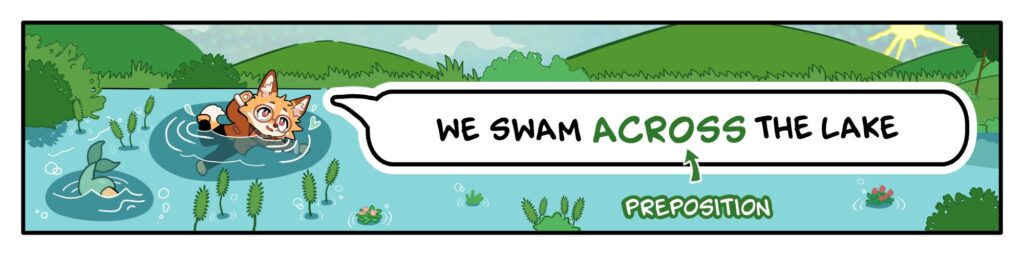
- “You have to walk across the bridge.”
When you talk about time, you also use prepositions.
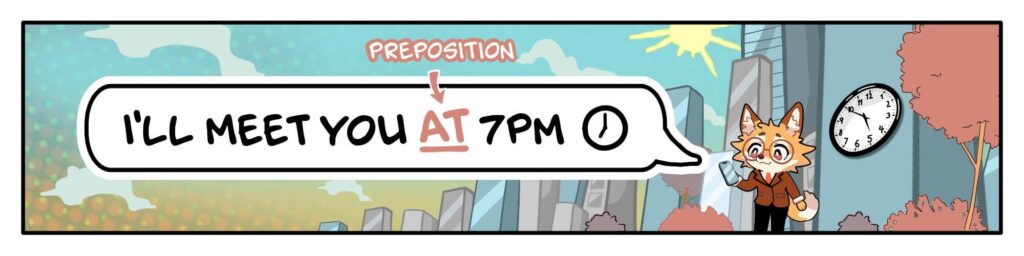
- “I’ll meet you at 7 PM.”
- “We have a meeting in the morning.”
These small words add essential detail that prevents misunderstandings.
What Is a Preposition in Academic and Professional Writing?
Prepositions are just as important in formal and professional writing as they are in everyday English. Using them correctly shows:
- You understand grammar
- Demonstrate strong writing skills.
In academic writing, prepositions help you connect ideas and explain relationships in a precise way. They make your sentences more accurate and easier to follow.
For example:
“The data was collected over a period of two months”,
or
“The report was written for the board of directors.”
Using the right preposition in these cases improves clarity and gives your writing a more professional and confident tone.
What Is a Preposition in Literature and Media?
Prepositions are widely used in literature and media to make descriptions clearer and more engaging. Writers use them to help readers imagine scenes and understand what is happening.
For example:
- “The character walked into the dark forest.”
- “The story takes place before the war.”
These small words help create vivid images in the reader’s mind.
Prepositions are also common in everyday English through idioms and phrasal verbs. Because of this, learning how they work can help you better understand books, news, and conversations.
40+ Examples in Sentences: What Is a Preposition in Action?
Let’s look at some of the most common preposition examples in action. These are categorised by their function to help you understand their different types of prepositions.
Prepositions of Place
| Preposition | Use | Example |
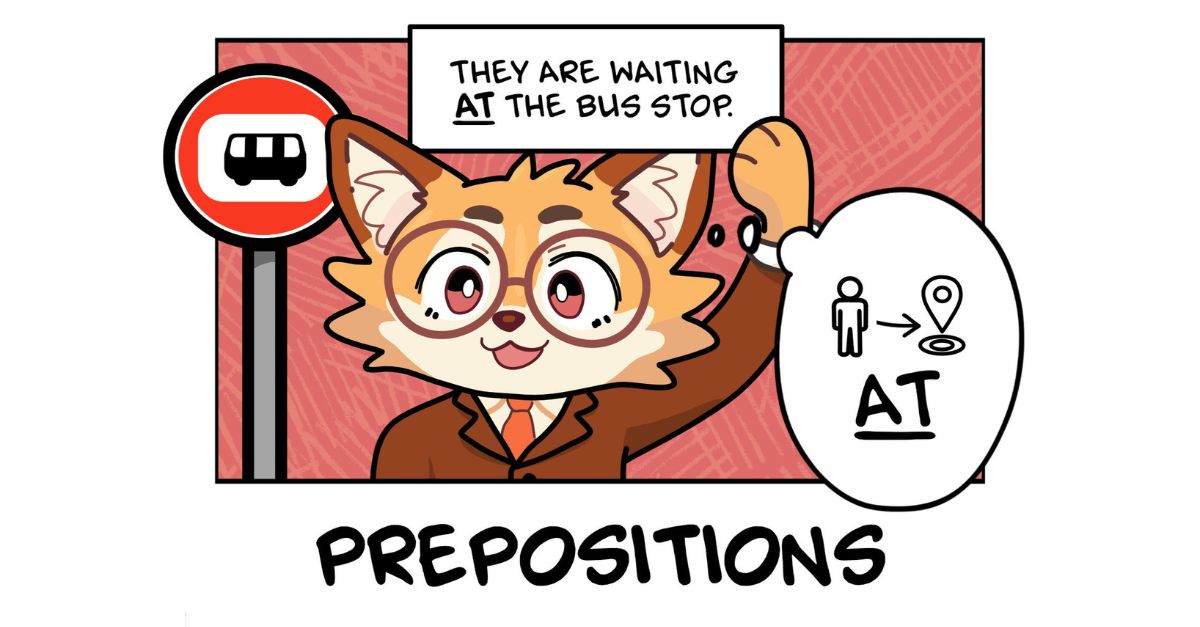
| at | Used for a specific point or location. | She is waiting at the bus stop. |
| on | Used for a surface. | The book is on the table. |
| in | Used for an enclosed space or a large area. | The keys are in my pocket. |
| under | Used for a position below something. | The cat is sleeping under the bed. |
| over | Used for a position above or higher than something. | The plane flew over the city. |
| beside | Used for a position next to something. | He sat beside me. |
| between | Used for a position separating two things. | The house is between the bank and the grocery store. |
| near | Used for a position close to something. | There is a park near my house. |
Prepositions of Time
| Preposition | Use | Example |
| at | Used for a specific time. | The movie starts at 8 PM. |
| on | Used for specific days and dates. | The party is on Saturday. |
| in | Used for months, seasons, and years. | I’ll see you in December. |
| before | Used for a time earlier than. | Finish your homework before dinner. |
| after | Used for a time later than. | I’ll call you after the meeting. |
| during | Used to indicate a period of time. | She fell asleep during the lecture. |
| since | Used to indicate a starting point in time. | I have been living here since 2018. |
| until | Used to indicate the end of a time period. | We can wait until 10 o’clock. |
Prepositions of Direction and Movement
| Preposition | Use | Example |
| into | Movement towards the inside of something. | He walked into the room. |
| onto | Movement toward a surface. | The cat jumped onto the counter. |
| toward | Movement in the direction of something. | She ran toward the finish line. |
| across | Movement from one side to the other. | We swam across the lake. |
| through | Movement from one end to the other of a space. | The train went through the tunnel. |
| off | Movement away from a surface. | The keys fell off the table. |
| out of | Movement away from an enclosed space. | He took his wallet out of his pocket. |
| up | Movement to a higher position. | We climbed up the hill. |
| down | Movement to a lower position. | He went down the stairs. |
Prepositions of Cause, Reason, and Purpose
| Preposition | Use | Example |
| because of | Used to show cause. | The game was cancelled because of the rain. |
| due to | Used to show cause (more formal than ‘because of’). | The delay was due to a technical issue. |
| for | Used to show purpose. | She bought a gift for her brother. |
| from | Used to show the reason for a feeling. | She was tired from working all day. |
Prepositions in Idiomatic Expressions
| Prepositional Phrase | Use | Example |
| in charge of | Responsible for something. | She is in charge of the project. |
| on time | At the exact scheduled time. | He was always on time for class. |
| by accident | Something done unintentionally. | I found the old photo by accident. |
| for good | Forever. | She left the country for good. |
| in short | To summarize. | In short, we need to find a new solution. |
| by the way | Used to introduce a new topic. | By the way, did you hear from John? |
| at a glance | Quickly. | He could tell the answer at a glance. |
| in fact | Actually. | She said she was busy, but in fact she was just tired. |
| with pleasure | A polite way of agreeing. | “Can you help me?” “With pleasure.” |
Practising How to Use Prepositions Correctly
Learning what a preposition is is the first step. The next step is to practice regularly until their use becomes natural. Here are some practical tips to help you master prepositions.
- Writing exercises: Try to write a short paragraph and then go back and change some of the prepositions to see how the meaning shifts. For example, “The ball is on the box” is different from “The ball is in the box.”
- Reading exercises: As you read books, articles, or even social media posts, make a note of all the prepositions you see. This helps you notice the patterns and common combinations.
- Listening practice: Pay attention to how native English speakers use prepositions in conversations, podcasts, and movies. Listen for the subtle differences between phrases like “get in the car” and “get on the bus.”
- Grammar apps and quizzes: There are many free resources online that have quizzes specifically on prepositions. These quizzes are a great way to test your knowledge and see where you need more practice.
What Is a Preposition in Real-Life Situations?
Let’s look at how prepositions are used in everyday situations. These examples will help you understand how they work in real life.
Prepositions of Place in Real Life
- Giving directions:
When a friend asks for directions, you might say, “Walk across the street, turn right at the corner, and my house is next to the blue one.” - Describing a scene:
To describe a photo, you could say, “My family is standing in front of the monument, and the sun is shining above us.”
Prepositions of Time in Real Life
- Scheduling events:
You use prepositions to plan time clearly: “Let’s meet at 3 PM on Tuesday. I’m busy from 1 to 2 PM.” - Narrating a story:
When talking about your day, you might say, “We went hiking during the day and had a bonfire at night.”
Prepositions of Direction in Real Life
- Giving travel instructions:
If someone asks for directions, you could say, “Drive down this road, then turn onto the highway.” - Explaining an action:
To describe movement, you might say, “The runner slid into third base.”
Prepositions in Professional and Academic Contexts
Prepositions are also important in formal writing. They help you connect ideas clearly and logically.
For example: “According to the research, the data shows that the market changed because of new trends.”
Final Thoughts on What is a Preposition?
Prepositions may be small words, but they play a big role in English. If you’re wondering what is a preposition, it’s simply a word that helps show place, time, direction, and relationships between ideas.
Learning prepositions in English can feel difficult at first, especially because there are no strict rules for every case. However, with regular practice, they become much easier to understand and use.
To improve faster, focus on:
- Common preposition examples in everyday sentences
- Noticing prepositions while reading or listening
- Practising them in your own speaking and writing
Check our courses to practice and improve your English.
Now, it is quiz time!
Test your understanding of prepositions with this short quiz:
1. Which sentence uses the correct preposition?
a) She is sitting in the chair
b) She is sitting on the chair
2. Choose the correct option:
We will meet ___ 5 PM
a) in
b) at
c) on
3. Fill in the blank:
The cat is hiding ___ the table
a) under
b) between
c) during
4. Which sentence is correct?
a) He walked into the room
b) He walked on the room
Write your answers in the comments and check how well you understand prepositions in English.