German Word Order vs English Word Order: Why Germans Get It Wrong In English
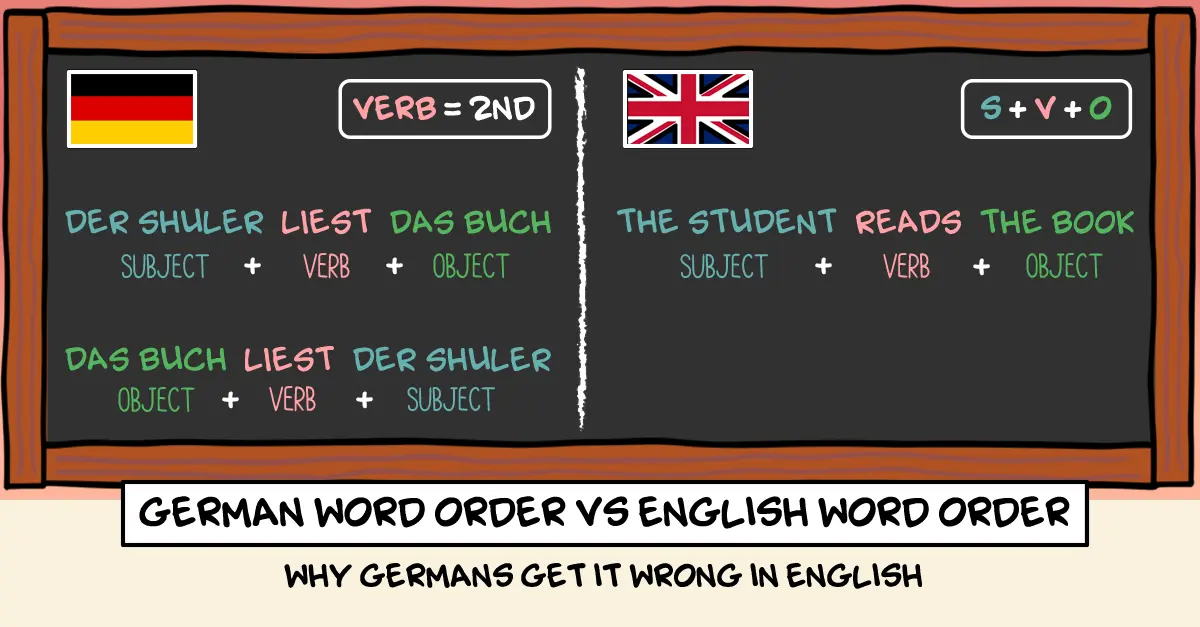
Table of Contents
Many learners from Germany speak excellent English. Their vocabulary is strong, pronunciation is often clear, and grammar knowledge is usually solid. However, one area consistently confuses people causes confusion: English word order.German word order mistakes in English.
What Is Word Order? Word order is the arrangement of words in a sentence — especially the position of the subject, verb and object.
In English, the word order is usually:
Subject + Verb + Object (SVO)
For example:
The student reads the book.
If you change the order:
Reads the student the book.
The sentence becomes incorrect because English depends heavily on fixed structure.
In German, word order is more flexible because grammatical cases show who is doing what.
In this article, we’ll explore the key differences between German and English word order, explain why errors happen, and show how to fix them.
Are you ready? Bist du bereit?
Flexible vs Fixed Word Order: The Core Difference
Thanks to the German case system (nominative, accusative, dative, genitive), German allows different word orders while still keeping meaning clear.
English, however, relies heavily on fixed word order.
English Basic Structure:
Subject + Verb + Object (SVO)
“I bought a car.”
This structure rarelyalmost never changes in standard statements.
In German, the same sentence could appear in multiple forms depending on
emphasis:
Ich kaufte ein Auto.
Ein Auto kaufte ich.
Both are grammatically correct in German. But in English, changing the word order often
makes the sentence incorrect or poetic.
This fundamental difference leads to many German word order mistakes in English.
Verb Position: The Biggest Problem
In main clauses, German positions the verb second, no matter what comes first. This is , known as the V2 rule.
German:
Heute gehe ich ins Kino.
German learners often transfer this structure directly into English:
Literal translation: Today go I to the cinema.
Correct translation: Today I go to the cinema.
This is one of the most common subject- verb- order mistakes Germans make.
In English, the subject must come before the verb in standard statements.
On the other hand, in German, subordinate clauses push the verb to the end.
German:
Ich denke, dass er morgen kommt.
Literal translation: I think that he tomorrow comes.
Correct translation: I think that he comes tomorrow.
English does not move the verb to the end in subordinate clauses. This is a major issue in German- to- English sentence structure conversion.
Time-Manner-Place vs. Place-Manner-Time
German word order often follows this pattern:
Time – Manner – Place (TMP)
Example:
Ich habe gestern mit dem Bus in Berlin gearbeitet.
(Literally: I have yesterday with the bus in Berlin worked.)
English word order prefers:
Place – Manner – Time (or flexible but natural order)
Correct Translation: I worked in Berlin by bus yesterday.
German learners of English syntax often keeps the German pattern:
Unnatural Translation: I worked yesterday by bus in Berlin.
While not always incorrect, this sounds grammatically awkward and is a common mistake among German learners.part of common English grammar problems for Germans.
Placement of Adverbs
German allows adverbs more freedom in placement.
German:
Ich habe das schon gesehen.
(Literally: I have that already seen.)
Incorrect Translation: I have that already seen.
Correct Translation: I have already seen that.
English has stricter rules about where adverbs go, usually:
Subject + Auxiliary + Adverb + Main Verb
This creates ongoing challenges in English word order for German speakers.
Time-Manner-Place vs. Place-Manner-Time
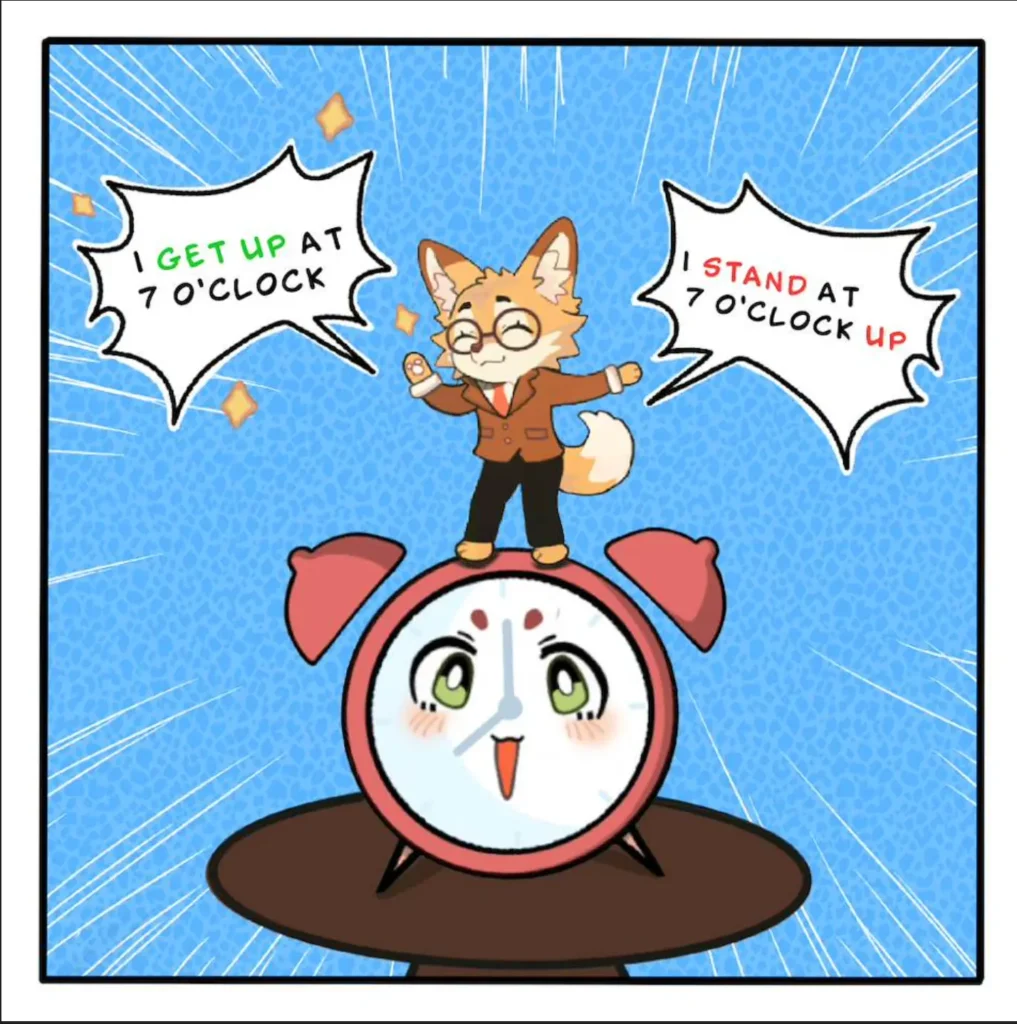
German has separable verbs:
Ich stehe um 7 Uhr auf.
(Literally: I stand at 7 o’clock up.)
English Equivalent: I get up at 7 o’clock.
German learners sometimes mirror the split structure incorrectly:
Incorrect Translation: I stand at 7 o’clock up.
Correct Translation: I get up at 7 o’clock.
Understanding that English phrasal verbs behave differently is essential for improving German learners’ English syntax.
Why do German Speakers Struggle with English Word Order?
There are several reasons why English grammar problems for Germans are so common in this area:
- Similar languages, different rules: English and German share roots, which creates false confidence — but their word order systems work differently.
- Strong grammar awareness: German learners often know grammar well, yet they apply German logic to English sentence structure.
- Direct translation habit: Many learners think in German and translate word by word instead of forming natural English sentences.
- Case vs. position: German shows meaning through case endings, while English relies on fixed word order.
- Verb placement differences: German frequently moves verbs to the second or final position, but English usually keeps the verb directly after the subject.
Learn more about English word order in our guide to word games for learning English, and discover fun ways to practice sentence structure naturally.
How German Speakers Can Fix Word Order Mistakes
If you want to eliminate German word order mistakes in English, focus on these practical strategies:
- Memorize the SVO rule: Always make sure your sentence follows Subject + Verb + Object, and check that the verb comes directly after the subject.
- Avoid direct translation: Don’t translate word by word from German — instead, build sentences in natural English chunks.
- Practice subordinate clauses: Remember that English does not move the verb to the end of the sentence.
- Learn natural adverb placement: Pay attention to where native speakers place time, manner and place expressions, and copy those patterns.
- Practice speaking regularly: Word order becomes automatic faster in conversation than through written grammar exercises alone.

Looking Ahead
German speakers often have a strong advantage when learning English. Vocabulary similarities and shared roots make progress faster compared to many other languages.
However, German word order mistakes in English remain one of the biggest obstacles to sounding natural and fluent.
The key differences include:
- Verb-second rule in German vs. fixed SVO in English
- Verb-at-the-end structure in German subordinate clauses
- Different adverb placement rules
- Use of auxiliary verbs in English questions
Mastering English word order isn’t about a largerbigger vocabulary — it’s about gently retraining your sentence habits!.
You’re not “bad at English.” You’re just using patterns that work perfectly in German.
With regular practice, word order starts to feel natural. You’ll hesitate less, correct yourself automatically, and eventually stop translating in your head.
Be patient with yourself — confidence grows faster than you think.
Did you know German and English split around 1,500 years ago?
“The ancestor language, Proto-Germanic, split into dialects that eventually became English, German, Dutch and the Scandinavian languages.
English later changed dramatically after the Norman Conquest of 1066, when French influenced vocabulary and grammar. German did not experience this same structural shift.”