30+ Essential Phrasal Verbs to Improve Your English Fluency
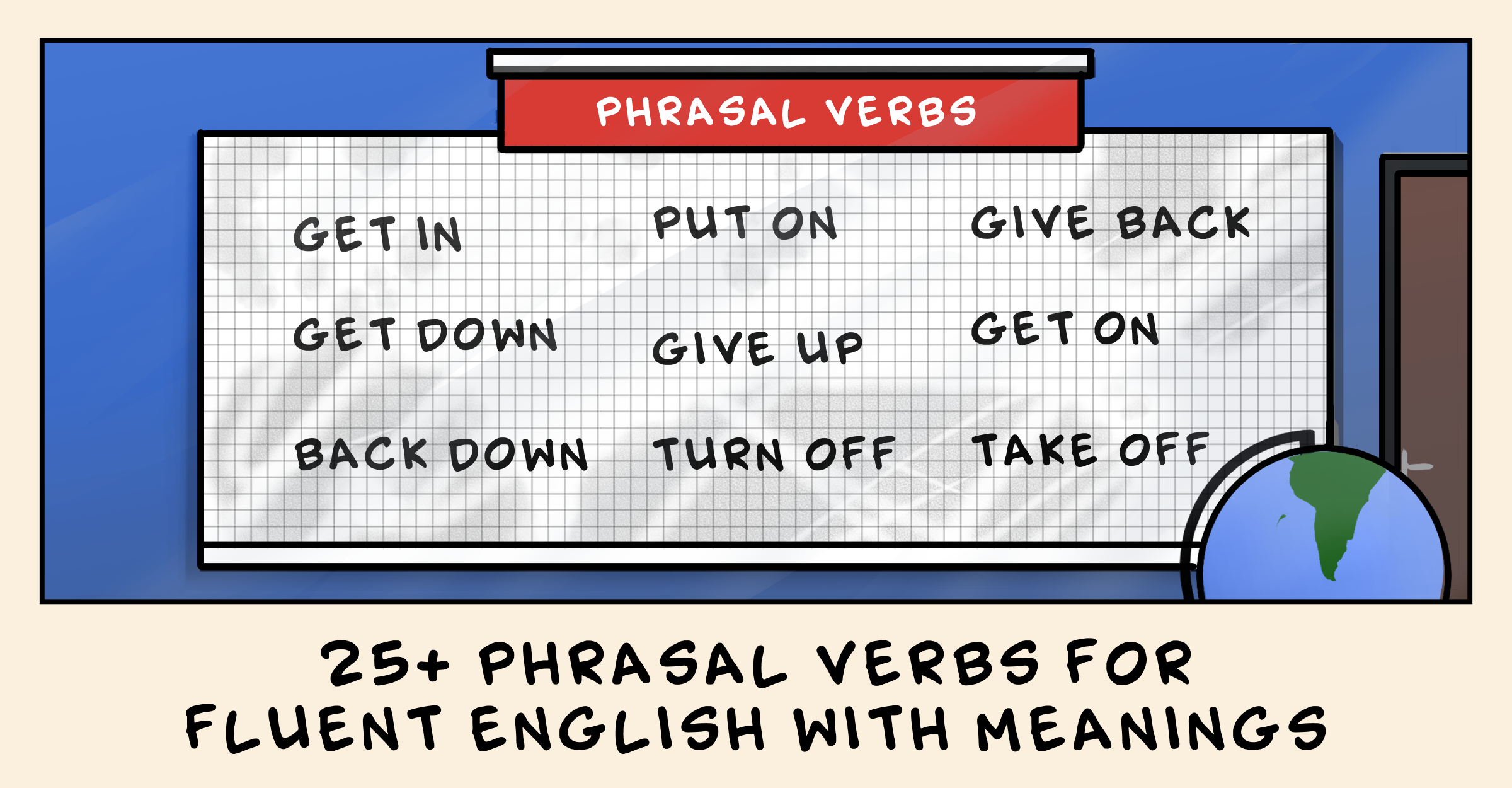
Learning phrasal verbs will feel like a game-changer for your fluency. They create unexpected new meanings, being essential for natural, everyday English.
We prepared a comprehensive phrasal verbs list for beginners. In this article, you will:
- Discover how to use them in casual chats and professional emails.
- Learn what phrasal verbs are.
- See plenty of examples.
Table of Contents
What Are Phrasal Verbs?
A phrasal verb is a combination of a standard verb and another word (usually a preposition or adverb). When these words combine, they create a new meaning.
For example, the verb “give” means to offer something to someone. But if you add “up,” you get “give up,” which means to quit.
Here are a couple of quick examples:
- Look up: This means to search for information. (e.g., “I’ll look up his phone number.”)
- Take off: This can mean to remove clothing, but it also means an airplane is leaving the ground. (e.g., “The plane will take off in ten minutes.”)
Why Are Phrasal Verbs Important?
Phrasal verbs are everywhere in English. Here’s why they are so essential:
- They’re common in everyday English. You’ll hear them in movies, music, and casual conversations.
- Using phrasal verbs correctly will make your English sound more fluent. Your written pieces will boost their quality tenfold.
- If you’re studying for an exam, learning some is crucial for vocabulary and comprehension sections.
Phrasal Verbs List by Type
We can separate the most common phrasal verbs into a few categories.
Separable Phrasal Verbs
Separable phrasal verbs are flexible. You can put the object of the sentence either between the verb and the particle or after the particle.
- Definition: The verb and the particle can be separated by the object.
- Example: “Turn off the light” and “Turn the light off” are both correct.
- He turned the light off.
Inseparable Phrasal Verbs
These verbs can’t ever be split up. The verb and the particle must stay together, and the object always comes after them.
- Definition: The verb and the particle cannot be separated.
- Example: You can “look after someone,” but you can’t “look someone after.”
- I will look after your cat while you’re away.
Multi-Word Phrasal Verbs
These phrasal verbs are inseparable and consist of a verb followed by an adverb and a preposition.
Do you get along with your colleagues?
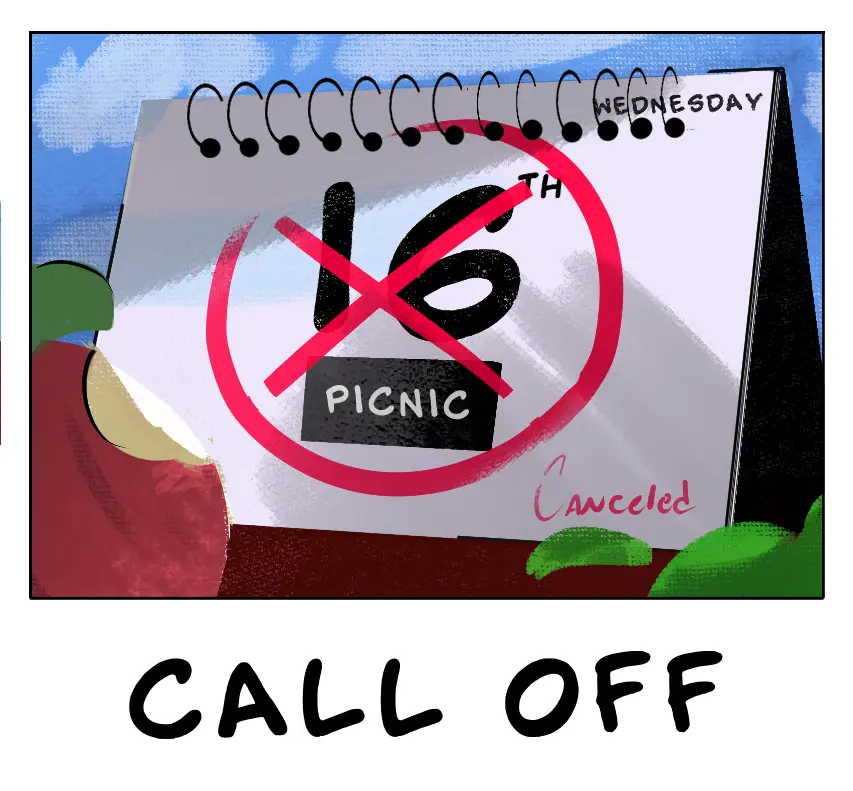
25+ Phrasal Verbs List and Meanings (With Examples)
Ready to dive in? Here is a practical phrasal verbs list divided by contexts.
Common Everyday Phrasal Verbs
These are some of the most common phrasal verbs you’ll hear and use daily.
| Phrasal Verb | Meaning | Example |
| Wake up | Stop sleeping | I wake up at 7 AM every morning. |
| Turn on | Start a machine or light | Can you turn on the television? |
| Give up | To quit | She didn’t give up, although it was difficult. |
| Carry on | To continue | Let’s carry on with the meeting after a short break. |
Phrasal Verbs for Work and Study
This part of our phrasal verbs list is perfect for professional and academic settings.
| Phrasal Verb | Meaning | Example |
| Hand in | Submit an assignment | You need to hand in your essay by Friday. |
| Look over | Review or check | Could you look over my report? |
| Fill out | Complete a form | Please fill out this application. |
| Catch up | Reach the same level as others | I need to catch up on the work I missed. |
Phrasal Verbs for Social Situations
Use these phrasal verbs when talking about relationships and social events.
| Phrasal Verb | Meaning | Example |
| Get along with | Have a good relationship | I get along with my neighbors very well. |
| Hang out | Spend time relaxing | We should hang out this weekend. |
| Break up | End a romantic relationship | They decided to break up after five years together. |
| Make up | Forgive each other after an argument | They argued last night but made up this morning. |
Phrasal Verbs for Travel and Movement
This selection of common phrasal verbs is all about travel.
| Phrasal Verb | Meaning | Example |
| Set off | Start a journey | We will set off early to avoid the traffic. |
| Pick up | Collect someone | Can you pick me up from the station? |
| Drop off | Take someone to a place and leave them there | I’ll drop you off at your hotel. |
| Check in | Register at a hotel or airport | You need to check in two hours before your flight. |
| Take off | When a plane begins to fly | The plane is scheduled to take off at noon. |
Advanced Phrasal Verbs
Ready for a challenge? This advanced phrasal verbs list will help you sound like a native speaker.
| Phrasal Verb | Meaning | Example |
| Bring about | Cause something to happen | The new manager brought about many positive changes. |
| Come up with | Think of an idea or plan | She came up with a great idea for the project. |
| Put up with | Tolerate something unpleasant | I can’t put up with his attitude anymore. |
| Look forward to | Feel excited about a future event | I look forward to seeing you next week. |

When to Use Phrasal Verbs?
Knowing how to use phrasal verbs is just as important as knowing their meanings. Choosing the correct one is key.
Everyday Conversations
In casual English, phrasal verbs create a more fluid language. Native speakers use them frequently.
Professional and Academic Contexts
While many phrasal verbs are acceptable in professional and academic writing, some can be too informal. Instead of “come up with,” you might use “devise” in a formal paper.
Writing and Exams
In exams like the IELTS or TOEFL, using phrasal verbs correctly shows a strong understanding of the English language.
How to Learn and Remember a Phrasal Verbs List
Memorizing a long phrasal verbs list can feel daunting. Here are some tips to help you out:
- Group by theme.
- Practice with flashcards.
- Use them daily.
Conclusion
Mastering phrasal verbs is a great way to progress on your English learning journey. If you memorize them, it will help you understand the details in everyday communication.
What are your favorite phrasal verbs? Share them in the comments below! We’d love to see which ones you use.