30 Examples to Master the Difference Between Affect and Effect
Few words in English cause as much confusion as affect and effect. You’ve probably seen them used incorrectly and wondered, “Is it ‘that will affect me’ or ‘that will effect me’?” It’s a common struggle for many English learners and native speakers alike.
There’s a rule which helps you easily understand the core difference between affect and effect. “Affect” is almost always a verb (an action), while “effect” is almost always a noun (a result). One is the cause, and the other is the consequence. Knowing how to use these two words correctly adds a professional touch to your writing and speaking, improving your fluency and clarity.
Table of Contents
Where Can You See the Difference Between Affect and Effect?
You’ll encounter affect versus effect in almost every type of communication. Knowing the difference will help you communicate more precisely on a daily basis.
The Difference Between Affect and Effect in Everyday Conversations
Even in casual speech, using the right word matters. When you’re talking about how a movie made you feel, you might say “That movie affected me deeply.” If you’re discussing the final result of a decision, you could say “What was the effect of that decision?”
It seems fairly simple, but even natives struggle with these two words. Using the correct option shows you have a strong command of the English language.
The Difference Between Affect and Effect in Academic Writing
In academic settings, precision is crucial. Essays, research papers, and reports require you to describe causes and their consequences accurately. You might write, “The study found that the new policy affected student performance,” and then follow up with, “The effect of the policy was a 15% increase in grades.” Understanding the difference between affect and effect here proves your attention to detail and ensures your point comes across.
The Difference Between Affect and Effect in Professional Settings
In business emails, presentations, and formal reports, clarity is key. You can’t afford to be misunderstood. For example, a business memo might state “The recent market changes will affect our sales projections.” Later in the same document, you might see “We are evaluating the long-term effects of these changes.” Using the right option between affect or effect makes you sound more professional and competent.
30 Examples of the Difference Between Affect and Effect in Sentences
The best way to master these words is to learn how they work in real sentences. Remember the main rule: affect is an action, while effect is a result.
Examples of Affect (Verb Usage)
As a verb, affect means to influence, to produce a change in something or someone.
- The cold weather will affect our travel plans.
- Stress can affect your performance at work.
- Changes in diet can affect your energy levels.
- How does climate change affect global temperatures?
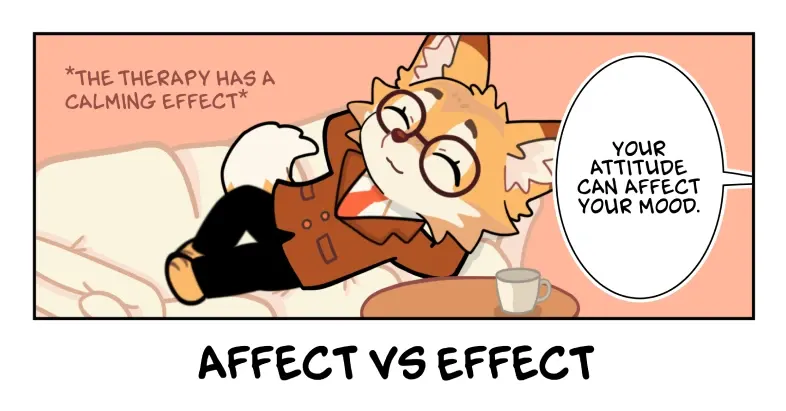
- Your attitude can affect your mood.
- The new regulations will affect all small businesses.
- His opinion shouldn’t affect your decision.
- My low grade will affect my scholarship.
- The medicine should affect your symptoms quickly.
- The scandal did not affect her reputation.
- Does social media affect mental health?
- A lack of sleep can negatively affect your concentration.
- The storm is expected to affect coastal areas.
- The new CEO will affect the company’s future.
- This news will deeply affect my family.
Examples of Effect (Noun Usage)
As a noun, effect means the result or consequence of an action.
- The new policy had a positive effect on productivity.
- His speech made a lasting effect on the audience.
- The medicine had an immediate effect on his pain.
- We are studying the long-term effects of the treatment.
- The special effects in the movie were amazing.
- What was the effect of her sudden departure?
- The protest had no effect on the government’s decision.
- He worked hard to achieve a specific effect.
- The changes will have a ripple effect throughout the organization.
- Her words had a powerful effect on me.
- The therapy has a calming effect.
- The drug’s side effects are listed on the label.
- The new law will be in effect starting next month.
- You can see the effect of the paint on the wall.
- The domino effect was a good example of the results.
Side-by-Side Comparison
To make the difference between affect and effect even clearer, let’s compare them directly. Comparing them side-to-side helps many students understanding how they convey rically different meanings.
- Affect = action (verb): You affect something. It’s what you do.
- Effect = result (noun): Something has an effect. It’s the outcome.
Think of it as a cause-and-effect relationship. The cause is the action (affect), and the consequence is the result (effect).
How to Practice Using the Difference Between Affect and Effect Correctly
While it is really simple, mastering this distinction takes practice. Here are some simple methods to help you remember the rules.
- Use mnemonics: A simple trick can help. Remember Affect = Action. Or, think of “Cause and Effect” to remember that effect is the end result.
- Try writing exercises: Practice sentences by substituting the words. If you can replace the word with “influence” or “impact” (as a verb), use affect. If you can replace it with “result” or “consequence” (as a noun), use effect.
- Read and underline: When you read articles, books, or news reports, pay attention to these words. Underline or highlight every time you see affect or effect. This helps you see them in context and understand their correct usage.
- Use flashcards and quizzes: Create flashcards with a sentence missing either “affect” or “effect” and try to fill in the blank. You can also find many online quizzes that test your knowledge of this specific grammar rule.
Situations to Understand the Difference Between Affect and Effect
Understanding the difference between affect and effect goes beyond just grammar rules; it’s about context.

When to Use Affect
Use affect when you are talking about an action that changes something. It’s about the process of influencing something.
- Describing an Influence: “The new law will affect everyone in the city.” You are talking about the action of the law’s influence.
- Psychological Usage: In psychology, “affect” refers to a person’s expressed emotions or feelings. For example, a psychologist might say a patient has a “flat affect,” which means they show little to no emotion. This is a very native-level way to speak, but it’s very specific to a professional context.

When to Use Effect
Use effect when you are talking about a result. It’s about the outcome, not the action.
- Highlighting an Outcome: “The new law had a major effect on the city.” You’re talking about the result of the law, not the action itself.
- Scientific Contexts: In science, you would say, “The chemical had no effect on the test results.” You are describing the measurable outcome.
- Special Noun Usages: “Effect” can also mean to “bring about” or “cause” something to happen (as a verb). For example, “The new manager will effect a lot of changes.” This is a more formal and less common usage, but it’s good to be aware of it. However, for most English learners, sticking to the noun rule is the safest and most effective strategy.
Conclusion
Remember the main rule: affect is a verb, effect is a noun. Take some time to practice and you should master using affect and effect quickly. Knowing when to use and stich between affect and effect is an important step towards improving your English communication.
This kind of precise language shows that you pay attention to detail and care about communicating clearly. It not only boosts your fluency but also enhances your credibility, especially in professional or academic environments. Start applying these tips and you’ll quickly see a positive change in your confidence!
Ready to take your English skills to the next level? Explore our courses and find the right program to help you succeed.