Another phrase for “not only” – 20+ Examples
Introduction
How often do you use the phrase “not only” while speaking or writing in English?
It’s a useful phrase, but using it too often can make your sentences sound repetitive. Learning another phrase for “not only” can help your writing sound smoother, more natural, and more engaging.
Whether you are writing an essay, sending an email, or simply trying to improve your English vocabulary, knowing different ways to say “not only” can make a big difference.
Table of Contents
What Is Another Phrase for “Not Only”?
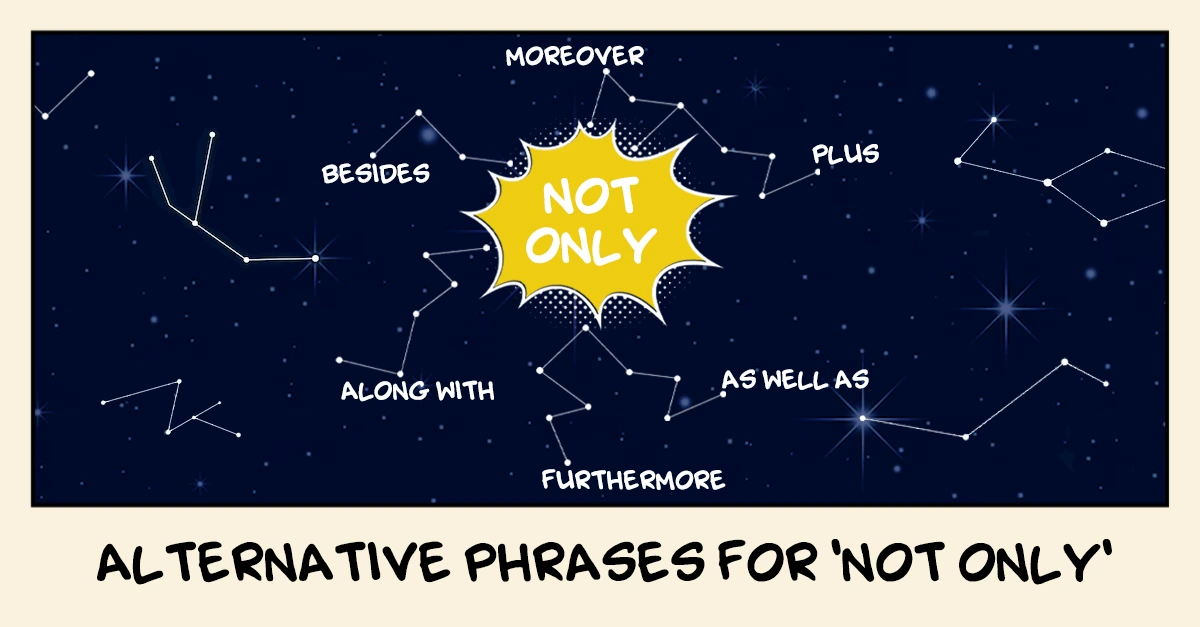
Some common alternatives for “not only” include:
- Moreover
- Besides
- In addition to
- Along with
- Furthermore
- Plus
These phrases help make your writing more natural, varied, and easier to read.
Using different transition phrases also improves sentence flow and helps you avoid repetition.
Why Use Another Phrase for “Not Only”?
Using different phrases instead of “not only” can help you:
- Sounds more natural
- Improve sentence flow
- Avoid repeating the same phrase
- Match formal or casual situations
- Expand your English vocabulary
- Make your writing more engaging
For example, formal writing often uses words like “furthermore” or “moreover,” while casual conversations may use “plus” or “besides.”

20 Other Ways to Say “Not Only”
If you’re looking for another phrase for “not only,” you’ll find plenty of options that fit different writing styles and situations. From formal alternatives like “moreover” and “furthermore” to conversational expressions such as “plus” and “what’s more,” these alternatives can help improve clarity and variety in your writing. Use the table below as a quick reference guide.
| Phrase | Tone | Example Sentence |
| Moreover | Formal | Moreover, the company improved customer service. |
| Furthermore | Formal | Furthermore, the team completed the project early. |
| Besides | Casual/Neutral | Besides helping me, she also gave useful advice. |
| In Addition To | Formal | In addition to teaching, he writes books. |
| Along With | Neutral | She brought snacks along with drinks. |
| Plus | Casual | I cleaned the kitchen, plus I cooked dinner. |
| As Well As | Neutral | He plays football as well as basketball. |
| Not to Mention | Conversational | The hotel was expensive, not to mention crowded. |
| Coupled With | Formal | Strong leadership, coupled with teamwork, led to success. |
| On Top of That | Casual | I missed the bus, and on top of that, it started raining. |
| Additionally | Formal | Additionally, the guide includes practice exercises. |
| Together With | Neutral | She submitted the report together with the presentation. |
| Likewise | Formal | Likewise, students should review grammar rules regularly. |
| What’s More | Conversational | What’s more, the tickets were completely free. |
| To Add To That | Casual | To add to that, the restaurant had great service. |
| Including | Neutral | The package includes books and practice sheets. |
| Supplemented By | Formal | The lecture was supplemented by visual examples. |
| Accompanied By | Formal | The article was accompanied by detailed charts. |
| Not Just | Casual | He’s not just smart but strong too. |
| As an Extra Point | Informal | As an extra point, the course is beginner-friendly. |
Formal Alternatives for “Not Only”
If you are writing academically or professionally, these alternatives work best:
- Moreover
- Furthermore
- Additionally
- In addition to
- Coupled with
Examples
- Furthermore, the research showed positive results.
- In addition to improving grammar, reading also improves vocabulary.
- Moreover, the company expanded internationally.
These phrases are commonly used in essays, reports, and workplace communication.
Conversational Alternatives for “Not Only”
For casual speaking or everyday writing, try these:
- Plus
- Besides
- On top of that
- What’s more
- To add to that
Examples
- Plus, the food was amazing.
- Besides being funny, the movie was inspiring.
- On top of that, we got free dessert.
These phrases sound more relaxed and natural in conversation.
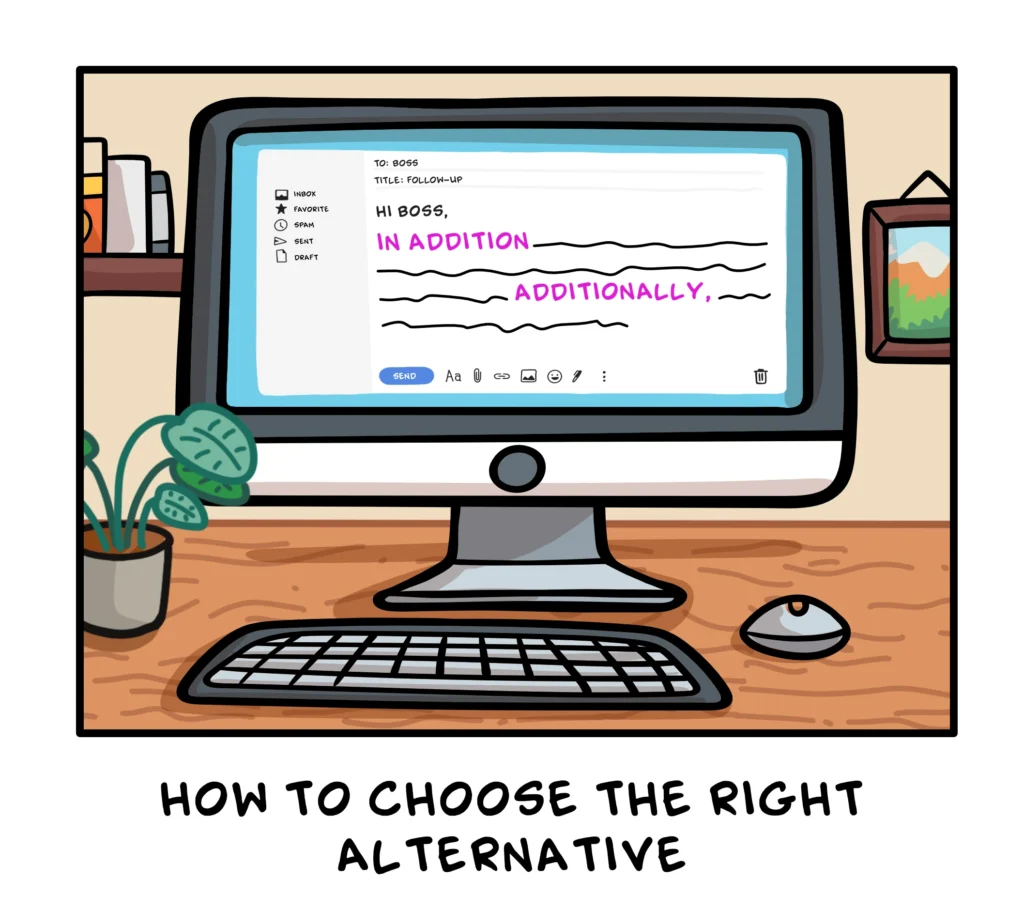
How to Choose the Right Alternative
The best alternative depends on the tone and situation.
| Situation | Best Choices |
| Academic Writing | Furthermore, Moreover |
| Professional Emails | In addition to, Additionally |
| Everyday Conversation | Plus, Besides |
| Storytelling | What’s more, on top of that |
| Presentations | Along with, as well as |
Think about your audience before choosing a phrase.
A formal report and a casual text message should not sound the same.
Common Mistakes to Avoid
1. Mixing Formal and Casual Tone
Incorrect:
“Furthermore, I was tired and plus hungry.”
Correct:
“Furthermore, I was tired and hungry.”
2. Overusing Transition Words
Using too many linking phrases can make writing sound unnatural.
Incorrect:
“Moreover, furthermore, additionally, the event was successful.”
Correct:
“Furthermore, the event was successful.”
3. Using Long and Confusing Sentences
Keep your sentences simple and clear.
Incorrect:
“Besides the fact that he was tired while also hungry and confused, he still attended the meeting.”
Correct:
“Besides being tired, he still attended the meeting.”
When Should You Use These Alternatives?
Different situations call for different phrases.
Academic Writing
Use:
- Furthermore
- Moreover
- Additionally
These sound polished and professional.
Creative Writing
Use:
- What’s more
- Not to mention
- On top of that
These create a more natural rhythm.
Everyday English
Use:
- Plus
- Besides
- Along with
These are easy and conversational.
Improve Your Writing Further
Learning transition phrases is one of the best ways to improve your English writing skills.
You can also explore:
- Figurative Language Examples:
https://englishlanguageandliterature.com/figurative-language-example/ - Adverb Examples:
https://englishlanguageandliterature.com/50-adverb-examples/
These guides can help you build a stronger vocabulary and improve sentence structure naturally.
FAQs
What can I say instead of “not only”?
You can use phrases like “moreover,” “besides,” “in addition to,” and “plus” depending on the tone and context.
What is a formal alternative to “not only”?
Formal alternatives include:
Furthermore
Moreover
Additionally
In addition to
These work well in essays and professional writing.
Is “besides” the same as “not only”?
Not exactly, but “besides” can sometimes replace “not only” in casual writing and conversation.
Can I use “plus” instead of “not only”?
Yes, “plus” is a simple and casual alternative that works well in informal situations.
Final Thoughts
The key is choosing the right phrase for the right situation. Simple alternatives like “plus” work well in conversation, while formal phrases like “furthermore” fit academic or professional writing better.
Using a variety of transition phrases also improves readability and helps your writing flow smoothly.
Quick Challenge
Which sentence sounds more natural to you?
A) “Not only was the movie long, but it was confusing too.”
B) “Besides being long, the movie was confusing too.”
Try creating your own sentence using one of the alternatives from this guide.
References
https://owl.purdue.edu/owl/general_writing/mechanics/transitions_and_transitional_devices/transitional_devices.html
https://englishlanguageandliterature.com/figurative-language-example/
https://englishlanguageandliterature.com/50-adverb-examples/