100 of the Most Common Adjectives for Emotive English
Struggling to describe things clearly in English? Learning the most common adjectives is one of the fastest ways to improve your fluency, vocabulary, and confidence.
Adjectives are essential in English because they describe nouns and add detail, emotion, and clarity to your communication. Whether you’re speaking, writing, or storytelling, adjectives help you express ideas more vividly and naturally.
Table of Contents
For example:
- “It was a day” → basic
- “It was a beautiful, sunny day” → clear and engaging
Mastering common adjectives will help you sound more like a native speaker and communicate more effectively in any situation.
In this guide, you will:
- What adjectives are and why they matter
- Where adjectives are used in real life
- 100+ most common adjectives with meanings and examples
- Types of adjectives (size, emotion, appearance, etc.)
- How to practice adjectives effectively
- Common mistakes to avoid
What Are Adjectives?
An adjective is a word that describes a noun or pronoun. It gives more information about:
- Size (big, small)
- Emotion (happy, sad)
- Appearance (beautiful, ugly)
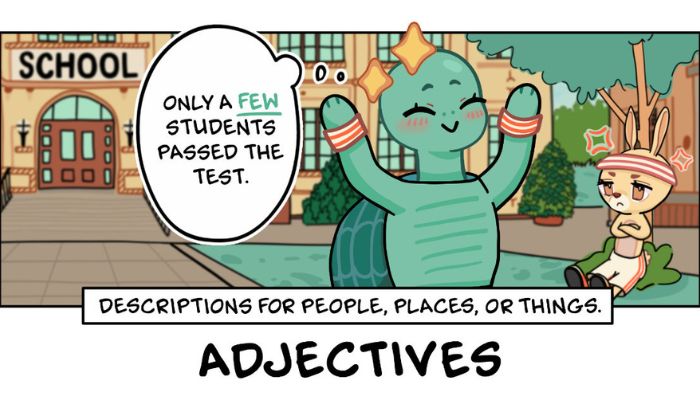
- Quantity (many, few)
- Time (early, late)
Using adjectives correctly makes your English:
- More descriptive
- More engaging
- More precise
Where Are Adjectives Used?
Everyday Conversations
You use adjectives daily to describe people, places, and experiences.
Examples:
- “The movie was boring.”
- “She is a funny person.”
- “The food was delicious.”
Writing (Academic & Creative)
Adjectives improve clarity and make your writing more impactful.
Examples:
- “It was a long, difficult journey.”
- “The results were significant.”
Media and Advertising
Adjectives make messages persuasive and appealing.
Examples:
- “Fresh and healthy food”
- “New and improved features”
100+ Most Common Adjectives (With Meanings & Examples)
1. Adjectives of Size and Shape
| Adjective | Meaning | Example |
| Big | Large in size | The big dog barked loudly. |
| Small | Little in size | She carried a small bag. |
| Tall | High in height | He is a tall athlete. |
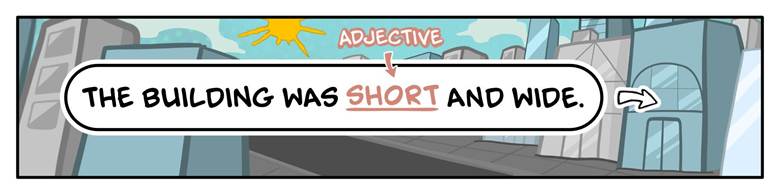
| Short | Not tall | The tree is short. |
| Long | Great length | We had a long trip. |
| Round | Circular shape | The table is round. |
- Adjectives of Emotions and Feelings
| Adjective | Meaning | Example |
| Happy | Feeling joy | She felt happy today. |
| Sad | Feeling unhappy | The sad song made me cry. |
| Angry | Feeling upset | He was angry at the delay. |
| Excited | Full of enthusiasm | The children were excited about the trip. |
| Brave | Showing courage | The brave soldier helped others. |
| Tired | Needing rest | I feel tired after work. |
- Adjectives of Appearance
| Adjective | Meaning | Example |
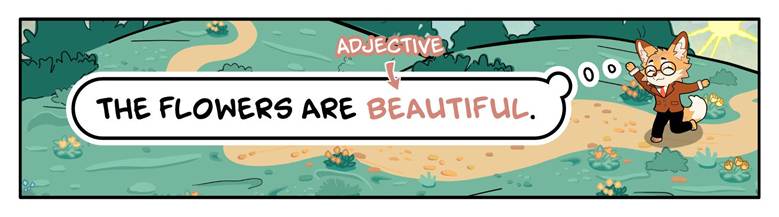
| Beautiful | Very attractive | The sunset was beautiful. |
| Ugly | Not attractive | The ugly monster scared the kids. |
| Handsome | Good-looking (men) | He is a handsome actor. |
| Pretty | Attractive (women/children) | She wore a pretty dress. |
| Clean | Not dirty | The room is clean. |
| Dirty | Not clean | His shoes are dirty. |
- Adjectives of Quantity and Quality
| Adjective | Meaning | Example |
| Many | Large number | Many people attended. |
| Few | Small number | Few students passed. |
| Good | High quality | That’s a good idea. |
| Bad | Low quality | The service was bad. |
| New | Recently made | I bought a new phone. |
| Old | Existing for long time | The house is old. |
- Adjectives of Time and Speed
| Adjective | Meaning | Example |
| Young | Early in life | The young boy smiled. |
| Fast | High speed | She is a fast runner. |
| Slow | Low speed | The bus is slow. |
| Late | After expected time | He was late. |
| Early | Before expected time | We arrived early. |
How to Practice Using Adjectives
Use Flashcards
Match nouns with adjectives (e.g., car → fast, new, expensive)
Write Daily Descriptions
Describe your surroundings using 3–5 adjectives.
Play Vocabulary Games
Challenge yourself to describe objects in detail.
Read and Learn
Notice how adjectives are used in books and articles.
Common Mistakes to Avoid
- Don’t overuse adjectives (too many in one sentence)
- Don’t use subjective adjectives in formal writing (beautiful, amazing)
- Don’t repeating the same adjectives (good, nice)
Instead, use variety: excellent, outstanding, impressive
Real-Life Uses of Adjectives
Everyday Life
- “The weather is amazing.”
- “I had a busy day.”
Professional Settings
- “The results are significant.”
- “It was a successful project.”
Creative Writing
- “A dark, mysterious forest”
- “A bright, cheerful morning”
Looking Ahead
Learning the most common adjectives in English is key to improving your fluency and communication skills. These words help you express ideas clearly, describe emotions and create vivid images in conversation and writing.
Start practicing daily, and you’ll quickly notice:
- Better vocabulary
- More confidence
- More natural English
Discover powerful adverbs that can take your English fluency even further in our related guide.
Adjective Quiz: Test Your Skills
Choose the Correct Adjective
1. She is a very ______ student.
a) intelligence
b) intelligent
c) intelligently
2. The movie was really ______.
a) interest
b) interesting
c) interested
3. This is a ______ problem.
a) difficulty
b) difficult
c) difficultly
Identify the Adjective
4. The beautiful garden attracted many visitors.
5. He wore a clean shirt.
6. The fast car won the race.
Discover our online English courses and take the next step in your learning journey.
References:
- https://englishlanguageandliterature.com/how-to-build-a-daily-routine-for-learning-english-online/
- https://englishlanguageandliterature.com/words-to-describe-how-you-feel/words-to-describe-how-you-feel/
- https://www.grammarly.com/blog/parts-of-speech/adjectives-modify-nouns/
- https://englishlanguageandliterature.com/positive-descriptive-words/
- https://englishlanguageandliterature.com/our-courses/