25+ Common Grammar Mistakes in English With Corrections
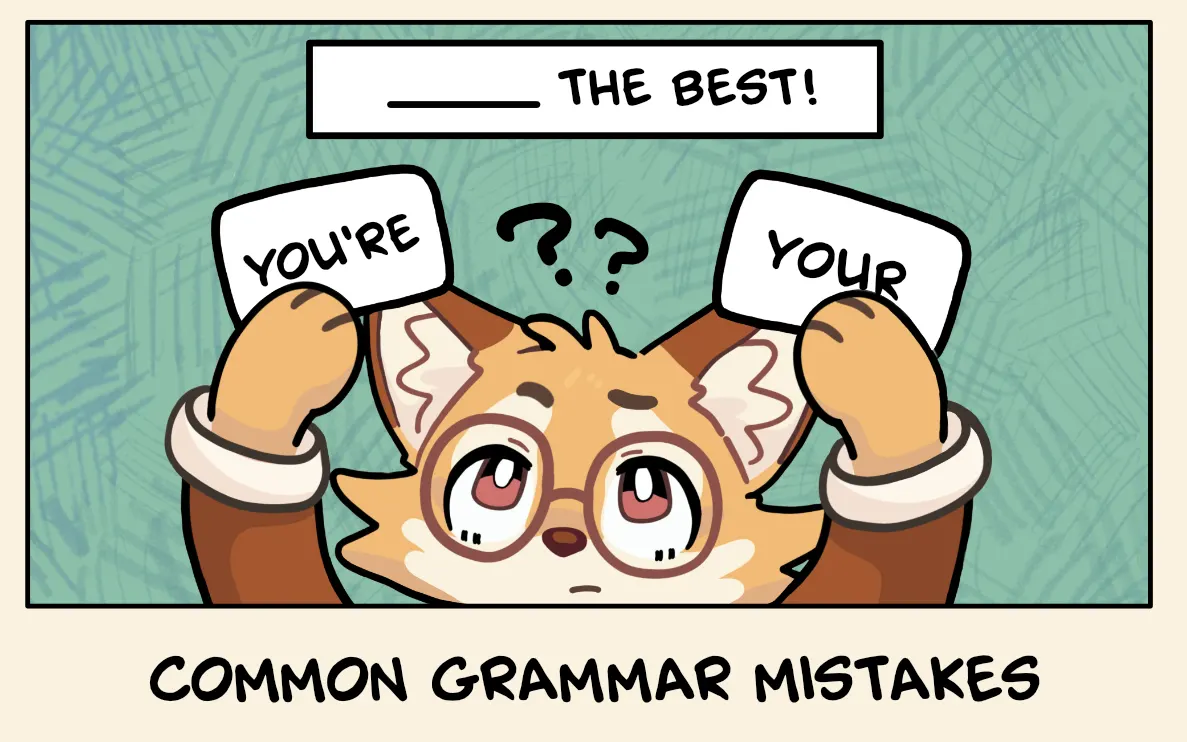
Have you ever sent a message only to notice a grammar mistake? You might have written “Your the best” instead of “You’re the best.” Or “I doesn’t want it” instead of “I don’t want it .” You don’t need to panic. Both learners and native speakers slip up with common grammar mistakes.
Just like any other mistake, it’s just a lesson on what you can improve on. Once you are able to notice these mistakes, fixing and avoiding them becomes just as easy.
This guide will help you with cleaner English communication whether you’re writing business emails, preparing for English proficiency exams, or just want to speak confidently.
Want more personalized learning? Our English for Work course can help with your grammatical struggles in your professional career.
Table of Contents
What are English Grammar Mistakes?
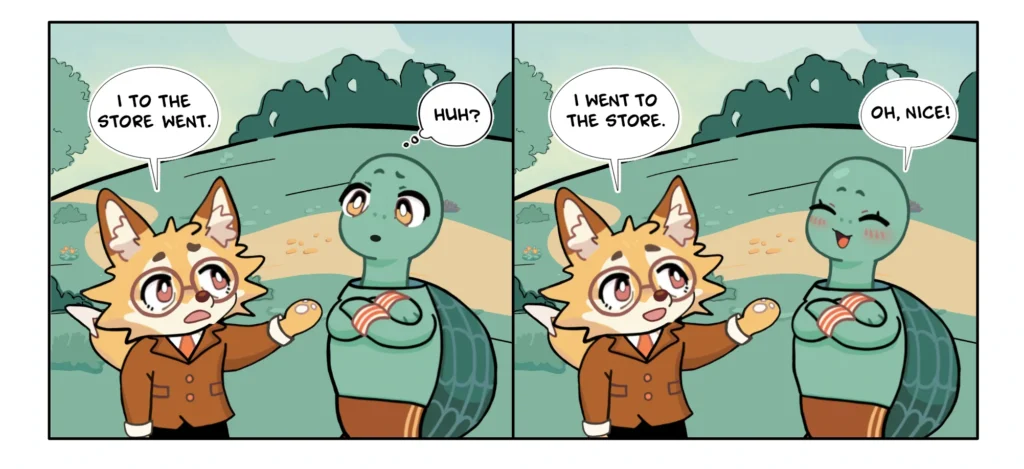
A grammatical mistake occurs when the structural rules of English are broken. These mistakes show up in both speaking and writing, sometimes even when you don’t realize it.
For example:
- Speaking: “Me and him is going.”
- Writing: “Its raining heavily.”
While both sentences sound understandable, they’re incorrect.
- Speaking: “Him and I are going.”
- Writing: “It’s raining heavily.”
These sentences sound much better.
A. Minor Slips vs. Recurring Errors
Mistakes are not created equally.
- Minor slips: Accidental typos that most readers overlook.
- Recurring errors: Consistent patterns of mistakes due to misunderstanding. These hurt your credibility and fluency.
B. Why do grammatical errors continuously happen?
- Confusion: English grammar rules have many exceptions (e.g., mouse → mice instead of mouses)
- Use of different rules from other languages
- Contextual differences (American vs. British English rules)
- Habit: once you learn a mistake, you keep on repeating it
- Speed: speaking or writing too fast can make you slip up
Why does Avoiding Grammar Errors Matter?
Imagine you are trying to have a conversation in your native tongue. If you make the occasional mistake, people can still understand you. Keep on making grammatical errors and you sound incoherent.
- Clarity: Correct grammar makes your message clear the first time.
- Professional success: Having “I has experience” in your CV can cost you the job. Employers judge your attention to detail through your grammar.
- Exam scores: Grammar is a major part of the scoring criteria for IELTS, TOEFL, and SAT. Constant grammatical errors can cost you chances for a high score.
- Credibility: Would you trust medical advice from someone who writes, “You health is safe”? Grammar impacts how clear and trustworthy your message is.
For more on why grammar is significant for fluency in exams, business, and everyday conversations, Cambridge English is an excellent free resource to use
15 Types of Grammatical Mistakes with Examples
Here are the most common types of English grammatical errors and their corrections. Each with a quick explanation and examples with fixes.
1. Verb Tense Mistakes
Mixing up tenses can mess with the timeline of your message.
- Wrong: I have seen her yesterday.
- Right: I saw her yesterday.
2. Subject-Verb Agreement
The subject and verb must match up within your sentence. This rule is important for you to master.
- Wrong: She go to school every day.
- Right: She goes to school every day.
3. Pronoun Mistakes
Incorrect pronoun use is a common grammar mistake that even native speakers make as well.
- Wrong: Me and him are friends.
- Right: He and I are friends.
4. Articles (a, an, the)
Using the wrong article or missing it entirely is pretty common as minor and recurring mistakes.
- Wrong: She is teacher.
- Right: She is a teacher.
6. Confused Words (Homophones)
Homophones are words that sound alike but have different meanings. These mixups are common grammar mistakes in written English.
- There / their / they’re
- Wrong: Their going to school.
- Right: They’re going to school.
- Than / then
- Wrong: You have more then me.
- Right: You have more than me.
- Your / you’re
- Wrong: Your the best.
- Right: You’re the best.
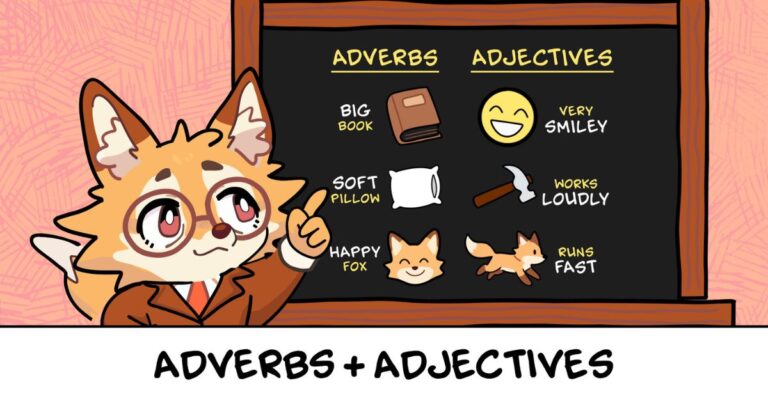
7. Adjective vs. Adverb
Use adjectives to describe nouns and use adverbs to describe verbs.
- Wrong: She runs quick.
- Right: She runs quickly.
8. Sentence structure (Word Ordering)
Subject–Verb–Object is the sentence ordering in English. The sentence sounds unnatural when the order is mixed up.
- Wrong: Always she is late.
- Right: She is always late.
9. Double Negatives
While double negatives make a stronger negative in other languages, this is not the case in English.
- Wrong: I don’t know nothing.
- Right: I don’t know anything.
10. Punctuation mistakes
Punctuation mistakes may just make sentences hard to read or change the entire meaning.
a. Misusing apostrophes
- Wrong: Its raining.
- Right: It’s raining.
b. Overusing commas
- Wrong: I like apples, and, bananas, and, oranges.
- Right: I like apples, bananas, and oranges.
c. Run-on sentences
- Wrong: I love reading it makes me happy.
- Right: I love reading because it makes me happy
11. Dangling Modifiers
These can make it confusing who or what the indented subject is.
- Wrong: Running fast, the gate was missed.
- Right: Running fast, he missed the gate.
12. Comparative & Superlative Errors
Using the wrong form of an adjective/adverb leads to awkward phrasing or even different meanings.
- Wrong: She is prettiest than her sister.
- Right: She is prettier than her sister.
13. Question Word Ordering
Questions follow a different structure than statements.
- Wrong: You are coming when?
- Right: When are you coming?
14. Capitalization Errors
Forgetting or unnecessarily capitalizing words is a common mistake that both learners and native writers can make.
- Wrong: i love english.
- Right: I love English.
Useful Tips to Avoid the Same Mistakes
Constant feedback is important when practicing avoiding the same grammar mistakes. These habits can help:
- Read daily: articles, books, and any texts trains you on correct grammar
- Write daily: just a few paragraphs or sentences a day creates a habit
- Track your common mistakes: make note of mistakes and correct them
- Use reliable resources: fixing your grammar using AI without reviewing doesn’t help you learn
- Practice contextually: learning correct grammar for your English goals sticks with you faster
If you want to improve your professional grammar with a qualified English language teacher, our English for Business course is designed to help you in a structured, supportive manner.
Quiz to Test Your Grammar Knowledge
Which completes the sentence?
They ___ him last week.
- meeted
- have meet
- met
- mets
You can also test your grammar more using the free Oxford online English Grammar Test.
References
- Wrong: She didn’t went to class. → She didn’t go to class.
- Wrong: By the time I arrived, he eats dinner. → By the time I arrived, he had eaten dinner.