50+ Personification Examples With Meanings for Writing and Literature
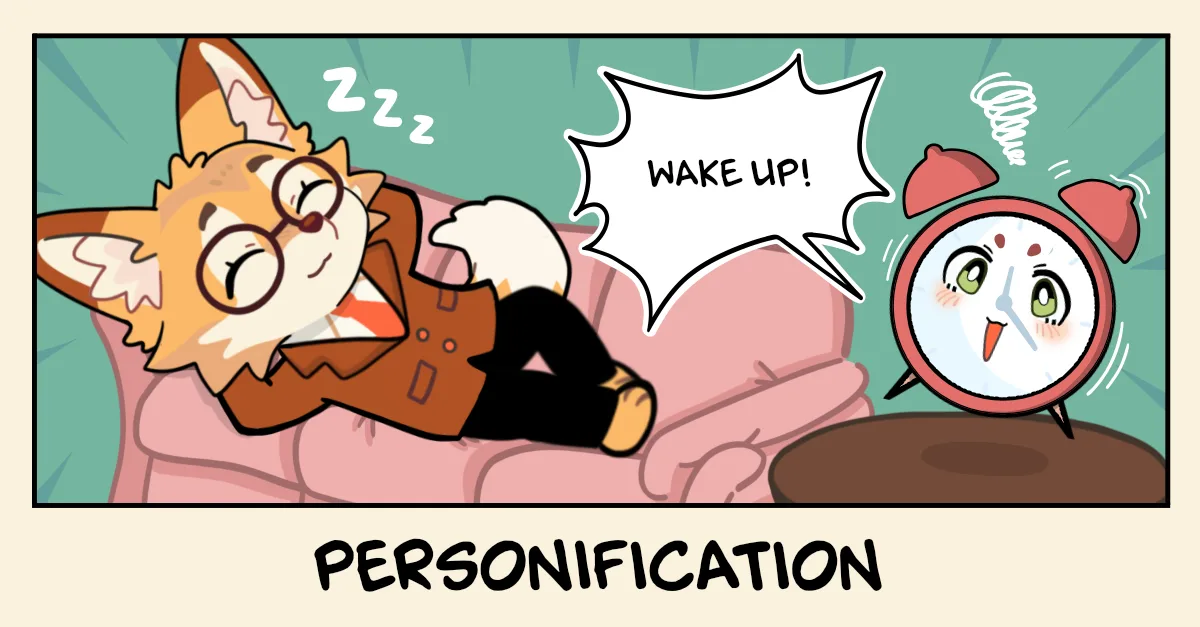
Have you ever heard someone say: “the trees danced in the wind”? Trees cannot literally dance, so at first this might sound strange. However, the speaker is using personification.
Personification is a form of figurative language that gives human qualities to non-human things. Animals, plants, objects, and even abstract ideas can all be personified.
But how do you use personification effectively? This guide will walk you through creative personification examples, explain where personification is commonly used, and help you learn how to use it naturally in your own writing.
Table of Contents
Where Are Personification Examples Commonly Used?
Personification Examples in Literature
Personification is a powerful literary device that helps writers create vivid imagery and emotional depth, much like metaphors and similes. Because of this, it is commonly used in poetry and novels.
Romantic poetry often uses personification to express strong emotions. For example, the phrase “the heart yearns” gives the heart a human action to symbolize longing and love.
Classic authors such as William Shakespeare and many modern fiction writers frequently use personification to make scenes feel more emotional and memorable.
Personification Examples in Everyday Speech
Personification also appears in everyday conversation to make speech more colorful and expressive.
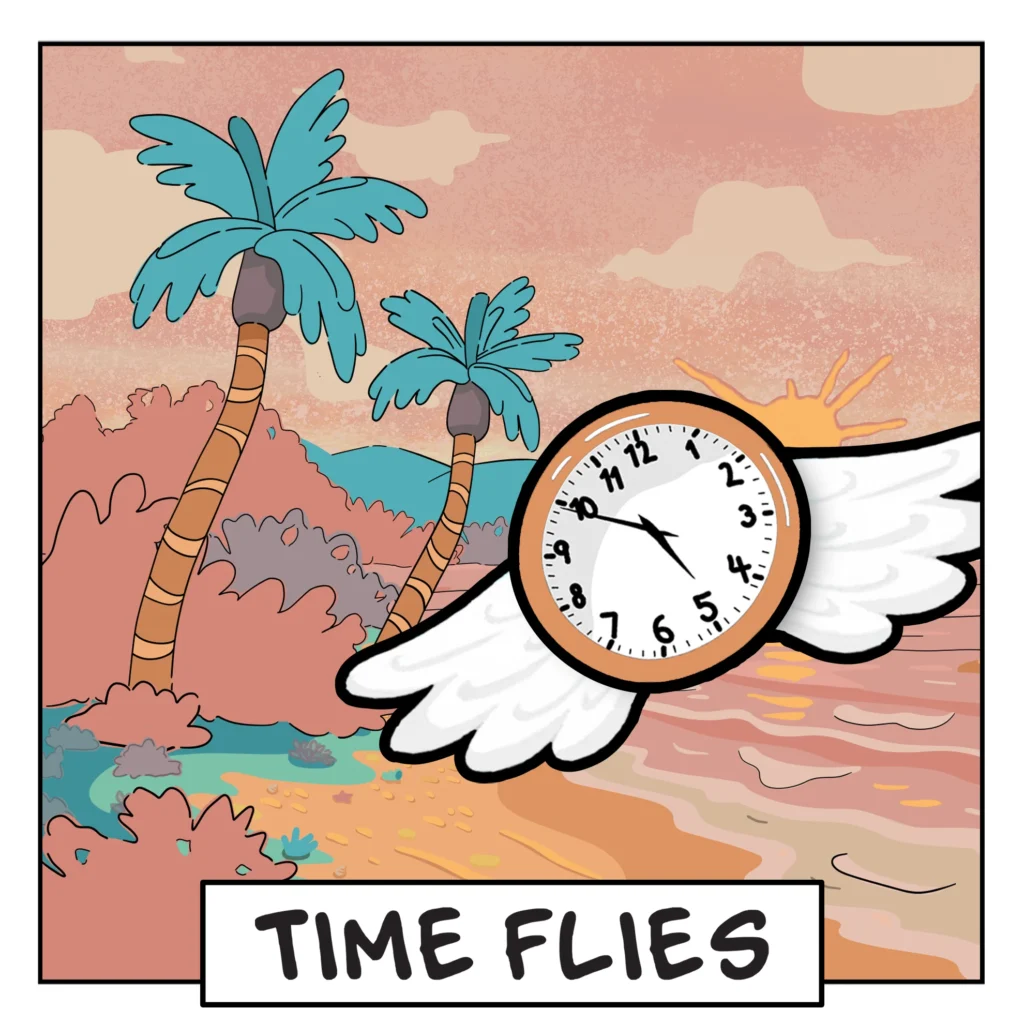
Common phrases like “time flies” or “opportunity knocked” use personification naturally in casual language. Even though these expressions are figurative, most people instantly understand their meaning.
Personification Examples in Media and Advertising
Advertising often uses personification to create memorable slogans and mascots.
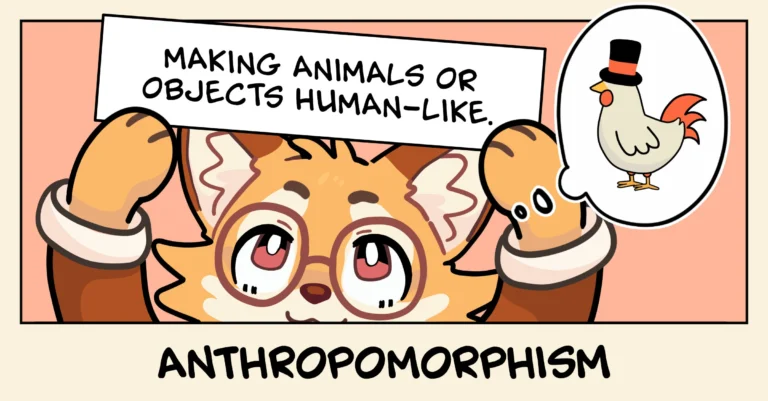
Many brands use anthropomorphism, which is similar to personification but gives human qualities to non-human things in a more literal way. Mascots based on animals or food products are common examples.
Personification in marketing helps brands appear relatable, friendly, and memorable.
Personification Examples in Art and Music
Music frequently uses personification in lyrics to express emotion and strengthen storytelling.
For example, the song Blackbird by The Beatles uses a blackbird symbolically to communicate hope and freedom during the civil rights movement in the United States.
Artists and songwriters often use personification because it creates emotional imagery that listeners can easily connect with.
50+ Creative Personification Examples With Meanings
Nature Personification Examples
| Phrase | Meaning |
| “The wind whispered through the trees” | The wind blew softly through the trees |
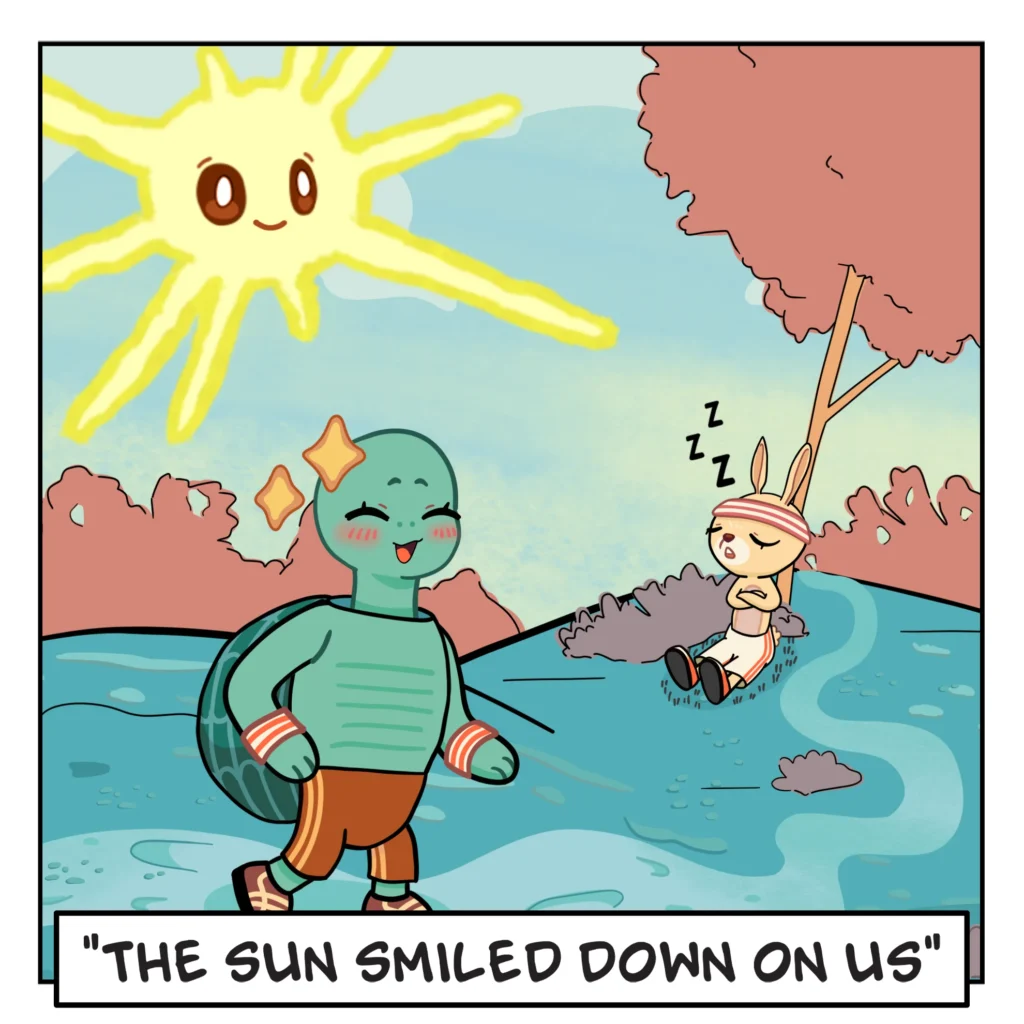
| “The sun smiled down on us” | The sunlight felt warm and pleasant |
| “The bushes danced in the wind” | The bushes moved with the wind |
| “The ocean roared with might” | The ocean moved aggressively and loudly |
| “The cat was a lonesome thief” | The cat moved around quietly and alone |
| “The dog cheered when I returned” | The dog seemed excited and happy |
| “The fish shivered at my sight” | The fish appeared frightened |
| “The bird complained all morning” | The bird kept making loud noises |
| “The trees clawed at me” | The branches scratched or hit me |
| “The storm was furious” | The storm was extremely intense |
| “The killer whales leaped in joy” | The whales jumped energetically around us |
| “The sun is killing me” | The heat is extremely uncomfortable |
Object Personification Examples
| Phrase | Meaning |
| “The alarm clock screamed at me” | The alarm was very loud |
| “The car groaned as it climbed the hill” | The car made struggling noises |
| “The hills have eyes” | Someone may be watching from the hills |
| “The school alarms screeched” | The alarm sounded harsh and loud |
| “The glass flew through the air” | Someone threw the glass |
| “My face was greeted by the pole” | I accidentally hit the pole |
| “This scale hates me” | The scale showed disappointing results |
| “The tear is hurting the wall” | The tear is damaging the wall |
| “The spring pounced at me” | The spring launched toward me suddenly |
| “The heart yearns” | I deeply long for someone |
| “The internet died” | The internet stopped working |
| “The chair gave out” | The chair broke or collapsed |
Abstract Idea Personification Examples
| Phrase | Meaning |
| “Love is blind” | Love can ignore flaws |
| “Fear stalked the battlefield” | Everyone felt afraid |
| “Time flies” | Time passed quickly |
| “Hope burns brightly” | People felt strong hope |
| “A living fantasy” | Something unbelievable happened |
| “Dread crawls inside you” | You slowly begin to feel fear |
| “My nerves abandoned me” | I became frightened or anxious |
| “My hunger is killing me” | I am extremely hungry |
| “Joy spreads during the holidays” | Many people feel happy during the holidays |
| “Sadness lingered in the room” | The sadness remained for a long time |
| “Spirits were lifted” | People felt happier |
| “The future is calling” | New opportunities are approaching |
Funny or Everyday Personification Examples
| Phrase | Meaning |
| “My phone is being stubborn today” | My phone is not working properly |
| “The cookies are calling my name” | I am craving cookies |
| “That painting hurts my eyes” | The painting looks unpleasant |
| “These jobs are killing me” | The work is exhausting |
| “Food makes joy more approachable” | Food improves my mood |
| “Killing time” | Wasting time |
| “Feeding my boredom” | Making boredom worse |
| “Opportunity knocked” | A new opportunity appeared |
| “My flowers were begging for water” | The flowers desperately needed water |
| “His hometown is expecting his return” | The people there want him to come back |
| “His book flew off the shelves” | The book sold very quickly |
| “The camera loves me” | I look good in photos |
How to Practice Using Personification Correctly
Personification is a valuable creative writing technique, but it becomes more effective with practice.
One of the best ways to learn personification is by reading poetry and identifying examples within the text. Poems are especially useful because they often rely heavily on imagery and emotion.
You can also try writing exercises where you assign human emotions or actions to plants, animals, objects, or abstract ideas such as love, fear, or hope.
Once you feel comfortable, challenge yourself to turn these ideas into full characters or scenes.
Situations Where You Would Use Personification
Personification is most effective when you want your writing to feel emotional, vivid, or imaginative.
Appropriate Uses of Personification
- Poetry, novels, and creative writing: Personification creates stronger imagery, emotion, and atmosphere.
- Advertising and marketing campaigns: Personification can help create memorable slogans and mascots.
- Speeches and storytelling: It keeps audiences engaged and makes ideas easier to remember.
- Songs and lyrics: Songwriters often use personification to communicate emotion more effectively.
Inappropriate Uses of Personification
- Academic, scientific, or technical writing: Figurative language can reduce precision and clarity.
- Legal or professional documents: Personification may confuse readers or sound unprofessional.
- Situations requiring literal accuracy: Reports, instructions, and educational explanations often work better with direct language.
Frequently Asked Questions
What is personification?
Personification is a type of figurative language that gives human qualities, emotions, or actions to non-human things.
What are some simple personification examples?
Examples include:
- “The wind whispered.”
- “Time flies.”
- “The stars danced in the sky.”
- “Opportunity knocked.”
What is the difference between personification and anthropomorphism?
Personification briefly gives human qualities to non-human things in a figurative way. Anthropomorphism makes non-human things behave like actual humans, often as full characters.
Why is personification important in writing?
Personification helps writers create vivid imagery, emotional depth, and more engaging descriptions.
Conclusion
To recap, personification is a form of figurative language that gives human characteristics to non-human things. It helps create memorable sentences in novels, poems, songs, speeches, and advertisements.
Whether you are writing creatively or simply trying to make your language more expressive, personification can make your words feel more vivid and emotional.
Now that you have seen these personification examples, try creating your own! Share your ideas in the comment. Which examples are your favorites?