50 Onomatopoeia Examples That Embolden Your English
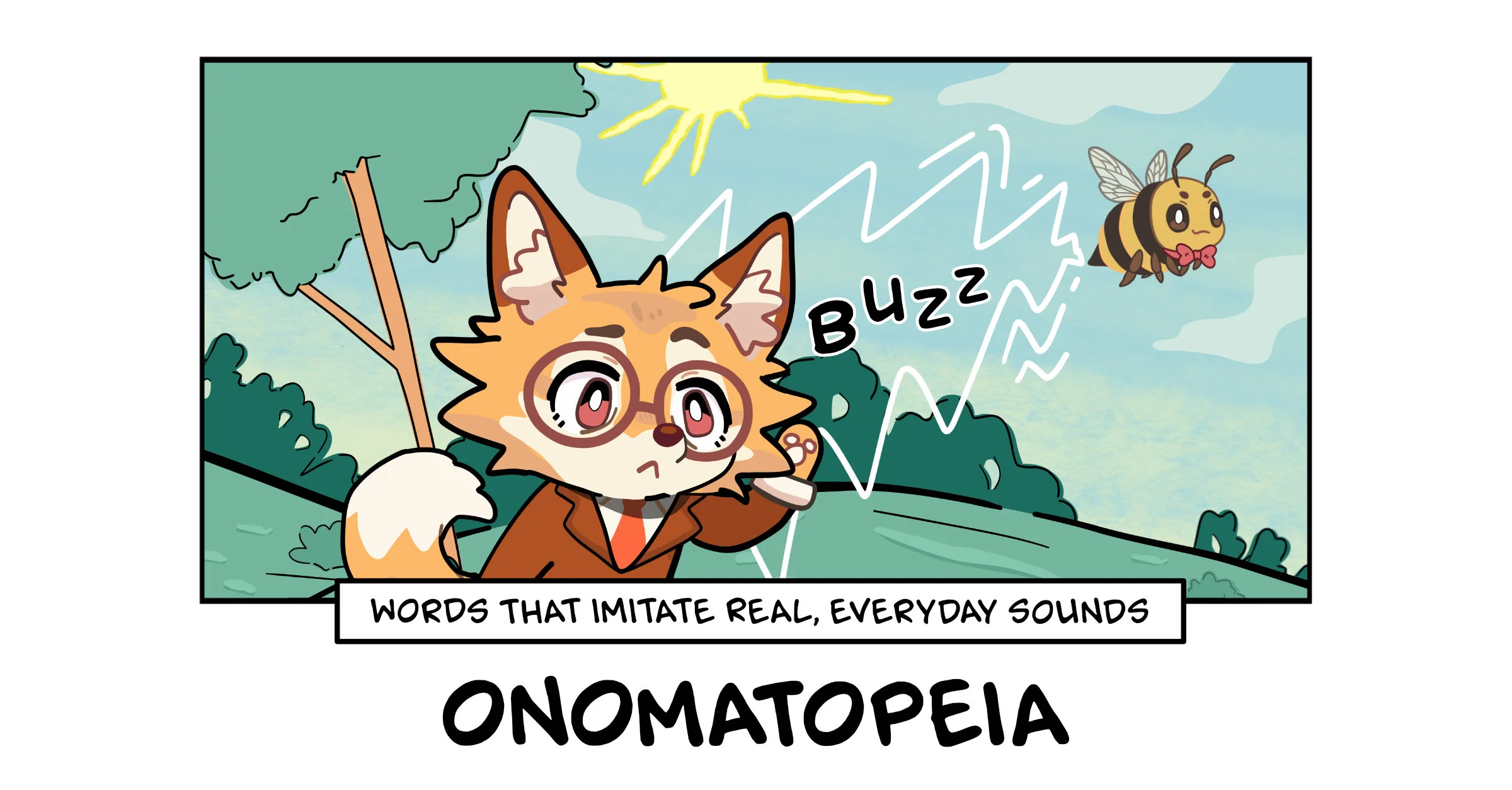
You may have seen people use or write words that represent certain sounds and noises in nature and beyond. Words like “crack”, “boom”, and “crunch” are some examples of this.
These words are called onomatopoeia. Onomatopoeia is a way of describing sounds in a simple and effective way, without the need to use a lot of description that bloats a text.
But how do you use onomatopoeia effectively? In this guide, you’ll learn dozens of onomatopoeia through various lists of examples and explore how they’re used.
Table of Contents
In this article, you will be guided through the following points:
Onomatopoeia Examples in Literature
In Children’s books, onomatopoeia is very often used to describe a sound, so that the word count is kept low. Children’s books need to be written as simply as possible, since they are intended for small children just learning to read.
In other forms of literature, such as poetry and novels, onomatopoeia is used to describe more distinct sounds and engage more of the reader’s senses.
Sensory imagery can greatly help capture a reader’s attention, and using onomatopoeia is an easy way to engage a reader’s sense of hearing.
Onomatopoeia Examples in Everyday Speech
During everyday speech, people often use onomatopoeia to describe sounds evocatively. This could be while telling a personal story, mimicking animal noises, or even just describing what something is like.
Onomatopoeia Examples in Media and Advertising
Comic books are well known for their usage of onomatopoeia. Onomatopoeia is especially prevalent in action comic books, like superhero comics, where onomatopoeic words are employed to relay excitement and a sense of danger.
Some onomatopoeic words even become associated with a specific character. One major example of this is “thwip” which is a sound now associated with the superhero Spider-Man.
In advertising, you might also see some examples of onomatopoeia used to aestheticize and describe products. These are most commonly found in food and restaurant advertisements, as a way for companies to make their food seem more appealing.
Onomatopoeia Examples in Academic and Creative Writing
Descriptive essays can use onomatopoeia to help paint a clearer picture of something if sound is prevalent in the subject, such as a location or a media experience. In other creative works, you can use onomatopoeia to create quick rhymes as well as to evoke sensory images.
For example, you might write something like “the dog went ‘woof’ on the roof” as part of your creative work. Using this literary device will help make clearer imagery like this and also engage the audience.
Animal Sound Onomatopoeia Examples
| Word | Meaning |
| “Meow” | The sound that a cat makes |
| “Woof” | The sound that a dog makes |
| “Moo” | The sound a cow makes |
| “Chirp” | Representing some bird noises |
“Squeak” | Rat or other small animal noises |
“Oink” | The sound a pig makes |
“Yip” | The sound that a fox can make |
“Roar” | Vocalization that many large predators make |
“Croak” | Frog sounds |
“Quack” | The sound a duck makes |
Nature Sound Onomatopoeia Examples
| Word | Example |
“Woosh” | Wind noise |
| “Whisper” | Less loud wind noise |
| “Boom,” | Deep resonant sound found in lightning |
| “Rustle” | Leaves clashing against each other |
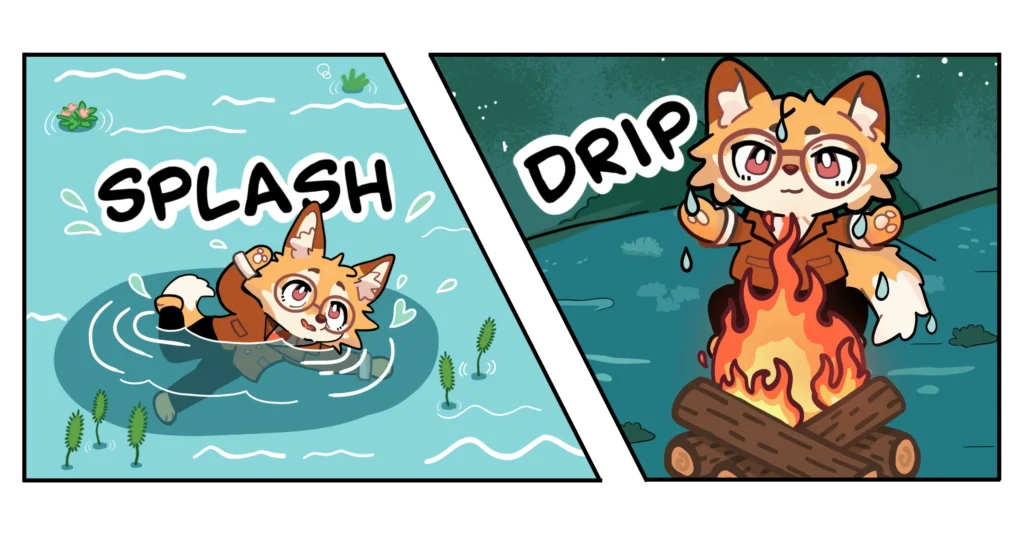
| “Splash,” | Water hitting something |
“Crackle” | Fire burning wood |
“Plop” | Something hitting the water |
“Drip” | Water drops falling |
“Swish” | Wind movement |
“Gurgle” | Someone exhaling underwater |
Impact and Action Onomatopoeia Examples
| Word | Example |
| “Bang” | Gun shot |
| “Crash” | Hitting something that causes a big impact |
| “Thud” | A dull sound of falling on something |
| “Clang” | Something metallic getting hit |
“Kaboom” | Explosion |
“Zoom” | Something going fast |
“Wham” | Sudden and loud explosion |
“Schwing” | The unsheathing of a knife or sword |
“Ratatata” | Machine gun fire |
“Splat” | Hitting or falling on something wet |
Food and Eating Onomatopoeia Examples
| Word | Example |
| “Munch” | Chewing noise |
| “Sizzle,” | Something cooking in a hot pan |
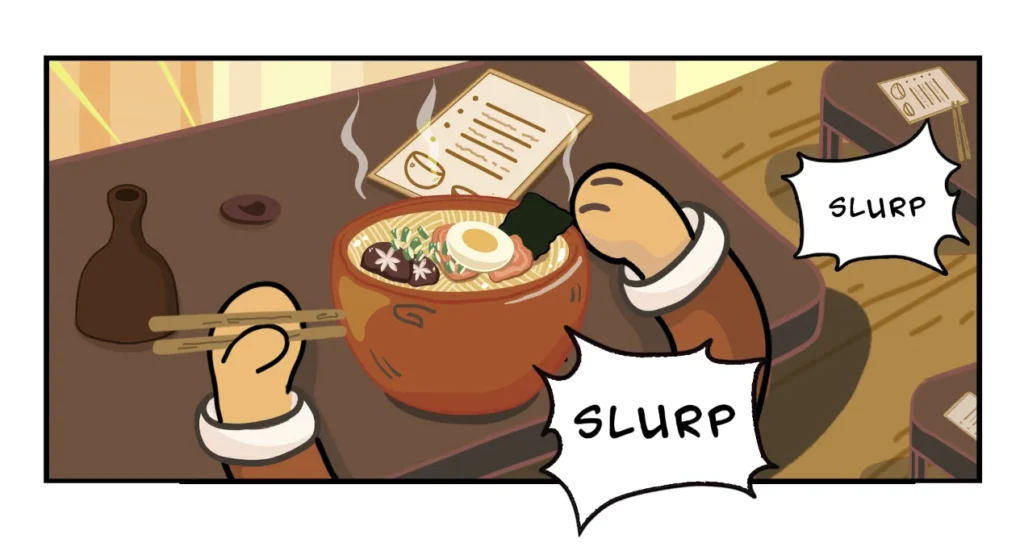
| “Slurp,” | Sucking up a noodle |
| “Crunch,” | Eating something hard |
“Gulp” | Swallowing |
“Glug” | Drinking and swallowing a liquid |
“Pop” | A sudden and sharp sound, sometimes made by bubble gum |
“Fizz” | A noise that a soda drink can make |
“Plop” | Something being dropped on a liquid surface |
“Nom nom” | Eating noises |
Everyday Life Onomatopoeia Examples
| Word | Example |
| “Tick-tock,” | The sound that an old clock makes |
| “Ring” | Phone sound |
| “Click,” | Computer mouse noise when its buttons are pressed |
| “Beep,” | Common sounds related to machines |
“Creek” | A sound commonly produced by old (wooden) doors when opened |
“Vroom” | Car engine starting |
“Ding” | Bell sound |
“Bong” | Larger bell sound |
“Wee-woo” | Emergency vehicle siren, often seen in police cars and ambulances |
“Clank” | Metal hitting metal |
How to Practice Using Onomatopoeia Examples Correctly
Now you might be wondering about the best way to practice your grasp of onomatopoeia. The following should come in handy right off the bat:
Onomatopoeia in written texts: Luckily, one of the easiest ways to see onomatopoeia used correctly is by reading. Most written works will have a little bit of onomatopoeia, but comic books and children’s books are the best if you are just starting to understand the concept.
Onomatopoeia fun through creative writing: Another way to practice onomatopoeia is by writing your own stories and seeing if your onomatopoeia examples make sense to others.
Songs also contain a lot of onomatopoeia, so keep an ear out next time you’re listening to music.
Onomatopoeia is very useful as a device, but it’s not always appropriate to employ. Here are a few rules for appropriate and inappropriate uses of onomatopoeia:
Appropriate Uses of Onomatopoeia
- Creative writing, poetry, and fiction: Onomatopoeia is an important literary device as a way to create sensory imagery and describe sounds without overcomplicating the text. In poetry, you can also use it to establish rhymes.
- Advertising, comics, and marketing: Onomatopoeia is a good way to make moments in comics and advertising feel evocative and engaging. This is especially true in food advertisements.
- Storytelling to engage children or audiences: Children are very easily engaged but also very easily lost; this makes onomatopoeia an important tool in children’s books and other works geared towards children.
Inappropriate Uses of Onomatopoeia
- Academic research papers and technical writing: Technical writing needs to be as exact as possible. Onomatopoeia can make academic writing seem lazy, as it is often used within the context of describing a sound in a nonspecific manner.
- Professional business documents: Similarly to academic papers and technical writing, professional business documents call for specificity, and onomatopoeia is not a very specific way of describing things.
- Situations requiring formal tone and clarity: Onomatopoeia is often seen as a casual way to speak. Using them in a formal context can make it sound like you lack tact and professionalism.
Onomatopoeia is a great way to describe sound, and it’s an essential component of casual English conversations. It’s also a good tool for creating better imagery and engaging your audience in a very simple way.
If you want more practice mastering onomatopoeia or other similar devices, and expand on our lists of examples with fellow learners, you can join one of our English courses on Whatsapp!
Pro tip for fun and interactive learning!
With your fellow learners, set a time frame and create music playlists with songs most likely to contain onomatopoeia examples. The person to summon the most onomatopoeic references in a single playlist will be the winner!
References:
https://www.scribbr.com/rhetoric/onomatopoeia