40+ Common Symbols in Literature and Their Meanings
Have you ever noticed that it always seems to rain during a funeral scene in a movie or book? Or that the villain often wears black, while the hero wears white? These aren’t just random choices by the author. They are deliberate tools used to tell a deeper story.
These tools are called symbols.
In this guide, we will explore over 40 common symbols in literature and explain exactly what they mean. By the end, you will be able to analyze your favorite stories like an expert.
Table of Contents
What Are Common Symbols in Literature?
Before we look at the list, we need to define what we are looking for. A symbol is a person, object, action, or situation that has a literal meaning but also represents something else.
These common symbols in literature act as a secret code. Authors use them to convey complex emotions without having to explain them in long, boring paragraphs.
Nature and Weather: Common Symbols in Literature
Nature is the most frequent source of symbolism. Since everyone experiences weather and seasons, authors know that these symbols will be understood by readers from any culture.
Weather and Celestial Symbols
| Symbol | Common Meaning | Example Context |
| Rain | Sadness, purification, or rebirth | A character walks through rain after a breakup (sadness) or after confessing a crime (washing away sins). |
| Storms | Conflict, chaos, or emotional turmoil | A violent thunderstorm occurs while a family is having a heated argument at dinner. |
| Fog/Mist | Confusion, mystery, or the unknown | The detective wanders through fog, symbolizing his inability to find the truth yet. |
| Sun | Hope, truth, or life | The sun rises immediately after the hero defeats the villain, signaling a new beginning. |
| Moon | Madness, femininity, or change | A character transforms or acts irrationally during a full moon. |
| Stars | Fate, guidance, or distant dreams | Two lovers look at the stars, wondering if they are “destined” to be together. |
| Snow | Coldness, death, or purity | A blanket of snow covers a battlefield, hiding the violence under a pure white sheet. |
| Wind | Change or the presence of spirits | A sudden gust of wind blows open a door just as a character decides to change their life. |
| Rainbow | Hope or a promise | After a long struggle, a rainbow appears to show that the worst is over. |
Plant and Landscape Symbols
| Symbol | Common Meaning | Example Context |
| Forest | Danger, getting lost, or testing oneself | The hero must enter the dark forest to prove their bravery and find their path. |
| Mountain | Obstacles, ambition, or spiritual closeness | Climbing a mountain represents the struggle to achieve a difficult goal. |
| River | The flow of time, journey, or boundaries | Crossing a river often signals that there is no turning back for the protagonist. |
| Desert | Isolation, death, or spiritual testing | A character wanders the desert to find clarity away from society’s distractions. |
| Rose | Love, beauty, (and with thorns) pain | A man gives his lover a red rose but pricks his finger, showing that love hurts. |
| Tree | Life, family, ancestry, or wisdom | An old oak tree stands in the center of a town, representing the community’s history. |
| Water | Life, cleansing, or the subconscious | A character dives into a lake to undergo a spiritual rebirth. |
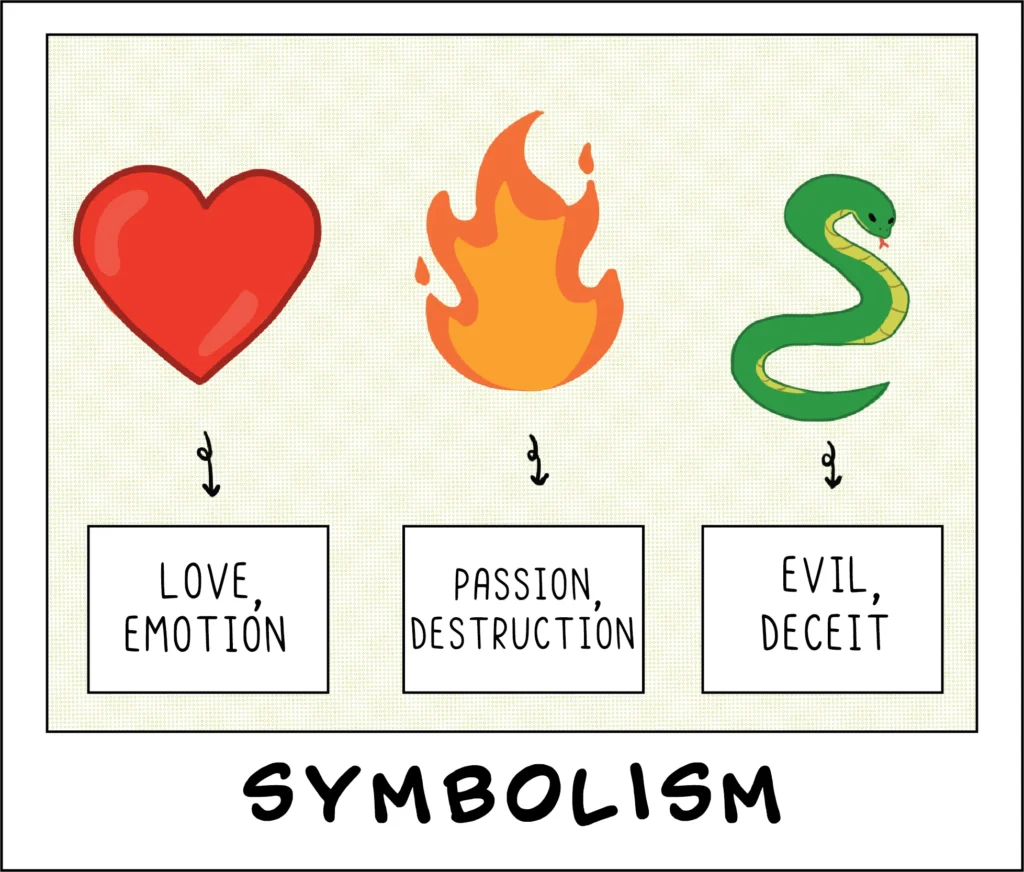
| Fire | Destruction, passion, or anger | A house burns down, symbolizing the collapse of the family inside it. |
| Weeds | Neglect, corruption, or unwanted things | A garden full of weeds shows that the character has let their life fall apart. |
Animals: Common Symbols in Literature
Animals are perfect shortcuts for character traits. This is called objectification. If an author compares a man to a lion, you immediately know he is brave or proud. If he is compared to a snake, you know he is untrustworthy.
| Symbol | Common Meaning | Example Context |
| Lion | Courage, royalty, or power | The king is described as having a “mane” of hair, signaling his dominance. |
| Snake/Serpent | Evil, temptation, or betrayal | A character with “slitted eyes” who speaks in a whisper is likely the traitor. |
| Dove | Peace, purity, or innocence | A white dove flies over the battlefield when the war finally ends. |
| Raven/Crow | Death, bad luck, or prophecy | A crow lands on the windowsill right before a main character dies. |
| Owl | Wisdom or nocturnal mystery | An old mentor figure is often associated with owls or wears large glasses. |
| Lamb | Innocence, sacrifice, or vulnerability | A child is described as a lamb before being sent into a dangerous situation. |
| Wolf | Cruelty, survival, or pack mentality | A group of bandits is described as a pack of wolves hunting their prey. |
| Butterfly | Transformation or the soul | A character changes from shy to confident, symbolized by a butterfly emerging. |
| Dog | Loyalty and faithfulness | The hero’s only companion is a dog who refuses to leave his side. |
| Rat | Filth, betrayal, or poverty | A spy is often referred to as a “rat” for selling out his friends. |
| Spider | Manipulation or entrapment | The villain sits in the center of a “web” of lies and connections. |
Colors: Common Symbols in Literature
Color is one of the most visual ways to use symbolism. We associate colors with feelings instinctively. Red is intense or aggressive; blue is calm.
| Symbol | Common Meaning | Example Context |
| Red | Passion, love, anger, or blood | The femme fatale wears a red dress to show she is dangerous and seductive. |
| White | Purity, innocence, or sterility | The bride wears white to symbolize a new, clean beginning. |
| Black | Death, evil, mystery, or mourning | The villain lives in a black castle, or a widow wears black veils. |
| Green | Nature, envy, or new life | A character is “green with envy” or lives in a lush green valley. |
| Blue | Sadness, calm, or stability | The depressed artist paints everything in shades of blue. |
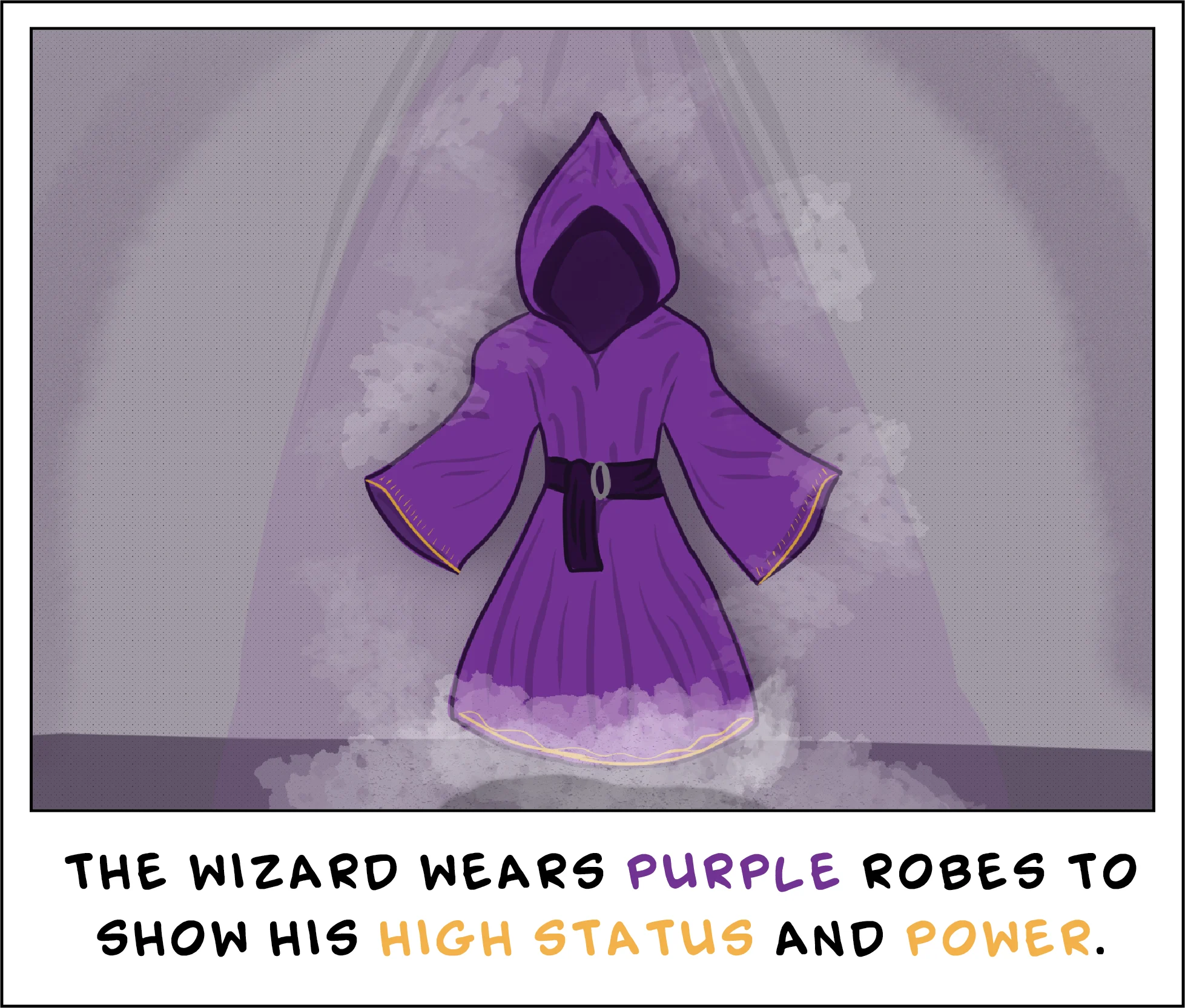
| Purple | Royalty, wealth, or magic | The wizard wears purple robes to show his high status and power. |
| Gold | Wealth, greed, or perfection | The object of everyone’s desire is made of pure gold, blinding them to reality. |
| Gray | Boredom, depression, or lack of clarity | The city is described as gray and foggy, reflecting the hopeless mood of the citizens. |
Objects and Settings: Common Symbols in Literature
Finally, everyday objects can take on huge significance. A mirror is never just a piece of glass in a book; it is a reflection of the truth. A road is never just asphalt; it’s a journey.
| Symbol | Common Meaning | Example Context |
| Mirror | Self-reflection, truth, or vanity | A character looks in a mirror and doesn’t recognize herself, showing an identity crisis. |
| Clock/Watch | The passage of time or mortality | A ticking clock in the background reminds the reader that time is running out. |
| Key | Knowledge, freedom, or secrets | The protagonist finds a key but doesn’t know which door it opens yet. |
| Mask | Hiding the truth or deception | Characters at a masquerade ball hide their true intentions behind masks. |
| Road/Path | The journey of life or destiny | Two roads diverge in a wood, representing a life-changing choice. |
| Window | Freedom (looking out) or entrapment | A character stares out the window, wishing to escape their boring life. |
| Door | Opportunity or transition | Walking through a door symbolizes moving from one stage of life to another. |
| Skull | Death or the fleeting nature of life | Hamlet holding a skull is the ultimate symbol of confronting mortality. |
| Chain | Imprisonment or connection | Even after being freed, the slave feels the “phantom chains” of his past. |
| Ring | Eternity, unity, or cycle | A wedding ring represents a bond that has no beginning and no end. |
| Ladder | Ambition or ascension | A character climbs a social ladder, stepping on others to get to the top. |
Why Do Authors Use Common Symbols in Literature?
You might wonder, “Why don’t authors just say what they mean?”
Authors use common symbols in literature because they allow the reader to interpret the story in their own way.
Symbols add depth. They allow a story to be about two things at once: the plot (what happens) and the theme (what it means).
For example, in Harry Potter, Harry’s scar is a physical mark. But as a symbol, it represents his emotional trauma and his connection to the past. If the author just said, “Harry was traumatized,” it wouldn’t be as powerful as describing the lightning bolt on his forehead.
Conclusion
Understanding common symbols in literature is like putting on a pair of glasses that lets you see the world more clearly. You stop reading just for the plot and start reading for the deeper meaning.
Do you want to practice your literary analysis? Join our English learning WhatsApp group to discuss your favorite books and their hidden meanings with other students!
Think about it: What could the crow symbolize?
“Once again, a crow caught her attention. It was crazy, but it seemed as if they had been following her for days.”
Writer: Adelaide Metcalfe
Designer: Ella Verdine