22 Powerful Anastrophe Examples to Improve Your Creative Writing
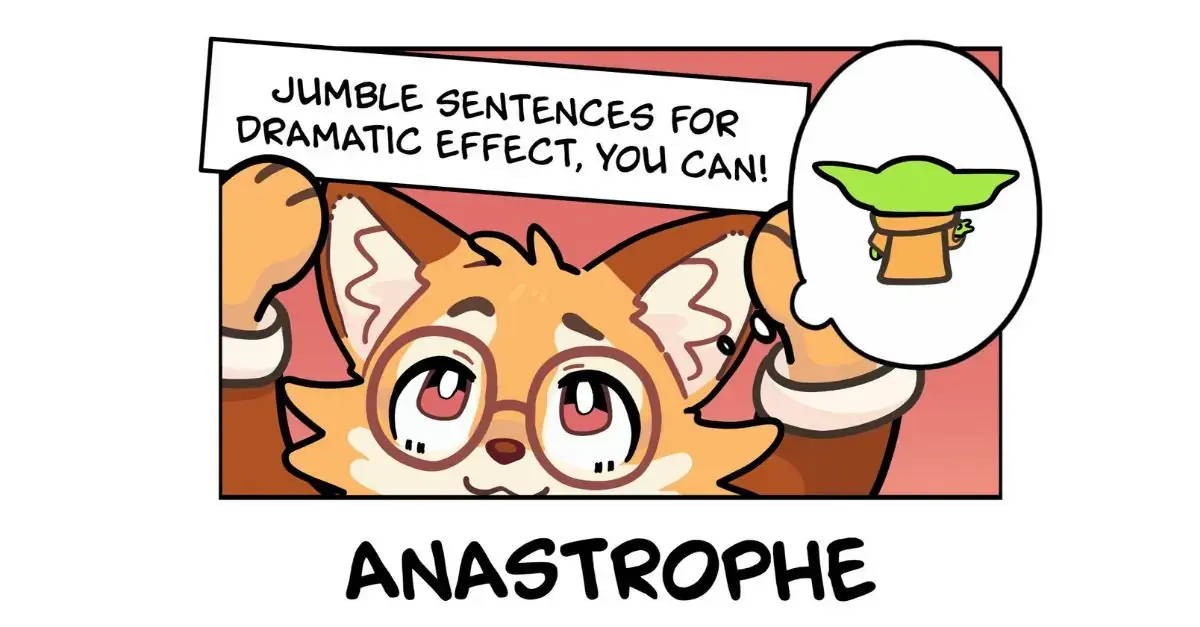
Do you feel like your writing sometimes lacks rhythm, emphasis or originality? One powerful literary technique can instantly transform your sentences: anastrophe.
Anastrophe is a figure of speech where writers change the normal word order of a sentence to create emphasis, rhythm or dramatic effect. Famous writers like William Shakespeare and Edgar Allan Poe used this technique to make their writing more expressive and memorable.
Even today, anastrophe appears in movies, speeches, songs and modern storytelling.
Table of Contents
What Is Anastrophe?
To understand anastrophe, you first need to understand the standard English sentence structure.
Most English sentences follow the SVO pattern:
Subject – Verb – Object
Example:
Subject: The person or thing doing the action.
Verb: The action itself.
Object: The thing receiving the action.
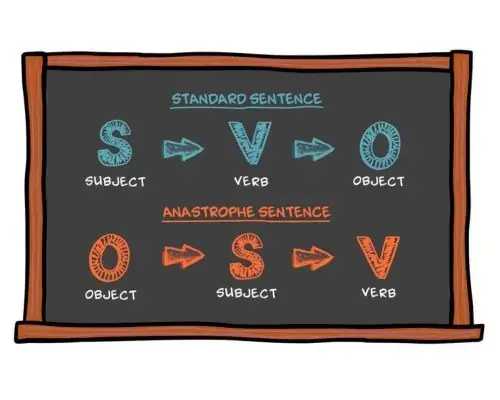
Standard sentence(SVO): You are strong in the Force.
Anastrophe sentence(OSV): Strong in the Force, you are.
This unusual sentence structure became famous through Yoda from Star Wars.
Simple Definition:
Anastrophe is the deliberate inversion of the normal word order in a sentence to create emphasis or stylistic impact.
Instead of placing the subject first, writers may move adjectives, objects or phrases to the beginning of the sentence.
Why Use Anastrophe in Writing? Key Benefits Explained
Changing sentence structure might seem confusing, but in creative writing it serves several powerful purposes.
1. Emphasis on Important Words
The first word of a sentence naturally receives the most attention.
Example:
Standard sentence: The moon was bright.
Anastrophe sentence: Bright was the moon.
Now the focus is on brightness, creating a stronger visual image.
2. Creating Rhythm and Poetic Flow
Poets often use anastrophe to fit rhyme schemes and meters.
For example, Edgar Allan Poe frequently rearranged sentences to maintain the musical rhythm of his poetry.
3. Establishing Character Voice
Anastrophe can also define how a character speaks.
For instance, Yoda uses inverted grammar to sound ancient, wise and mysterious.
This technique instantly tells audiences that the character is different.
Where Is Anastrophe Commonly Used?
You won’t usually hear anastrophe in everyday conversation. If you walked up to a barista and said, “A coffee, I would like,” they might look at you strangely. Instead, it appears in a dramatic or artistic language.
1. Literature and Poetry
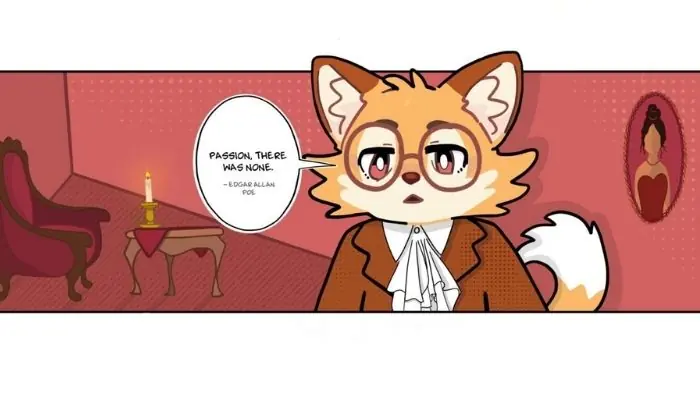
For example, William Shakespeare often rearranged sentence structure in plays like Hamlet. And Edgar Allan Poe frequently swapped word order to maintain the rhythm of his poems or to create an unsettling, “creepy” atmosphere.
2. Speeches and Rhetoric
Powerful speeches sometimes rely on unusual sentence structures to make lines more memorable.
One famous example comes from John F. Kennedy during his inaugural speech.
His line:
“Ask not what your country can do for you.”
This inversion made the phrase more impactful.
3. Media and Pop Culture
Film writers frequently use anastrophe to define characters.
The most iconic example remains Yoda from Star Wars, whose unique speech pattern is entirely based on anastrophe.
22 Powerful Anastrophe Examples
Below are categorized anastrophe examples from literature, speeches and poetry.
Literary Anastrophe Examples
These examples come from novels, films, and classic literature.
| Example | Source / Context |
| “Strong in the force, you are.” | Star Wars (Yoda) |
| “And the only word there spoken was the whispered word, ‘Lenore?’” | The Raven by Edgar Allan Poe |
| “Passion there was none.” | The Tell-Tale Heart by Edgar Allan Poe |
| “to thine own self be true” | Hamlet by William Shakespeare |
| “The lady doth protest too much, methinks” | Hamlet by William Shakespeare |
| “The greatest teacher, failure is” | Star Wars (Yoda) |
| “Never ever put them down, you just lift your arms higher” | The Show Goes On by Lupe Fiasco |
Rhetorical Anastrophe Examples
These are commonly used in speeches, slogans and persuasive writing.
| Example | Purpose |
| “United we stand, divided we fall” | Emphasis on unity over the action of standing |
| “Grave danger you are in” | Placing the “danger” first creates urgency |
| “To hell you are being put through” | Emphasizing the struggle |
| “Revolving, the world kept doing” | Focus on the continuous motion |
| “Divided, was the flaw that made us lose” | Highlighting the cause of failure |
| “He is hurt, would you help?” | Persuasive questioning |
| “Love, the answer to our problems” | Highlighting the solution immediately |
Poetic Anastrophe Examples
Poetry often uses anastrophe to enhance rhythm and imagery.
| Example | Effect Created |
| “Bright was the moon tonight” | Focus on the visual light |
| “Gone are the days of sorrow” | Focus on the passage of time/loss |
| “though arms we need – not as a call to battle, though embattled we are” | Contrast and rhythm (JFK) |
| “Though heartbroken, not from the leaving” | Emphasis on emotion |
| “Sing, that song” | Imperative poetic command |
| “Your soul, It comes from there” | Mystical emphasis |
| “Harsh was the sun” | Emphasis on the intensity of heat |
| “Poisened, that was the relationship of the two” | Dramatic reveal of toxicity |
When Should You Use Anastrophe?
Anastrophe is powerful, but it must be used carefully.
Use anastrophe in:
- Creative writing
- Fantasy stories
- Poetry
- Dramatic speeches
- Song lyrics
It works especially well for ancient or mystical characters.
When Not to Use Anastrophe?
Avoid using anastrophe in:
- Academic writing
- Technical manuals
- Business reports
- Everyday conversation
Clarity is more important than style in those contexts.
How to Write Your Own Anastrophe (A Step-by-Step Guide)
Follow this simple four-step process.
Step 1: Write a Normal Sentence
Example:
The mountain stood tall and ominous.
Step 2: Identify the Descriptive Word
Adjectives: tall and ominous
Step 3: Move the Description to the Front
Rearrange the sentence:
Tall and ominous stood the mountain.
Step 4: Check the Rhythm
Read it out loud.
Does it sound poetic, dramatic or memorable?
If yes, you’ve successfully created an anastrophe sentence.
Now, try it with an Object:
- Standard: I have never seen such beauty.
- Inversion: Such beauty, I have never seen.
Common Mistakes to Avoid
1. Overusing Anastrophe
Too much inversion can make writing confusing and unnatural. Think of it like seasoning: use it sparingly.
2. Changing Meaning
Example:
Normal: The dog bit the man.
Wrong change: The man bit the dog.
This changes the meaning.
Correct anastrophe:
The man, the dog bit.
3. Forcing Rhymes
In poetry, do not twist sentences just to force a rhyme. If it sounds unnatural, rewrite the line.
Anastrophe is a powerful literary device that can dramatically improve creative writing.
By rearranging sentence structure, writers can:
- Emphasize important ideas
- Create rhythm and poetic flow
- Develop unique character voices
From William Shakespeare to Edgar Allan Poe, great writers have used anastrophe to craft unforgettable lines.
Start practicing with the 22 anastrophe examples above, then try creating your own sentences.
Your writing will become more dramatic, expressive and memorable.
Fun Challenge!
Create anastrophe versions of the sentences below:
- The sky was incredibly bright tonight.
- I have never seen such beauty before.
- The old castle stood silent on the hill.
- The wind felt cold and sharp.
- The warrior fought with great courage.

Bonus Challenge:
Write your own sentence and transform it into anastrophe — just like the speech style of Yoda from Star Wars.
Learn more about powerful sentence techniques in our guide: 30 Clever Foreshadowing Examples for Cohesive Writing.