20 Powerful Juxtaposition Examples to Improve Your English Writing (With Clear Meanings)
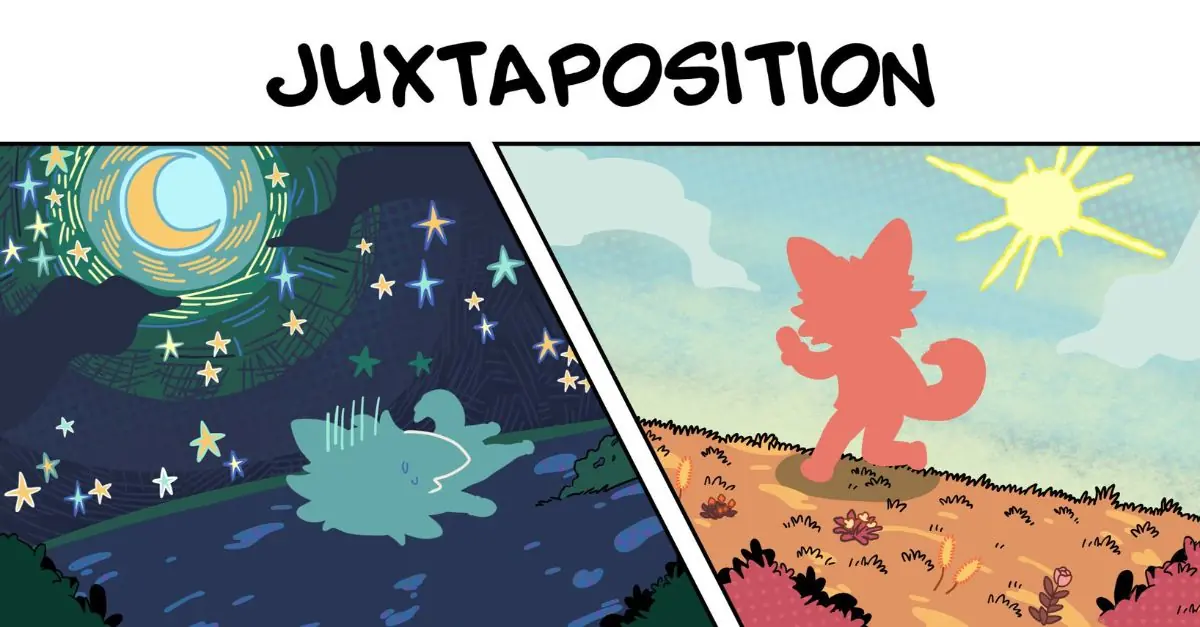
You’ve probably seen good versus evil in stories, rich versus poor in movies or light and shadow in photography.This powerful contrast is called juxtaposition.
What is Juxtaposition?
Juxtaposition is a literary and artistic technique where two contrasting ideas, characters, images or themes are placed close together to highlight their differences. Writers, filmmakers, artists and even advertisers use juxtaposition to create stronger emotional impact and deeper meaning.
In this article, you will learn what juxtaposition means, where it is used, see powerful examples and learn how to use it in your own writing.
Table of Contents
Where Are Juxtaposition Examples Commonly Used?
1. Juxtaposition in Literature
Many famous writers use juxtaposition in English literature to highlight themes and conflicts. By placing contrasting ideas, characters, or settings side by side, authors develop themes, build tension, and deepen characterization.
For example:
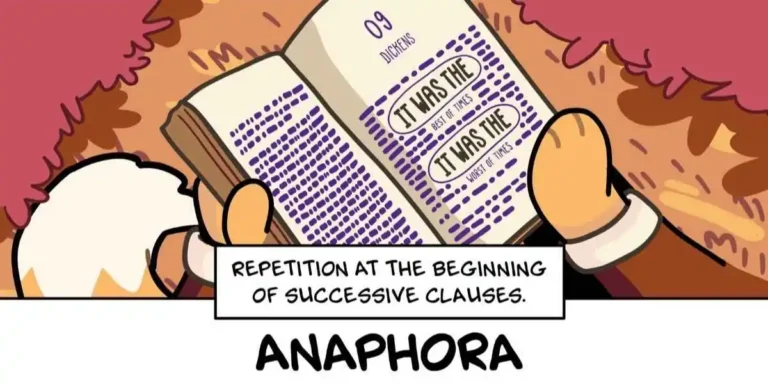
- In A Tale of Two Cities, the line “It was the best of times, it was the worst of times” contrasts prosperity and suffering during the French Revolution.
- In The Odyssey, the islands of Calypso and Circe are contrasted with Ithaca to highlight temptation versus home, loyalty and responsibility
Poetry also frequently uses juxtaposition by placing opposing ideas together to create layered meaning.
2. Juxtaposition in Film and Media
In film, juxtaposition is often visual
Examples:
- Showing a wealthy character’s luxury lifestyle before cutting to rough scenes of poverty
- Pairing a calm, calculating character with an impulsive, emotional one.
- Contrasting peaceful music with violent imagery to heighten tension.
Visual storytelling makes juxtaposition especially powerful because audiences can immediately see the contrast.
3. Juxtaposition in Art and Photography
Artists use contrast in
- Color (bright vs. dark)
- Texture (smooth vs. rough)
- Subject matter (industrial vs. natural) Symbolism (life vs. death imagery)
- Symbolism (life vs. death imagery)
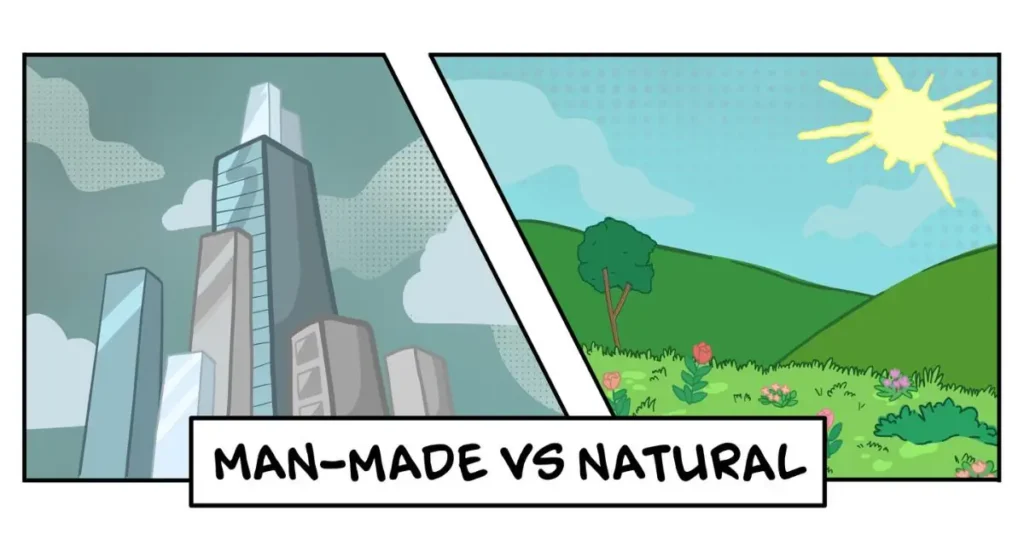
For example, black-and-white photography with one object in color creates immediate visual focus and contrast.
4. Juxtaposition in Everyday Life and Speech
Juxtaposition isn’t limited to creative works. You may use it everyday when:
- Comparing two restaurants
- Deciding between two job offers
- Describing how your life has changed
- Watching advertisements that contrast “before” and “after” and also brand competitions (coke vs pepsi)
It helps make comparisons clearer and more persuasive.
20 Striking Juxtaposition Examples (With Meanings)
Below are powerful examples categorized into literary, visual, and situational contrasts.
1. Literary Juxtaposition Examples
| Examples | Meaning |
| “It was the best of times, it was the worst of times” (A Tale of Two Cities) | Highlights extreme social contrast between London and France during the French Revolution. |
| The juxtaposition between Calypso/Circe islands and Ithaca.(The Odyssey) | Highlights the contrast between hedonism and temptation with duty and home. |
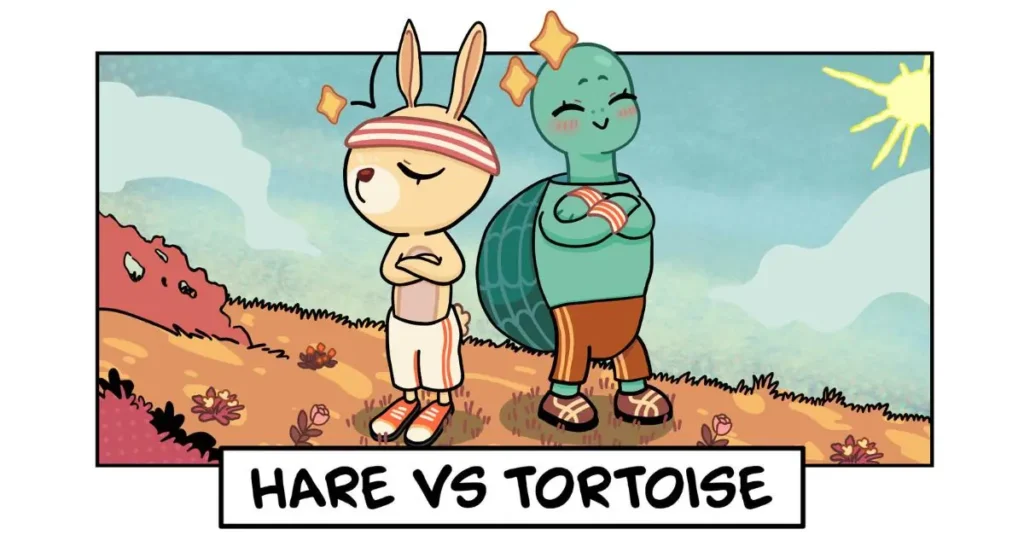
| Tortoise and the hare being contrasted to each other in the fable. (Aesop’s Fables) | Patience and persistence contrasted with arrogance and speed. |
| “That is hot ice, and wondrous strange snow!” (A Midsummer Night’s Dream) | Contrasts heat and cold to emphasize confusion and absurdity |
| “You fit into me.” (You fit into me) | Intimacy sharply contrasted with emotional pain. |
| “All is fair in love and war.” (Frank Fairlegh) | Compares romantic pursuit with the brutality of war. |
2. Visual Juxtaposition Examples
| Examples | Meaning |
| Black-and-white background with one colored object | Highlights importance or emotional focus. |
| Bright colors vs dark shadows | Optimism contrasted with fear or mystery. |
| Smooth shapes with rough textures | Order versus chaos. |
| Industrial buildings beside natural landscapes | Technology vs nature. |
| Luxury settings next to poverty | Economic inequality. |
| Light vs shadow | Good vs. evil or truth vs. secrecy. |
| Flowers placed beside skulls | Life contrasted with death. |
3. Situational Juxtaposition Examples
| Examples | Meaning |
| Rich vs Poor | Highlights inequality and privilege. |
| Chaos vs Calm | Emphasizes emotional or situational contrast. |
| Success vs Failure | Shows growth, resilience or consequences. |
| Nature vs Technology | Explores modernization and environmental tension. |
| Peace vs Conflict | Highlights instability or moral tension. |
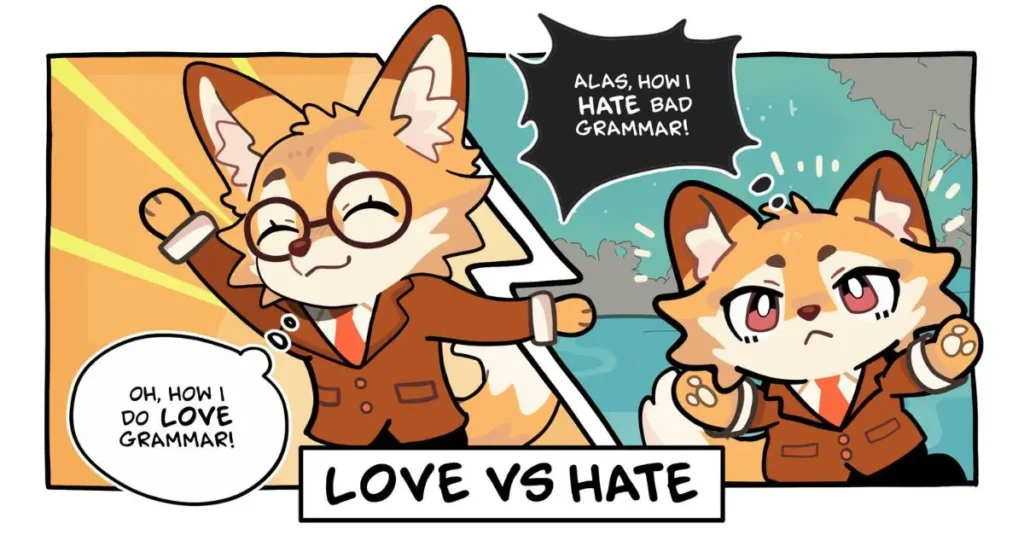
| Love vs Hate | Demonstrates emotional extremes. |
| Acceptance vs Bigotry | Reveals moral and societal divides. |
How to Use Juxtaposition in Your Own Writing
If you want to improve your writing, learning how to use juxtaposition in writing can make your work more engaging. Here are some practical techniques:
- Read Actively: Pay attention to how books, films and ads place contrasting ideas together.
Create Opposing Characters: Use characters with opposite personalities or values to highlight contrast. - Contrast Settings: Place very different settings next to each other to create a stronger impact.
- Use Clear Opposites: Use obvious contrasts like light vs dark or hope vs despair.
- Keep It Purposeful: Only use contrast when it helps support your main idea or message.
When Should You Use Juxtaposition?
Appropriate Uses:
- Creative writing and storytelling
- Poetry
- Film and visual arts
- Marketing and advertising
- Personal essays
When to Avoid Juxtaposition:
- Academic writing (where clarity is crucial)
- Scientific papers
- Technical reports
- Professional business documentation
In formal writing, clarity and precision are more important than dramatic contrast.
Why Juxtaposition Matters?
Juxtaposition makes your writing:
- More engaging
- More emotionally powerful
- More thought-provoking
- Easier to remember
By placing opposites side by side, you help readers see ideas more clearly.
Looking Ahead
Juxtaposition is a powerful literary device that strengthens themes, deepens meaning and improves storytelling. Whether you’re writing fiction, creating art, or improving your English skills, mastering juxtaposition can elevate your work dramatically.
Start small—try writing a short paragraph contrasting two opposite ideas. The more you practice, the more naturally it will come.
Would you like exercises to practice using juxtaposition in your writing? Join our English WhatsApp group!
Did you know?
“Oxymoron and juxtaposition both use contrast, but they work differently. An oxymoron squeezes two opposite words together (like “deafening silence”), while juxtaposition puts bigger ideas, characters, or scenes next to each other to highlight their differences.”
Learn more about oxymorons in our guide to oxymoron examples and discover how these surprising word combinations can make your English more expressive and creative.
Example:
- Grammar explanation ke liye Cambridge Dictionary
- Grammar learning ke liye British Council LearnEnglish
Content me naturally add karo:
For more grammar examples, you can refer to the Cambridge Dictionary.