40+ Awfully Good Oxymoron Examples with Meaning in English
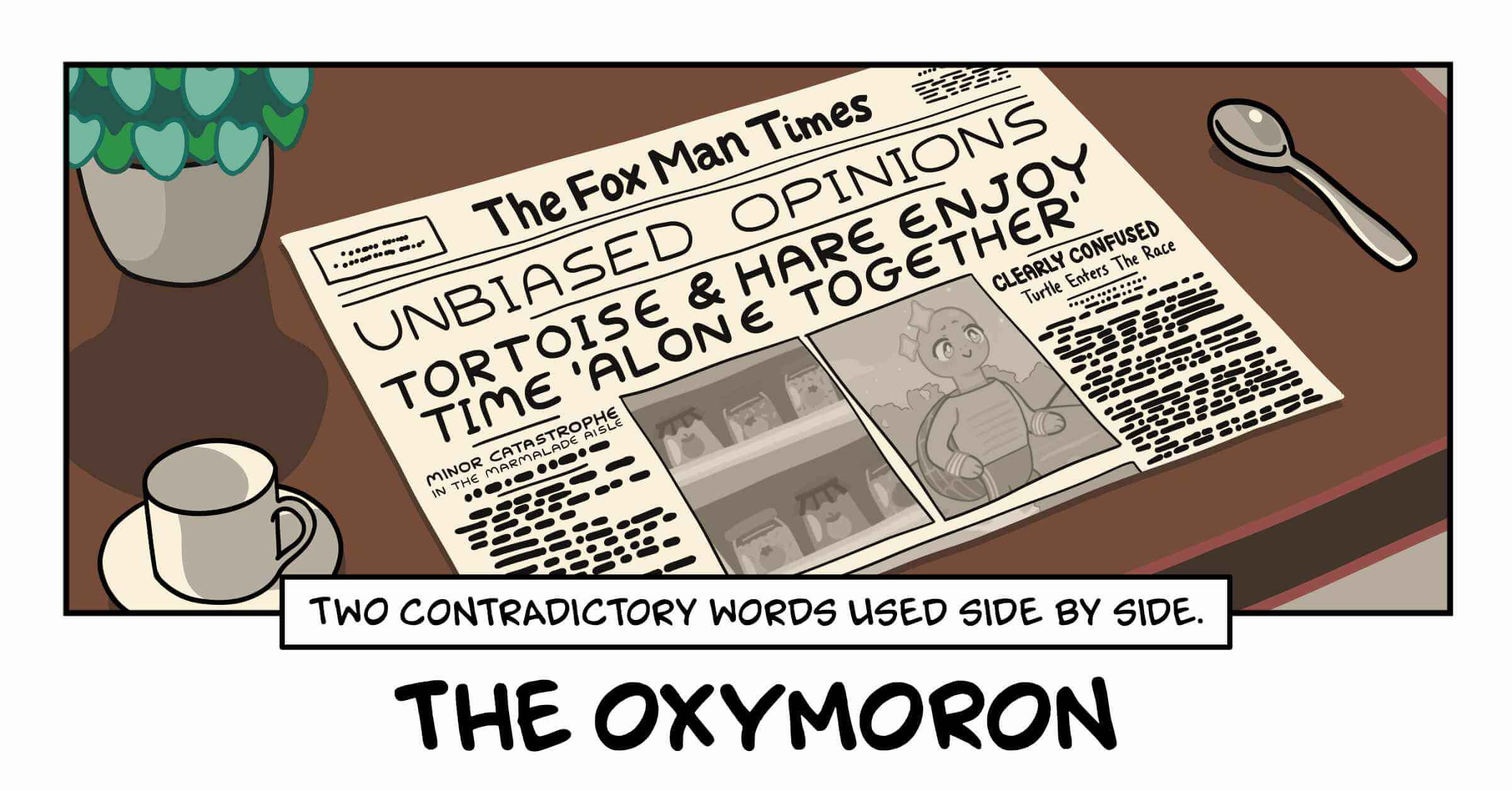
Perhaps you have not come across the term oxymoron, but you have likely heard phrases like ‘old news’, ‘awfully good’, and ‘same difference’. What was your first reaction when you heard these phrases made up of two contradictory words?
Was it easy to figure out the meaning? Usually, such phrases take on a new meaning and are used quite differently from the original meaning of their individual components.
Interested in knowing more? In this article, we will explore oxymorons in depth by providing oxymoron examples with meaning in English to explain the concept clearly and simply. Keep reading.
Table of Contents
Where Are Oxymoron Examples Commonly Used?
Common Oxymoron Examples used in Everyday Language
Similar to idioms or metaphors, an oxymoron is used in everyday conversations among friends and family, in formal and informal situations. They are often used either:
- Without conscious awareness:
For example, you may complement a joke by saying, ‘seriously funny,’ without knowing that you’ve just used an oxymoron. - Intentionally and deliberately,
To create emphasis, make the expression humorous or memorable.
Oxymorons are a good approach to make your thoughts more engaging or deliver your points in a witty way.
Oxymoron Examples in Literature
Writers find oxymoron their best tool to express emotions and feelings. It becomes so relatable when a character in a fiction piece talks similarly to our daily conversations, using an oxymoron.
Also, there are many cases in literature where oxymorons helped clarify complex human emotions to readers. For example:
In Shakespeare’s Romeo and Juliet, ‘parting is such a sweet sorrow’, reflects the coexistence of sadness in separation and joy in anticipation of reunion.
This was not the only time Shakespeare used oxymorons. He used them so extensively and succeeded in conveying emotional depth, tension, and poetic contrast, making his writings more vivid and eternal.
Oxymoron Examples in Media and Advertising
Oxymorons fit perfectly well in marketing language.
They manage to:
- Engage readers or the audience
- Grab attention
- Convey an idea clearly
- Create curiosity
Therefore, in media and advertising, oxymorons are heavily used. For example, many marketers use the expression, ‘affordable luxury,’ which immediately triggers their target audience, as who does not wish for a luxurious product that is affordable?
Lyrics are rich with oxymorons to engage listeners and music lovers. A well-known example is the Sound of Silence by Simon & Garfunkel, where the title itself is an oxymoron that evokes a sense of emptiness and introspection.
Oxymoron Examples in Academic or Professional Writing
Oxymorons are not quite common in formal writing, but they are sometimes used in specific situations.
Oxymorons are used in:
- Satire: to point out problems, or make fun of ideas that have no sense.
- Journalism: Rarely to be found, but for the sake of its impact and effect.
- Gonzo journalism: Because it is more personal, oxymorons are often used here to express personal insights about events.
Why are they used?
- To show contradictions clearly
- To produce a more engaging piece of writing
- To express more complex emotions
40+ Stupidly Brilliant Oxymoron Examples with Meanings
Classic Literary Oxymoron Examples
| Oxymoron | Meaning |
| “O loving hate” | From Romeo and Juliet Creates a mix of negative and positive feelings when you love someone. |
“A terrible beauty is born” | Easter, 1916 by W.B. Yeats Something is beautiful, but sadly or disturbingly. |
“I must be cruel only to be kind” | Hamlet, by Shakespeare Being kind in a way that hurts someone, but it is ultimately for their good. |
| “Alive with death” | The Picture of Dorian Gray by Oscar Wilde Something appears lively but is actually filled with decay or moral corruption |
| “So foul & fair a day I have not seen” | Macbeth by Shakespeare A day of mixed feelings |
| “Cold Fire” | Romeo and Juliet by Shakespeare Strong emotions that feel confusing. |
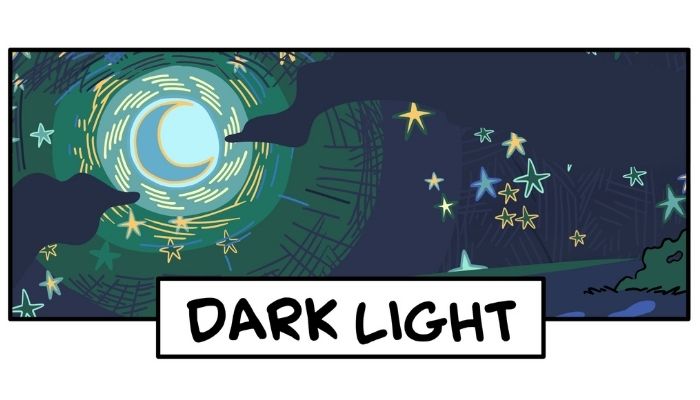
“Dark light” | Paradise Lost by John Milton A faint light that makes darkness more visible than removing it. |
Everyday Oxymoron Examples
| Oxymoron | Meaning |
| “Bittersweet,” | Something a bit happy but also a bit sad |
| “Jumbo shrimp” | Something small that is described as big. |
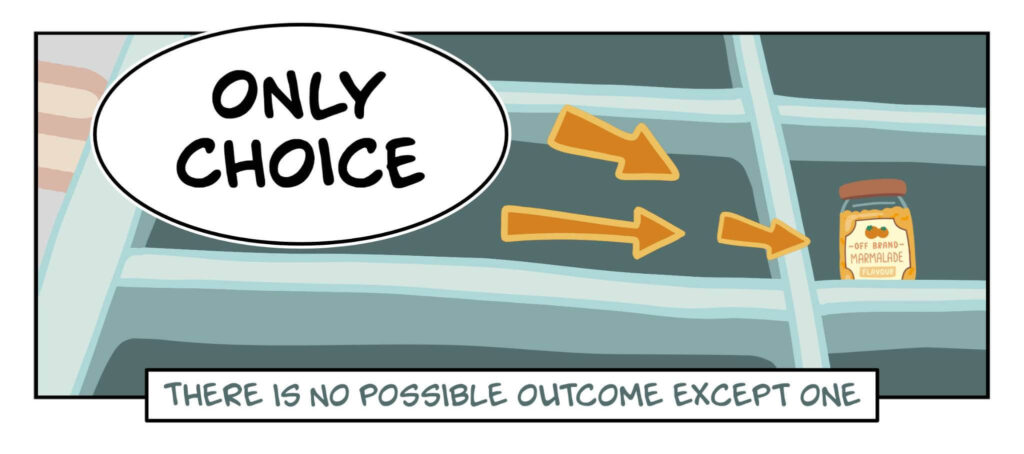
| “Only choice” | There is no possible outcome except one |
“Virtual reality” | Referring to a type of media that uses a device with a display near the eyes to simulate a 3D environment |
“Joyful tears” | The feeling of being so happy that you start to cry |
“Old news” | Something that was originally exciting is now well known |
“Same difference” | There is no difference between the two compared things |
“Passive-aggressive” | A tone where a person is using irony to subtly mask disapproval |
“Original copy” | A copy that is treated as if it were the original |
Funny Oxymoron Examples
| Oxymoron | Meaning |
“Unbiased opinion” | An opinion that tries to be objective |
| “Clearly confused” | Someone who is obviously confused |
| “Organised chaos” | A mess that is known to the people who are using it |
“Act naturally” | Try to seem normal |
“Only choice” | There is no possible outcome except one |
“Minor catastrophe” | Something bad, but also easily fixable |
“Civil war” | A war within a group |
“Foolish wisdom” | An idea that seems wise, but it is misleading. |
“Small crowd” | A small group of people |
“Open secret” | Something that is supposed to be secret but is well known instead |
Philosophical and Poetic Oxymoron Examples
| Oxymoron | Meaning |
| “living death” | Something that feels dead, even if it lives |
“Business ethics” | Differences between ethics in real life and ethics in business spaces |
“Alone together” | Feeling lonely while with other people |
“Silent scream” | A strong feeling of pain or distress that is not expressed out loud |
“Minor miracle” | Something good happened, which is appreciated but insignificant |
“Intense apathy” | Apathy that is very present in a person |
“Larger half” | One of the two pieces is bigger than the other |
“True fiction” | An imaginable story, but it contains real truth or ideas about life. |
How to Practice Using Oxymoron Examples Correctly
To improve your understanding of oxymorons and speak like a native, practice is all you need.
There are a few effective ways:
- Reading
This is the best way. Read Shakespeare’s for example, his writings are intense with oxyrmorn.
Literature and fiction help you understand the meaning and the right way to use them.
- Watching movies and TV shows
Similar to reading, movies visualise oxymorons and make them easier to understand. Watch the TV shows and take notes of oxymorons used.
- YouTube and short social media reels
Especially the content created by marketers. They usually include good oxymoron examples used in a smart way to engage others.
- Practice with experts
You can either sign up for one of our online classes or join our WhatsApp group.
Situations Where You Would Use Oxymoron Examples
Appropriate Uses for Oxymorons
- Poetry, novels, and creative writing: Using oxymorons can help describe conflicting emotions in a story.
- Casual speech for humour or emphasis: Oxymorons are a quick way to introduce humour to a situation or add emphasis to your point.
- Advertising and branding for memorability: Oxymorons in advertising can help improve brand recognition.
Inappropriate Uses for Oxymorons
- Technical, legal, or scientific writing: Oxymorons are contradictory by nature. Legal and scientific writing requires a lot of specificity and clarity, so using oxymorons can confuse readers.
- Professional communication: because clarity is required in this kind of writing.
Final Thought on Oxymoron Examples with Meaning in English.
At first, oxymoron examples may seem deceptively simple, but in fact, they play a crucial role in evoking emotional depth by express complecity or contradictory ideas.
Since they convey meaning most of the time poetically, they are used heavily in literature, music, marketing and even everyday language.
Now, it is quiz time!
Let’s check your understanding of this topic.
Someone describes a moment as “beautifully tragic.”
What do you think they mean? Comment and let’s talk about it.