List of Metaphors: 50+ Powerful Examples with Meanings
What is a Metaphor?
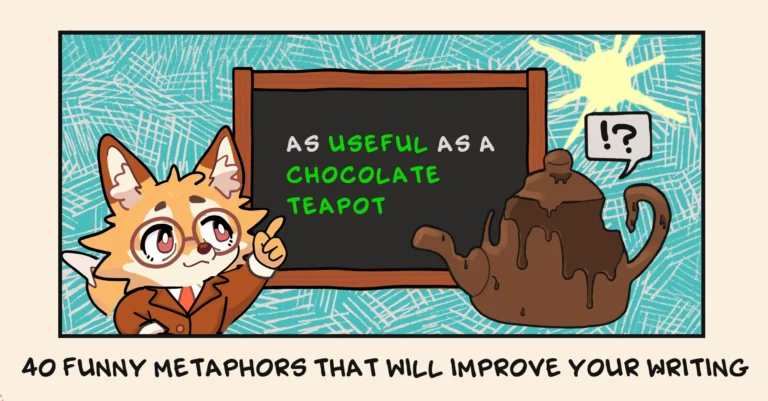
Have you ever heard someone describe a busy classroom as a ‘zoo’ or heard that someone has a ‘heart of stone’?
They weren’t talking about an actual zoo or a heart of stone. These statements are called metaphors, which are used to make an idea easier to picture.
A metaphor is a figure of speech that makes a direct comparison between two different things unlikely objects without using the words “as” or “like.”
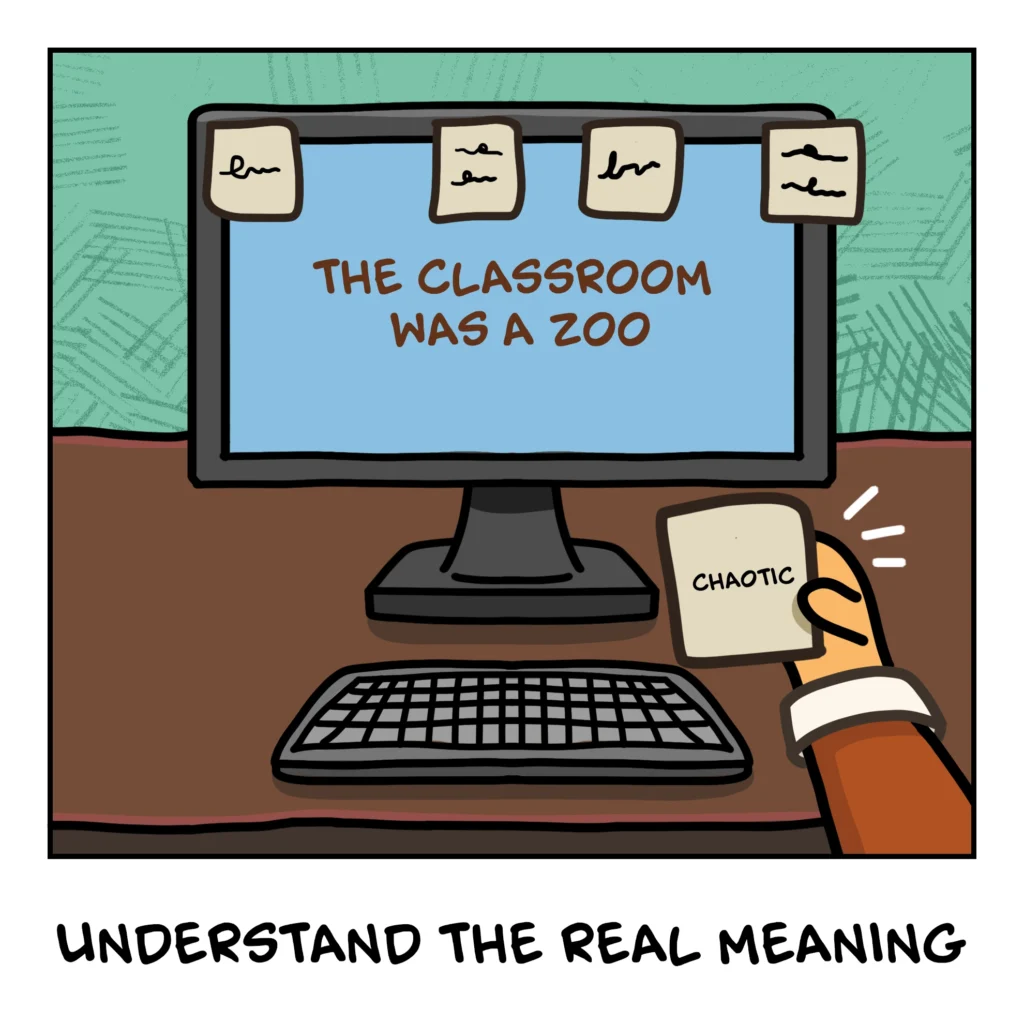
Let’s look at the statement: “The classroom was a zoo.”
This doesn’t mean animals were running around the classroom. It means the classroom felt noisy, chaotic, and difficult to control.
Table of Contents
Metaphor vs Simile: What’s the difference?
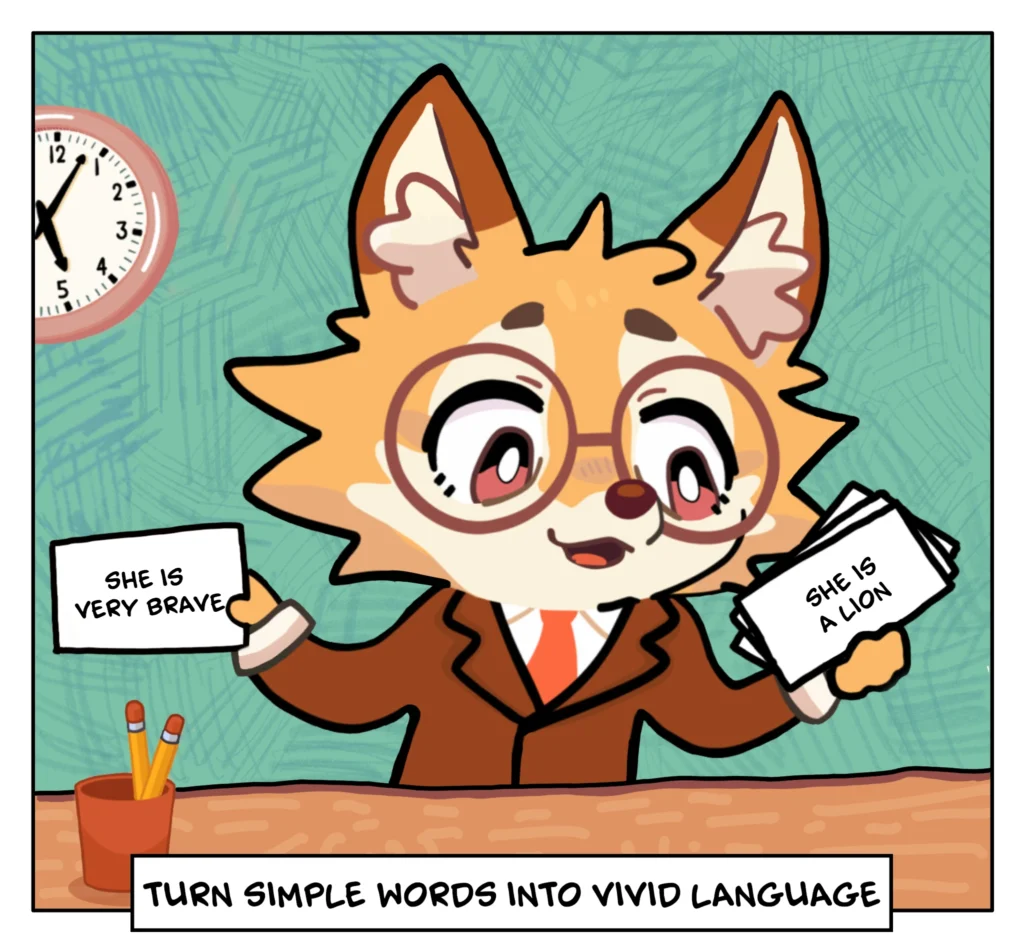
Both Metaphors and Similes compare two things, but they do it differently.
A simile uses the words “like” or “as.”
– “He is as brave as a lion.”
A metaphor makes the comparison directly.
– “He is a lion on the battlefield.”
The person isn’t literally a lion. The metaphor suggests that he is brave, strong, or fearless.
Both forms of figurative language can make writing more interesting. However, metaphors can feel more direct because they present the comparison as a statement.
Metaphors are just one type of figurative language. Learn more in our guide to Creative Figurative Language Examples.
Why do we use Metaphors?
A good metaphor can turn a simple idea into an image that readers remember.
Metaphors can:
- Make writing more vivid.
- Add emotion to your message.
- Help readers understand difficult ideas.
- Make conversations more expressive.
- Give abstract ideas a clear image.
- Make stories, poems, and speeches more memorable.
Metaphors are also useful for people learning English. Native speakers use many metaphorical expressions in everyday conversations, so understanding them can make English easier to follow.
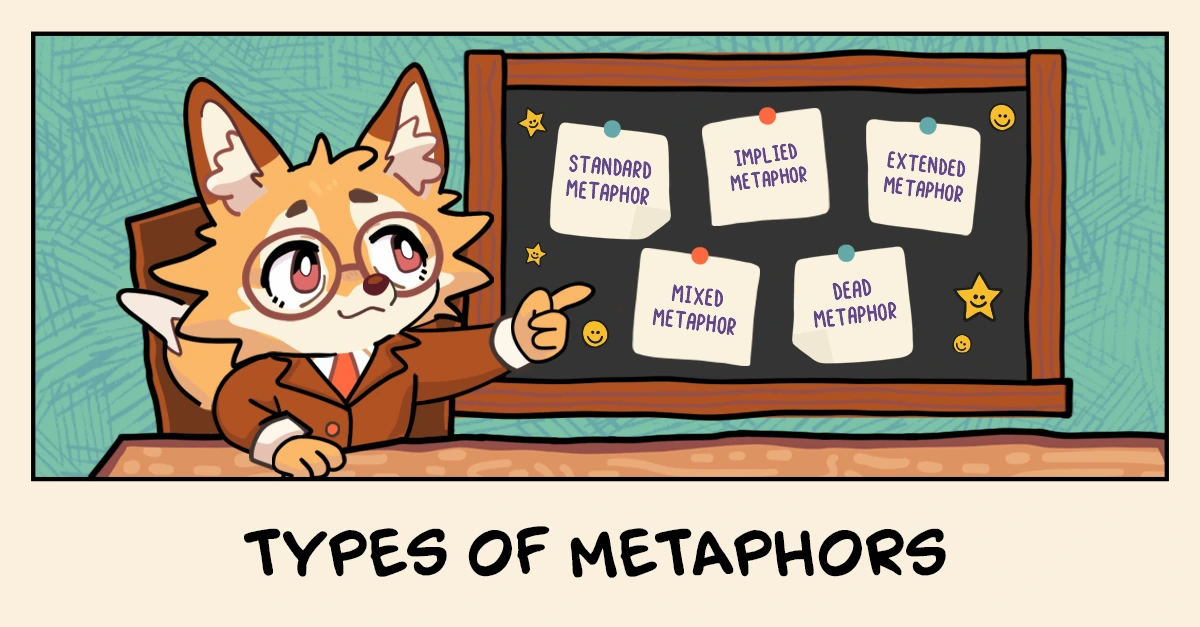
Types of Metaphors.
There are several types of metaphors. Understanding the differences can help you recognise and use them correctly.
- Standard Metaphor.
A standard metaphor makes a direct comparison.
“Life is a rollercoaster.”
This comparison suggests that life contains highs, lows, surprises, and changes.
- Implied Metaphor.
An implied metaphor suggests a comparison without stating it directly.
“He barked orders at everyone.”
The word “barked” suggests a comparison between his behaviour and a dog’s bark. - Extended Metaphor.
An extended metaphor develops one comparison across several sentences or even an entire poem, speech, or story.
“All the world’s a stage” by Shakespeare, in the speech in his pastoral comedy ‘As You Like It.’
The comparison between life and theatre is developed through ideas about people playing different roles. - Mixed Metaphor.
A mixed metaphor combines two unrelated metaphors.
“Let’s cross that bridge when the ball is in your court.”
“Cross that bridge” and “the ball is in your court” come from different metaphorical ideas. Mixing them can make your writing confusing, so they should be used carefully and consistently in writing. - Dead Metaphor.
A dead metaphor is an expression that has become so common that we rarely think about its figurative meaning.
“The foot of the bed.” / “The flood of tears.” / “The leg of a table.”
Because these expressions are so familiar, their metaphorical origins are easy to forget.
Examples of metaphors and their meanings.
Here are some useful metaphors organised by topic.
Everyday Metaphors.
| Metaphor | Meaning | Example |
| Time is money. | Time is valuable. | Time is money, so don’t spend it worrying about things you cannot change. |
| Life is a journey. | Life involves choices and experiences. | Life is a journey, and every mistake is part of the road. |
| The world is a stage. | Life is like a performance, and people play different roles. | The world is a stage, and everyone has a part to play. |
| Love is a battlefield. | Love and relationships can involve conflict and struggle. | After years of arguments with her partner, she felt that love was a battlefield. |
| He has a heart of stone. | Someone appears cold or unwilling to show emotion. | He refused to forgive her; he has a heart of stone. |
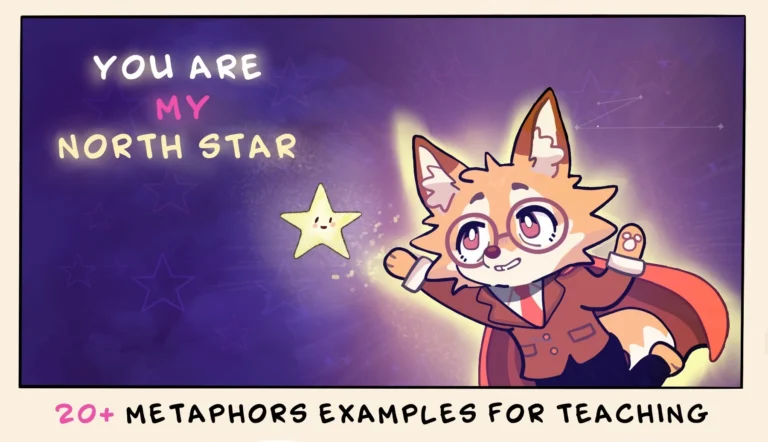
| You are my sunshine. | Someone brings happiness and warmth into your life. | You are my sunshine on even the darkest days. |
| He’s a walking encyclopedia. | Someone knows a great deal about many subjects. | Ask him about history; he’s a walking encyclopedia. |
Nature Metaphors.
| Metaphor | Meaning | Example |
| The sun is a golden coin. | The sun is being compared to something bright and valuable. | The golden coin of the sun disappeared behind the hills. |
| A river of tears | A large amount of crying. | She cried a river of tears after hearing the news. |
| The clouds were cotton balls | The clouds looked soft and fluffy. | The clouds were cotton balls floating across the sky. |
| A blanket of snow | Snow completely covers a surface. | A blanket of snow covered the park overnight. |
| The forest is a maze. | The forest is confusing or difficult to navigate. | The forest is a maze, with twisting paths leading in every direction. |
Emotion Metaphors.
| Metaphor | Meaning | Example |
| He’s burning with anger | He is extremely angry. | He was burning with anger after the betrayal. |
| Her heart was a locked door | She wouldn’t share her feelings. | Her heart was a locked door after years of hurt. |
| Waves of sadness | Sadness comes in powerful waves. | Waves of sadness washed over him. |
| Hope is a light in the darkness | Hope provides direction during difficult times. | Her family became a light in the darkness. |
| Fear is a shadow | Fear can follow someone everywhere. | Fear was a shadow she couldn’t escape. |
Work and Life Metaphors.
| Metaphor | Meaning | Example |
| The ladder of success | Progress towards career goals. | She climbed the ladder of success quickly. |
| A ticking time bomb | A situation likely to cause problems. | The unresolved conflicts were a ticking time bomb. |
| The backbone of the team | Someone essential to a group. | Maria is the backbone of our team. |
| Drowning in work | Having too much work. | I’m drowning in work this week. |
| Ideas are seeds | Ideas can grow into something bigger. | This small idea could be the seed of a great project. |
Education and ESL Metaphors
| Word | Meaning | Example |
| Knowledge is power | Knowledge gives people strength and opportunities. | Keep learning because knowledge is power. |
| The classroom is a garden | Students grow through care and guidance. | Every student blooms differently. |
| A teacher is a guiding star | Teachers help students find their way. | Her teacher was a guiding star throughout school. |
| Books are keys | Books can open the door to knowledge. | Books are keys to worlds we’ve never seen. |
| Learning is a journey | Learning happens gradually over time. | Every lesson is another step on the journey. |
Sports and Action Metaphors
| Metaphor | Meaning | Example |
| Hit the ground running | Start something quickly and energetically. | She hit the ground running in her new job. |
| It’s a marathon, not a sprint | Success takes time and effort. | Learning English is a marathon, not a sprint. |
| In the driver’s seat | In control of a situation. | She is now in the driver’s seat for the duration of the meeting. |
| Playing hardball | Acting tough during negotiations. | He was playing hardball during salary negotiations. |
| Dropped the ball | Made a mistake. | We lost the opportunity because someone dropped the ball. |
Love and Relationship Metaphors
| Metaphor | Meaning | Example |
| The light of my life | Someone brings great happiness. | My daughter is the light of my life. |
| Two peas in a pod | Two people are very similar or close. | She and her best friend are two peas in a pod. |
| On thin ice | A relationship or situation is in danger. | After the argument, they were on thin ice. |
| Stole my heart. | Someone made you fall deeply in love with them. | I didn’t expect to fall in love, but he stole my heart. |
| A rocky relationship. | A relationship has many difficulties or disagreements. | They love each other, but their relationship is rocky. |
Technology and Modern Life Metaphors
| Metaphor | Meaning | Example |
| The internet is a web | The internet connects many people and systems. | The internet is a web connecting millions of people. |
| Glued to his phone | Constantly using a phone. | He is glued to his phone during dinner. |
| My inbox is a battlefield. | Managing emails feels difficult, stressful, or competitive. | After returning from holiday, my inbox was a battlefield. |
| Her brain is a computer | She processes or remembers information extremely well. | She never forgets anything; her brain is a computer. |
| Drowning in information | There is more information than one can comfortably process. | With social media and constant news updates, we’re drowning in information. |
Creative and Abstract Metaphors
| Metaphor | Meaning | Example |
| Time is a thief | Time takes moments and experiences away from us. | Time is a thief, so enjoy the moments you have. |
| Dreams are stars | Dreams can inspire and guide people. | Dreams are stars that give us something to reach for. |
| His words were knives | His words caused emotional pain. | His criticism hurt because his words were knives. |
| Memories are treasures | Memories are valuable and worth keeping. | Memories are treasures that become more precious with time. |
| Music is the language of the soul | Music can communicate deep emotions without words. | When conversation failed, music became the language of the soul. |
Did You Know? Popular songs also use metaphors to help listeners picture the character, story, object, or idea being mentioned. For example: “Red” or “All Too Well” by Taylor Swift; or “Hotel California” by The Eagles.
Common mistakes to avoid when using metaphors.
Metaphors are powerful, but using too many or too complex can make your writing difficult to understand.
Avoid:
- Using too many metaphors at once: These can make your message confusing.
- Mixing metaphors: Stick to one clear image instead of combining unrelated comparisons.
- Being too abstract: Choose images that your reader can picture.
- Forcing a metaphor: If the comparison doesn’t add meaning, leave it out.
The best metaphors are usually clear, relevant, and vivid.
How to create your own metaphors.
Creating a metaphor doesn’t have to be difficult.
Start with the idea you want to describe.
Then ask yourself:
What does this feeling, person, place, or experience remind me of?
For example:
Feeling: Anxiety
Image: A storm
Metaphor: “Anxiety is a storm inside my chest.”
Or:
Feeling: Hope
Image: A candle
Metaphor: “Hope is a candle in the dark.”
The goal isn’t simply to make your writing sound fancy. A good metaphor should help you see, feel, or understand your idea differently.
Metaphors aren’t the only way to give language a more vivid quality. Learn about how writers give human qualities to non-human things from our article on Personification.
Conclusion
Metaphors do more than make language sound creative. They help us turn complicated ideas, emotions, and experiences into images that are easier to understand and remember.
From “Time is money” to “The forest is a maze,” metaphors can add to your everyday English conversation. Once you start recognising them, you will notice how often they shape the way we communicate.
The best metaphors are clear, purposeful, and meaningful. They give ordinary words another layer of meaning and allow others to see an idea from a different perspective.
So, why not create one of your own? Choose a feeling, person, place, or experience and ask yourself: What could I compare this to? You might be surprised by how much a single metaphor can say.
Writer: Mrunmayee Raut
Designer: Shenaih Limbaga