Teaching Metaphors: A Guide for Educators
Introduction
Abstract concepts can be very difficult to teach. For many students, especially those learning English as a second language, taking words literally is a safety net. Moving them away from that safety net into the world of figurative language can feel like a daunting task.
But teaching metaphors does not have to be a struggle – it can be one of the most fun and creative units in your curriculum. When you finally get your students to grasp the concept of metaphors, you are teaching them how to think critically and better express emotions.
Table of Contents
Why Is Teaching Metaphors Important?
You might wonder if spending weeks on this topic is worth it. It absolutely is. Metaphors are the DNA of our language. We use them constantly without thinking (“time is money,” “heart of gold,” “feeling blue”).
If students do not understand metaphors, they will miss deeper meanings in literature, news, and daily conversation. Knowing metaphors also helps students move away from boring, repetitive sentences in their writing (e.g. “He was fast”) to dynamic descriptions (e.g., “He was a cheetah on the track”).
How to define a metaphor for students?
Before you can dive into complex poetry, you need a solid definition. A metaphor is a figure of speech that makes a direct comparison between two unrelated things to help explain an idea or make a comparison. A metaphor says X is Y.
When teaching metaphors, you must emphasize not only what a metaphor is but why we use them. We use them to create an image in the reader’s mind. We transfer the qualities of one known object to a less understood concept, making it more understandable.
Step-by-Step Guide for Teaching Metaphors
Now that you’ve defined metaphors, how do you actually teach them?
Make Sure They Know Similes First
Before teaching metaphors, make sure your students have similes down. “X is like Y” is much easier and faster to grasp for students because the comparison is made explicit by the use of “like” or “as”. A metaphor is bolder. It asserts that one thing is another.
Only show them metaphors once they’ve mastered similes and make sure to emphasize their difference. A common student pitfall is mistaking one for the other, and that’s easily avoidable if you make sure to highlight the difference:
| Simile (The Training Wheel) | Metaphor (The Advanced Ride) |
| You are like a star. | You are a star. |
| Her voice is like velvet. | Her voice is velvet. |
| The classroom was like a zoo. | The classroom was a zoo. |
| Life is like a highway. | Life is a highway. |
| His stomach felt like a knot. | His stomach was a knot. |
Ask your students: “Which sentence sounds stronger?” They will usually identify the metaphor as the more confident statement.
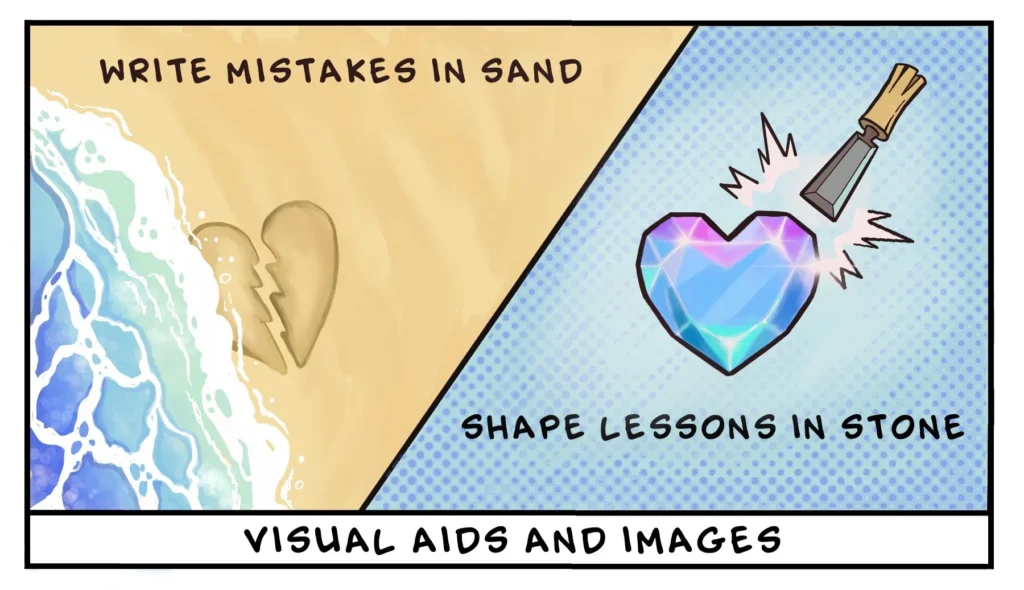
Use Visual Aids and Images
Abstract words can float away, but images stick. Get images that showcase the similarities between subjects:
A messy room + A pigsty.
A fierce athlete + A lion.
A protective mother + A shield.
Connect to Pop Culture and Music
Your students are already consuming metaphors every day; they just don’t know the label for it. Music is a goldmine for figurative language. Try bringing in lyrics from popular songs and asking students to identify the metaphors.
Katy Perry: “Baby, you’re a firework.” (You are bright, loud, and exciting).
David Guetta: “I am titanium.” (I am strong and unbreakable).
Lifehouse: “You are the storm that I believe in.” (You are powerful and chaotic).
When you ground the lesson in culture they enjoy, teaching metaphors becomes less of a lecture and more of a discovery session.
Exercises to Try
The “Metaphor Detective”
Give students a short story or a newspaper article. Hand them a highlighter. Their job is to find every metaphor in the text.
Level Up: Ask them to rewrite the sentence without the metaphor (literal translation) and discuss how the meaning or feeling changes. This reinforces why the author chose the metaphor.
The “Object Box” Challenge
Put random objects in a box (a stapler, a feather, a rock, a flashlight).
Have a student pick an object (e.g., a flashlight).
Have them pick a concept from a list on the board (e.g., Knowledge, Truth, Friendship).
They must create a metaphor connecting the two.
Example: “The truth is a flashlight because it reveals things hidden in the dark.”
This is excellent for teaching metaphors because it forces students to justify the comparison. It also can create some ridiculous and unpredictable pairings, making the class more fun.
Metaphor Self-Portraits
Ask students to draw a self-portrait, but they cannot draw their human face. They must draw themselves as objects that represent their personality.
A student who is loud and energetic might draw a firecracker.
A student who is quiet and observant might draw a camera.
A student who is tough on the outside but soft on the inside might draw a coconut.
Under the drawing, they must write the sentence: “I am a [Object] because…”
Common Mistakes When Teaching Metaphors
Even experienced teachers slip up. Avoid these common pitfalls to ensure your lesson runs smoothly.
Using Outdated Idioms
Young and ESL students often lack the cultural context for many older idioms. By sticking to universal concepts (nature, emotions, technology) when you first start teaching metaphors, you make sure that they understand the concept. You can then move on to more specific metaphors like “don’t beat a dead horse” or “sounding like a broken record.”
Confusing Metaphors with Hyperbole
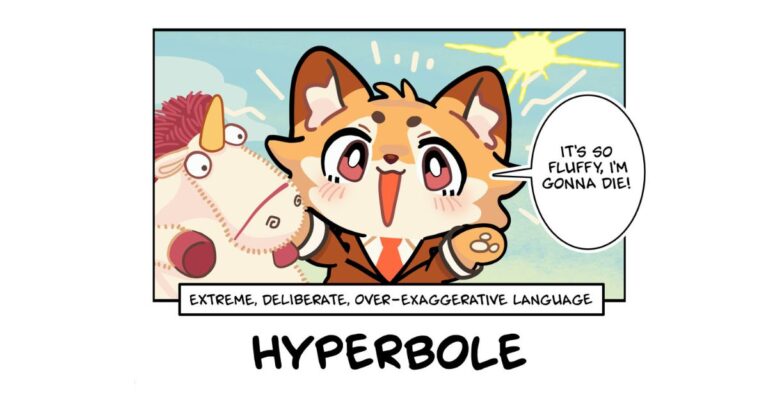
Hyperbole: “I’m so hungry I could eat a horse.” (Exaggeration).
Metaphor: “My stomach is a bottomless pit.” (Comparison).
Be careful to distinguish between simply exaggerating and making a direct comparison between two unlike things.
Ignoring the “Why”
Don’t just teach students to identify metaphors. Teach them to analyze the reasons behind the comparisons; nuance matters and your job is to make sure they have developed the critical thinking skills to recognize it.
Always ask: “Why did the author compare the soldier to a wall? Why not a tiger?”
Wall: Implies defense, stillness, unmoving strength.
Tiger: Implies aggression, attack, movement.
Comprehensive List of Metaphors
To help you plan your lessons, we have organized common metaphors into tables. You can use these for quizzes or writing prompts.
Simple Metaphors for Beginners
These examples compare physical objects to other physical objects or simple traits. They are perfect for introducing the concept.
| Metaphor | Meaning |
| Time is money. | Time is valuable and should not be wasted. |
| He is a night owl. | He stays up late at night. |
| She has a heart of gold. | She is extremely kind and generous. |
| The world is a stage. | Everyone is playing a role or acting in life. |
| He is a chicken. | He is afraid or cowardly. |
| Her tears were a river. | She cried a lot for a long time. |
Abstract Metaphors for Intermediate Learners
These require a bit more critical thinking. They often describe emotions or states of being.
| Metaphor | Meaning |
| Hope is a bird with feathers. | Hope is light, uplifting, and can fly away. |
| Life is a rollercoaster. | Life has ups and downs; it is scary and exciting. |
| Love is a battlefield. | Relationships involve struggle, strategy, and pain. |
| Chaos is a friend of mine. | I am comfortable in messy or disorganized situations. |
| A smile is a passport. | Being friendly allows you to go anywhere and be accepted. |
| The mind is a garden. | Thoughts grow depending on what you plant/feed them. |
Conclusion
Teaching metaphors unlocks a new level of creativity for your students. It gives them the tools to describe their world with color, emotion, and precision. It transforms “I was sad” into “I was drowning in a sea of grief”.
By starting with similes, using visual aids, and practicing with the examples in the tables above, you can make this abstract concept concrete and accessible. Remember, patience is key. Figurative language is a muscle that needs exercise. Keep practicing, keep analyzing songs, and keep asking “why”.
Writer: Avin Moonesan
Designer: Mariam Ismail