20+ Food Idioms to Nurture your English
Idioms were made to connect. Through fun expressions, people come together like two friends do when they share an inside joke.
And food is the root of a fun time, isn’t it? A table full of people sparks the liveliest conversations, the most wholesome moments, and unforgettable memories.
Something this important also inspires language changes, which is why food idioms exist.
Table of Contents
What exactly are Food Idioms?
In every culture and language, there are sayings, proverbs, or idioms related to either food or cuisine.
Since food is such a universal part of life, it’s only natural that English has many food idioms to delight in!
So, let’s get cooking, shall we?
Food idioms are phrases and expressions that use food, cooking, or eating imagery to communicate something specific.
These food-related expressions not only honor the shared experience that food represents; they’re also easy to understand and remember.
Food idioms are one of the most common expressions in the English language. Native speakers use them without even thinking!
Let’s introduce food idioms in a fun way, how about a menu?
In this guide, you will taste:
- Starters: Food Idioms about Everyday Life.
- Main Courses: Food Idioms about Success and Work Life.
- Second Courses: Food Idioms about Relationships
- Desserts: Food Idioms about Rewards and Easy Tasks.
- Today’s Specials: Food Idioms for Everyday Conversations and Ideas.
- And finally, the Chef’s Recommendations: To digest this spoonful of fun and practice what we just learned!
For each meal that you order, you will be served the food idiom, its meaning, and a sentence example to stir things up into motion.
Let’s strike while the iron is hot!
Starters: Food Idioms for Everyday Life
Life can feel difficult and full of stress, which is why these idioms help to express the tolls of responsibility and challenges.
| Food Idiom | Meaning | Sentence Example |
| A lot on your/my plate | Having a lot of responsibilities or tasks to be done. | Between her thesis, part-time job, and volleyball practice, she has a lot on her plate for the remaining semester. |
| Bite off more than you can chew | To take more than you can realistically handle. | He definitely bit more than he could chew when he agreed to attend three weddings this weekend. |
| In a pickle | Being in trouble or in an uncomfortable situation. | Paolo missed the last bus of the day in a different city, and that left him in a pickle. |
| In hot water | Being in trouble or warned about an upcoming trouble. | Since missing an important delivery, he found himself in hot water with his supervisor. |
Main Courses: Food Idioms about Success and Work Life
Because a nice meal needs proper bites!
| Food Idiom | Meaning | Sentence Example |
| Bread and butter | A person’s main source of income and/or support. | Printing her illustrations became her bread and butter for the last year. |
| Bringing home the bacon | Earning money for your home, yourself, or your family. | As a cat mom, she also needs to work hard to bring home the bacon. |
| Worth your salt | Worth your while, deserving of respect, talented/skilled. | Any athlete worth their salt knows that stretching is essential. |
| The best thing since sliced bread | An exceptionally good idea or invention. | Delivery services are definitely the best thing since sliced bread. |
| Selling like hotcakes | Selling very quickly. | The Bad Bunny concert tickets sold out like hotcakes in just 20 minutes. |
Second Courses: Food Idioms about Relationships
In every menu, there are shared plates, aren’t there? These idioms are the crème de la crème!
| Food Idiom | Meaning | Sentence Example |
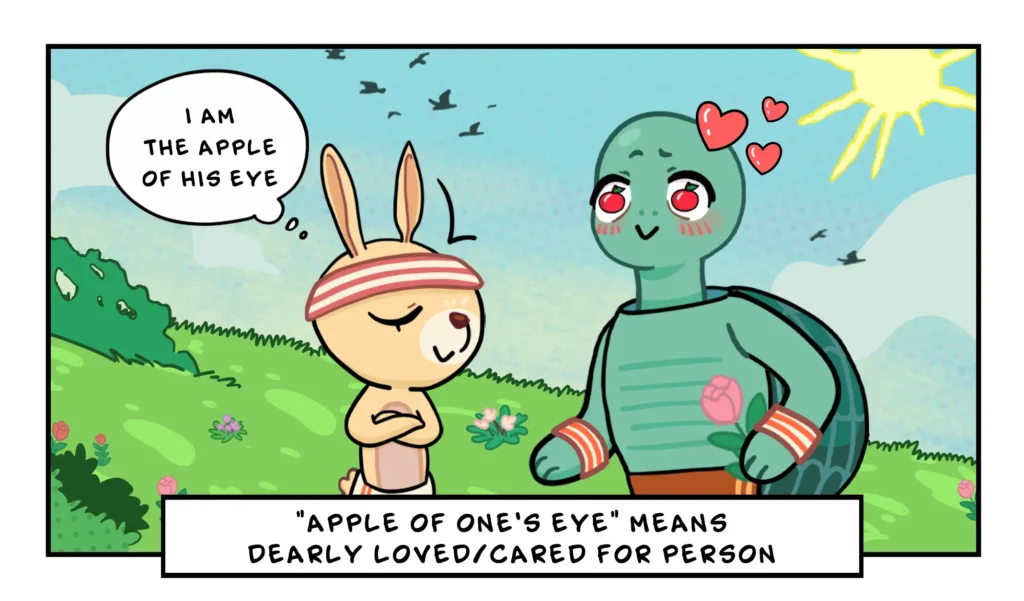
| Apple of one’s eye | Someone very dear and loved. | His baby girl is the apple of his eye, he can never say no to her. |
| Like two peas in a pod | Extremely similar in behavior, appearance, or interests. Or simply two people who get along pretty well. | Those siblings are like two peas in a pod, they even dress the same! |
| Cool as a cucumber | Remarkably calm and composed under pressure. | During the earthquake she remained cool as a cucumber. |
| The peanut butter to my jelly | When two people complement each other perfectly. | They make a great team |
| Salt of the earth | A trustworthy, honest person. | Everyone knows Tina in the office, she’s the salt of the earth! |
Desserts: Food Idioms about Rewards and Easy Tasks
Should we sweeten the pot with a sweet treat? Absolutely!
| Food Idiom | Meaning | Sentence Example |
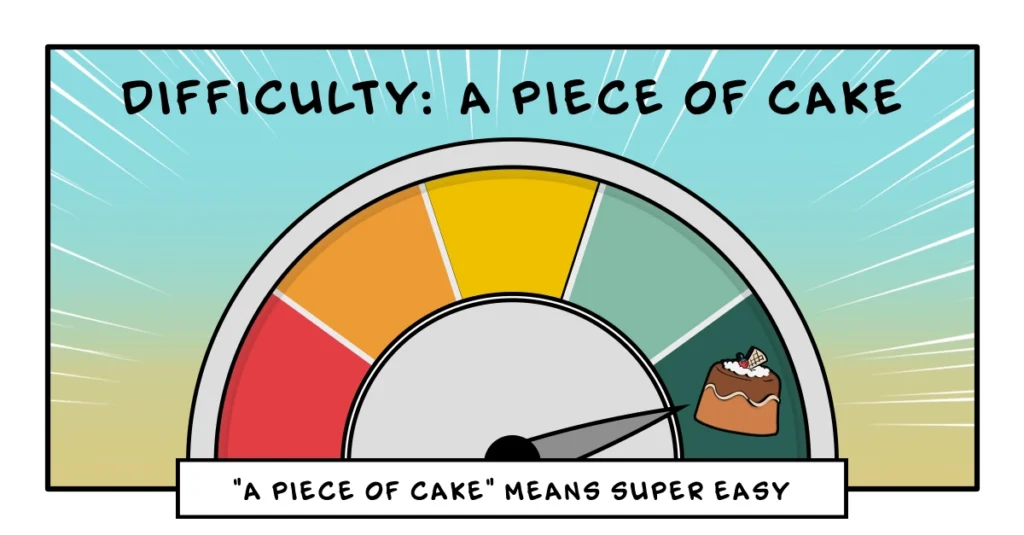
| Piece of cake | Something very easy to do. | I thought the math test would be hard, but it was a piece of cake. |
| Easy as pie | Very simple and easy. | Even my grandma knows how to use the app, it’s as easy as pie! |
| Icing on the cake | Something that makes a good situation even better. | The salary is great, but getting a company car was the icing on the cake for me. |
| Cherry on top | An additional good thing to an already great thing. | After passing her driver’s test, her parents gifted her a brand new car, which was the cherry on top! |
| Tough cookie | A strong, determined person. | He kept playing after spraining his ankle, he’s one tough cookie. |
| Sugarcoating | To make a harsh truth, bad news, or an awkward or unpleasant situation seem better than it actually is. | She sugarcoats the truth so it’s easier to say. |
Today’s Specials: Food Idioms for Everyday Conversations and Ideas
These food idioms can be used weekly when you wish to sound like a native English speaker!
| Food Idiom | Meaning | Sentence Example |
| Food for thought | Something worth serious consideration. | The TED Talk really gave the students plenty of food for thought. |
| Chew the fat | To have a casual conversation. | They spent the afternoon chewing fat over a cup of coffee. |
| Spice things up | Making things more interesting or exciting. | Besides playing board games, we also sang some karaoke to spice things up. |
| Too many cooks in the kitchen | Too many people are involved in something. | You can’t involve anyone else in your relationship problems, that’d be too many cooks in the kitchen. |
| Spill the beans | To gossip, to reveal a secret. It can be both intentional and by accident. | No one knew what happened at the meeting except the intern, everyone begged her to spill the beans! |
| Bigger fish to fry | To have more important things to do or worry about. | I can’t go to the party tonight, I have bigger fish to fry. |
Chef’s Recommendations: Conclusion
Learning food idioms offers more than a vocabulary practice. It also helps you understand day-to-day interactions much better, as well as build confidence in any social situation.
Want a final bite?
Did you catch the hidden food idioms in this article? Look out for them and think about their meaning! Practice your instinct and be surprised at how naturally idioms can be processed in your mind.
Food idioms are a fun tool to spice up your English speech and writing, and so are other types of idioms. If you wish to submerge yourself in more English expressions, check out our articles!
And if you’re starving for more knowledge, you can always count on a dictionary to better feed your needs.
Bon appétit!
| HIDDEN FOOD IDIOMS | |
| Food Idiom | Meaning |
| Let’s get cooking! | Let’s get started. Beginning to work on something. |
| Stir things up | Causing excitement or trouble to change the current situation. |
| Strike while the iron is hot! | Taking advantage of an opportunity and its timing while it’s happening. |
| Crème de la crème! | The very best of the best. |
| Sweeten the pot | To make something more appealing or attractive by adding a benefit or reward. |
| Bon appétit! | Enjoy your meal! |
How Can I Learn Food Idioms Quickly?
The key to learning idioms about food is simply practice. Many of these idioms for food are common, and once you start using them yourself, you’ll notice how often they’re used in other places. Start slowly and don’t overstuff your sentences with these phrases; one or two food idioms at a time is enough.
What Are the Most Common Food Idioms?
In the English language, some of the most common food idioms include:
“Piece of cake”
“Cool as a cucumber”
“Apple of my eye”
“Food for thought”
“Don’t put all your eggs in one basket”
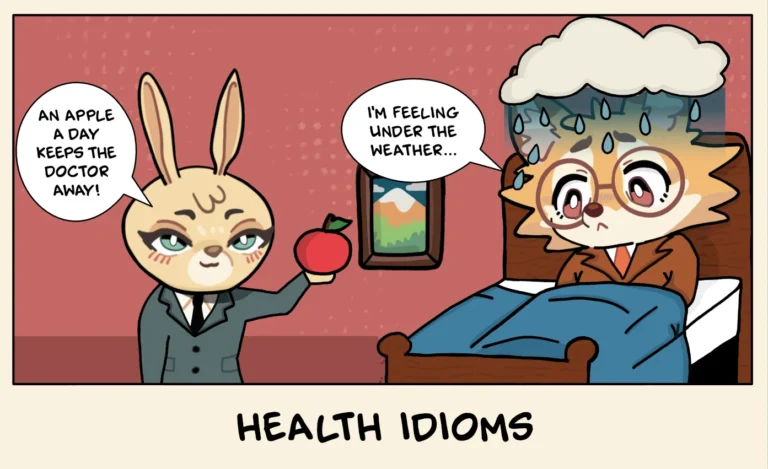
“An apple a day keeps the doctor away”
These are only a few in a long list of food idioms; as you explore and integrate idioms for food into your writing, you’re sure to encounter many more.
Can Food Idioms be Used in Exams and Writing?
You can certainly use idioms for food in your writing and in exams. One thing to pay attention to is that your food idiom matches the tone and context of the overall piece; describing a WW1 battle as “a piece of cake” may not be the most appropriate.
However, food idioms absolutely have their place in many styles of writing.