30 Brilliant Words to Describe Yourself in an Interview
“Could you introduce yourself?” is one of the most common interview questions. That’s why it’s important to know the right words to describe yourself in an interview.
Hiring managers ask this question to quickly understand:
- Your personality
- Your work ethic
- Your key traits
They use this information to decide if you are a good fit for the role and their workplace.
To succeed, you need to choose the right words and know when to use them. Strong communication can improve your chances of getting hired.
Table of Contents
Why Words to Describe Yourself in an Interview Are Important
Knowing how to use the right words to describe yourself in an interview helps you make a strong first impression. It shows confidence and self-awareness—two qualities employers look for in candidates.
Choosing words that match the job role can help you clearly present your strengths and personality. This makes it easier for hiring managers to see if you are a good fit.
Once you understand which words to use, you can tailor your answer to highlight:
- Your skills
- Your personality
- Your suitability for the role
To improve your interview answers, follow these simple tips:
- Prepare: Keep your answer clear, structured, and to the point
- Practice: Rehearse your response so you can speak with confidence
Why Using Different Words to Describe Yourself in an Interview Helps You Stand Out
Learning a variety of words to describe yourself in an interview helps you give better, more tailored answers. It allows you to adjust your response based on the job role and company.
Using different adjectives to describe yourself in an interview makes you sound:
- More authentic
- More specific
- More memorable
This can improve your chances of getting hired.
A strong vocabulary also helps you match your answer to the job description and company values. This makes it easier to show why you are the right fit without giving generic answers.
When you use the right professional words to describe yourself, you can clearly explain your strengths and stand out from other candidates.
Words to Describe Your Work Ethic in an Interview (With Examples)
| Word | Meaning | Example sentence |
| Hardworking | Puts in consistent effort and goes beyond expectations | I am hardworking and stay focused until my tasks are fully completed |
| Dedicated | Fully committed to a goal, team, or responsibility | I am dedicated to delivering high-quality results, even under pressure. |
| Reliable | Someone others can depend on | My team often trusts me with key tasks because I’m consistently reliable. |
| Proactive | Takes actions without being told | I take a proactive approach by solving problems before they grow. |
| Diligent | Careful and focused on details. | I am diligent and always check my work to ensure accuracy. |
Words to Describe Your Personality in an Interview (With Examples)
| Word | Meaning | Example sentence |
| Friendly | Easy to talk to and approachable | I build strong relationships quickly because I’m naturally friendly and approachable. |
| Adaptable | can adjust to new situations easily | I stay adaptable and handle changes calmly when priorities shift. |
| Positive | Keeps an optimistic attitude | I bring a positive attitude that helps keep the team motivated. |
| Motivated | Driven to achieve goals | I’m motivated to improve and always look for new challenges. |
| Confident | Sure of your abilities and ideas | I share my ideas with confidence when I believe they can help the team. |
Words to Describe Your Skills and Abilities in an Interview (With Examples)
| Word | Meaning | Example sentence |
| Creative | Think of new and original ideas | I use creative thinking to find solutions that others may miss. |
| Analytical | Solves problems using logic and data. | I take an analytical approach to review data and make decisions. |
| Organized | Plans and manages tasks efficiently. | I stay organized by using systems to manage multiple deadlines. |
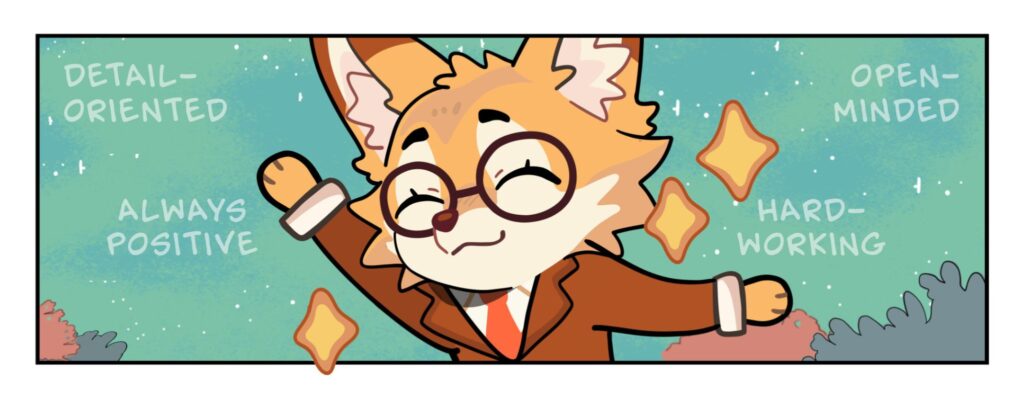
| Detail-oriented | Pays attention to small details. | I am detail-oriented and often catch mistakes before they become issues. |
| Resourceful | Finds quick and effective solutions. | I stay resourceful and use available tools to solve problems efficiently. |
Words to Describe Your Teamwork and Leadership Skills in an Interview (With Examples)
| Word | Meaning | Example sentence |
| Collaborative | Works well with others | I take a collaborative approach and make sure everyone’s ideas are heard. |
| Supportive | Helps and encourages others. | I am supportive and always ready to help teammates when needed. |
| Responsible | Takes ownership of tasks. | I am responsible and always follow through on my commitments. |
| Decisive | Makes clear and timely decisions. | I stay decisive and choose the best option in fast-paced situations. |
| Influential | Can inspire or persuade others positively. | I use an influential communication style to motivate the team. |
Words to Describe Your Learning and Growth Mindset in an Interview (With Examples)
| Word | Meaning | Example sentence |
| Curious | wants to learn and explore new ideas | I am curious and always look for better ways to improve my work. |
| Eager | Ready and willing to learn new things. | I am eager to learn from others and take on new challenges. |
| Resilient | Recovers quickly from difficulties. | I stay resilient and focus on solutions when things do not go as planned. |
| Open-minded | Willing to accept new ideas and feedback. | I am open-minded and adjust my approach based on feedback. |
| Ambitious | Strong desire to improve and succeed. | I am ambitious and set goals to grow both personally and professionally. |
Where to Use Words to Describe Yourself in an Interview (With Examples and Tips)
First impressions are important in any job interview. This is your chance to use the right words to describe yourself in an interview and show your skills clearly.
A strong introduction helps the interviewer quickly understand who you are. Use simple and confident words to describe your personality and strengths.
When to Use Words to Describe Yourself in an Interview
You should use interview words and adjectives to describe yourself at different stages:
- At the beginning, when you introduce yourself
- When answering interview questions
- During the behavioural interview questions.
Use Words in Behavioral Interview Answers
Employers often ask questions like:
- “Tell me about a time when…”
- “How do you handle…”
These questions test your:
- Communication skills
- Teamwork
- Problem-solving ability
To answer well, combine professional words to describe yourself with real examples.
Example:
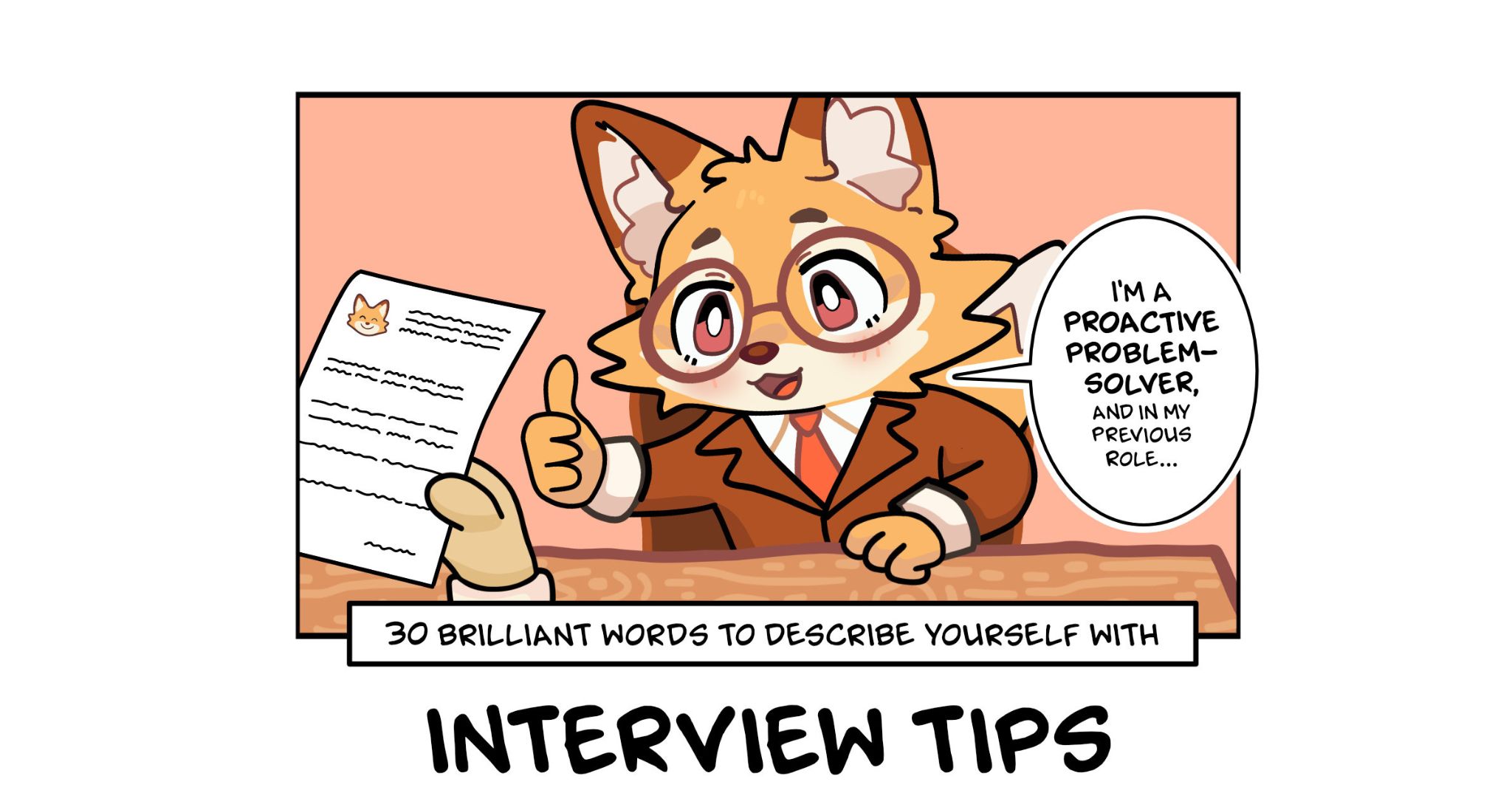
- “I am a proactive problem-solver, and in my previous role…”
This makes your answer clearer and more believable.
Simple Interview Speaking Tips (STAR Method)
To give better answers, use the STAR method:
- Situation: Explain what happened
- Task: Describe your responsibility
- Action: Explain what you did
- Result: Share the outcome
This method helps you give structured and easy-to-follow answers.
Example Using the STAR Method
- Situation: A project deadline was moved earlier than planned
- Task: I needed to reorganize my work and support my team
- Action: I broke the work into smaller tasks and stayed proactive
- Result: We finished early, and my manager praised my work
Where Else Can You Use These Words?
You can also use these words to describe yourself in:
- Your cover letter
- Your CV or resume
- Thank-you emails after an interview
Using the right words consistently helps you leave a strong and professional impression.
How to Choose the Best Words to Describe Yourself in an Interview
Choosing the right words to describe yourself in an interview is important. Your answer should match the job role and the company’s expectations.
To do this, look at the job description and use similar language. This shows the employer that you understand what they are looking for.
1. Match Your Words to the Job Description
Use professional words to describe yourself that fit the role. You can do this by:
- using keywords from the job description
- matching the company’s tone and values
- showing how your skills fit the role
This helps you sound more relevant and prepared.
2. Be Honest and Authentic
Choose adjectives to describe yourself in an interview that are true. Employers prefer honest answers over impressive-sounding words.
Make sure you can support your words with real examples.
For example:
- Instead of just saying “hardworking,” explain how you show it
3. Avoid Overused or Generic Words
Some common words can sound weak if not explained well. Examples include:
- hardworking
- perfectionist
Instead, try to use more specific and clear traits. This will help you stand out from other candidates.
4. Focus on Clear and Specific Traits
The best words to describe yourself in an interview are:
- simple
- specific
- supported by examples
This makes your answers more believable and easier to remember.
Final Thoughts on Words to Describe Yourself in an Interview.
Choosing the right words to describe yourself in an interview can help you stand out and make a strong impression. Simple, clear, and honest answers are more effective than complicated or generic ones.
When you use the right adjectives to describe yourself in an interview, you show employers your personality, skills, and confidence. This makes it easier for them to see if you are the right fit.
To improve your answers, remember to:
- Choose professional words to describe yourself that match the job
- Support your words with real examples
- Keep your answers clear and easy to understand
With practice, you will master your English interview skills.
Now, let’s test your interview skills. Ready?
Try these questions and think about your answers:
- What are 3 words to describe yourself in an interview?
- Which word best describes your work ethic?
- How would you describe your personality in one sentence?
- Which of your skills makes you a strong candidate?
- Can you give an example to support one of your traits?
Drop your answers below and practice your interview responses!
Join our WhatsApp group for more support to improve
your English.