Gendered Language Explained: 30 Examples and Inclusive Alternatives
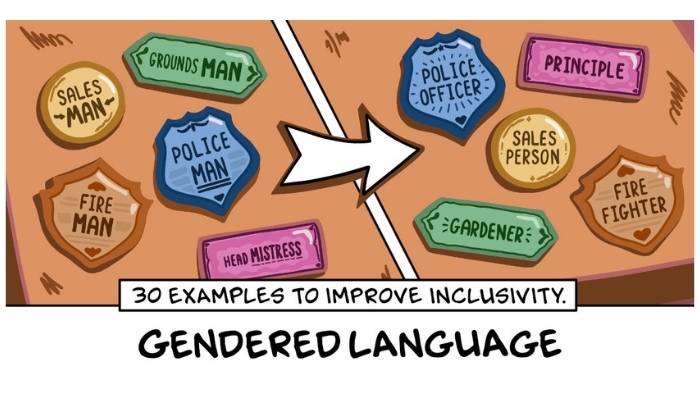
Most societies assign roles and expectations based on gender. These vary across cultures but have existed for centuries, influencing how people communicate. In English, these influences often appear as gendered language.
Gendered language refers to words or phrases that assume or emphasise a particular gender—such as “policeman” or “last man standing.”
This is different from grammatical gender, which involves using correct pronouns for someone (e.g., she/her, he/him, they/them).
Table of Contents
What Is Gendered Language?
Gendered language refers to words or phrases that assume or emphasise a specific gender. For example, terms like “policeman” or phrases like “man up” imply gender roles or expectations.
This is different from grammatical gender, which simply involves using the correct pronouns for someone, such as he/him, she/her or they/them.
Where Is Gendered Language Commonly Used?
1. Everyday Speech
Gendered language often appears in casual conversation:
- Saying “you guys” to address a mixed group
- Using incorrect honorifics like “Mr.” or “Mrs.”
- Using phrases tied to stereotypes
2. The Workplace
In professional environments, gendered language can:
- Reinforce stereotypes
- Affect hiring decisions
- Limit inclusivity
Using neutral job titles helps create a fairer workplace.
3. Media and Literature
Gendered language is frequently used in:
- Advertising targeting specific audiences
- Older media reflecting past gender roles
- Stories that reinforce or challenge stereotypes
Pros and Cons of Gendered Language
Pros
- Can reflect identity and personal preference
- Useful in historical or cultural contexts
- Helps add realism in storytelling
Cons
- Reinforces outdated stereotypes
- Excludes non-binary individuals
- Creates bias in professional communication
30 Examples of Gendered Language (With Inclusive Alternatives)
Gendered Job Titles
- Policeman → Police officer
- Stewardess → Flight attendant
- Fireman → Firefighter
- Cameraman → Camera operator
- Headmistress → Headteacher / Principal
- Businessman → Entrepreneur
- Delivery man → Courier
- Salesman → Salesperson
- Fisherman → Fisher
- Groundsman → Groundskeeper / Gardener
Gendered Honorifics and Titles
- Mr.
- Mrs. / Miss / Ms.
- Dr.
- Sir
- Lady
- Professor
- Your Honour
- Lord
- Madam
- Mx. (gender-neutral alternative)
Gendered Pronouns and Phrases
- He/him
- She/her
- They/them
- “Boys will be boys”
- “Man up”
- “Like a girl”
- “Girly”
- “Manpower” → Workforce
- “Ladies and gentlemen” → Everyone / Guests
- “You guys” → Everyone / Team

How to Identify Gendered Language
To recognise gendered language:
- Review your writing for assumptions about gender
- Replace gendered terms with neutral alternatives
- Ask for and respect people’s pronouns
- Be mindful of phrases rooted in stereotypes
When to Use (and Avoid) Gendered Language
Appropriate Uses
- Historical or academic references
- Cultural or religious contexts
- Creative writing and character dialogue
- When someone states a clear preference
Inappropriate Uses
- Job descriptions and hiring processes
- Legal and academic writing
- Workplace communication
- Public or global messaging
Looking Ahead
Gendered language is shaped by culture and history, but it can also reinforce bias and exclusion. Choosing inclusive, gender-neutral language improves communication and helps create respectful environments in both personal and professional settings.
Did You Know?
Gendered language isn’t used in all languages.
In Turkish, the pronoun “o” means he, she, or they, depending on context.
This shows that inclusive language is already natural in many cultures.
To see gendered language in action, explore TV shows and movies that help improve English skills at every level and highlight how inclusive and everyday language is used in context.
References:
https://blog.duolingo.com/what-is-grammatical-gender/
https://www.thoughtco.com/honorific-definition-and-examples-1690936
https://www.berkeleywellbeing.com/stereotyping.html