30 Music Idioms with Examples to Improve Your English
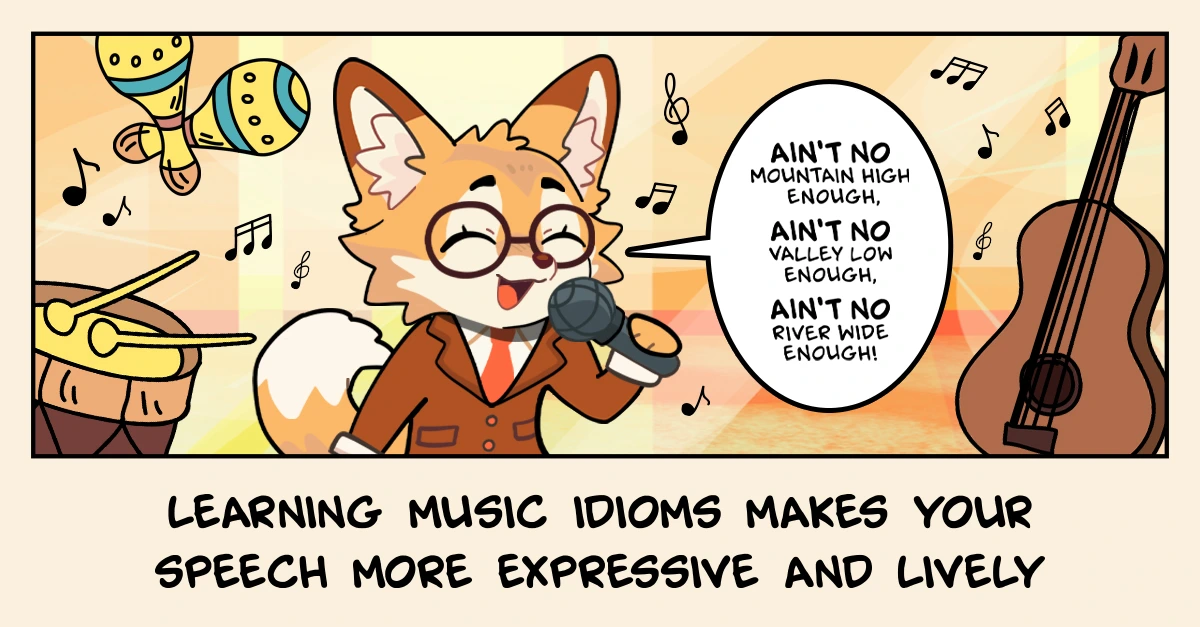
Have you ever heard phrases like “It’s music to my ears” or “He changed his tune”? Music idioms are common in everyday English, appearing in conversations, films, TV shows, and the workplace.
Learning these expressions can make your English sound more natural and fluent. It can also help you understand conversations more easily because idioms often have meanings that are different from the literal words.
Table of Contents
What Are Music Idioms?
Music idioms are expressions related to music, singing, instruments, or songs. However, they usually have a figurative meaning instead of a literal one.
For example:
- “Face the music” does not mean standing in front of a band. It means accepting the consequences of your actions.
Idioms make English more colourful and expressive. They are especially useful in spoken English and informal writing.
If you enjoy learning figurative expressions, you may also like this guide on figurative language examples:
https://englishlanguageandliterature.com/figurative-language-example/
30 Music Idioms With Meanings and Examples
1. Music to my ears
Meaning: Something pleasant to hear.
Example: “Your good news was music to my ears.”
2. Change your tune
Meaning: Change your opinion or attitude.
Example: “He changed his tune after seeing the results.”
3. Face the music
Meaning: Accept punishment or criticism.
Example: “You broke the rules, so now you must face the music.”
4. Blow your own trumpet
Meaning: Boast about yourself.
Example: “She is always blowing her own trumpet about her grades.”
5. Ring a bell
Meaning: Sound familiar.
Example: “Her name rings a bell, but I can’t remember where I met her.”
6. Strike a chord
Meaning: Create an emotional reaction.
Example: “His story struck a chord with many people.”
7. In tune with
Meaning: In agreement or understanding.
Example: “Good friends are often in tune with each other.”
8. Out of tune
Meaning: Not in harmony or agreement.
Example: “Their ideas were completely out of tune.”
9. Play it by ear
Meaning: Decide something as you go.
Example: “We don’t have a plan yet. Let’s play it by ear.”
10. Fine tune
Meaning: Make small improvements.
Example: “The writer fine-tuned the article before publishing it.”
11. Call the tune
Meaning: Control a situation.
Example: “The manager calls the tune in the office.”
12. March to the beat of your own drum
Meaning: Act independently.
Example: “She has always marched to the beat of her own drum.”
13. Hit the right note
Meaning: Say or do something suitable.
Example: “His speech hit the right note with the audience.”
14. Hit a sour note
Meaning: Create tension or discomfort.
Example: “Her rude comment hit a sour note during dinner.”
15. Swan song
Meaning: A final performance or act.
Example: “The film was the actor’s swan song.”
16. Sound like a broken record
Meaning: Repeat the same thing again and again.
Example: “My parents sound like broken records about studying.”
17. Sing a different tune
Meaning: Change your opinion completely.
Example: “He was singing a different tune after the interview.”
18. Make a song and dance about something
Meaning: Overreact or complain too much.
Example: “She made a song and dance about the small mistake.”
19. For a song
Meaning: Very cheaply.
Example: “He bought the old bike for a song.”
20. Pull out all the stops
Meaning: Make a huge effort.
Example: “The team pulled out all the stops to finish the project.”
21. Blow the whistle
Meaning: Report wrongdoing.
Example: “An employee blew the whistle on the company.”
22. Drum up support
Meaning: Encourage support or interest.
Example: “The charity event helped drum up support.”
23. Without missing a beat
Meaning: Immediately and smoothly.
Example: “She answered the question without missing a beat.”
24. Strike the right chord
Meaning: Have the desired effect emotionally.
Example: “The advertisement struck the right chord with customers.”
25. Toe the line
Meaning: Follow rules or authority.
Example: “Employees are expected to toe the line.”
26. Harp on something
Meaning: Talk repeatedly about something annoying.
Example: “He keeps harping on my mistakes.”
27. All that jazz
Meaning: Similar related things.
Example: “The shop sells books, games, art supplies, and all that jazz.”
28. Dance to someone’s tune
Meaning: Follow someone’s orders.
Example: “He refuses to dance to anyone’s tune.”
29. Sing from the same hymn sheet
Meaning: Agree with each other.
Example: “The whole team was singing from the same hymn sheet.”
30. Set the tone
Meaning: Create the mood or atmosphere.
Example: “The opening scene set the tone for the movie.”
How to Remember Music Idioms Easily
Learning idioms can feel difficult at first, but small daily practice helps a lot.
Here are a few simple tips:
- Learn idioms in context instead of memorising lists.
- Write your own example sentences.
- Watch English movies and listen for idioms.
- Try using one new idiom every day.
- Review idioms regularly to remember them longer.
You can also improve your vocabulary with English idioms from different topics and situations. The more expressions you learn, the more natural your English will sound.
Why Music Idioms Matter in English
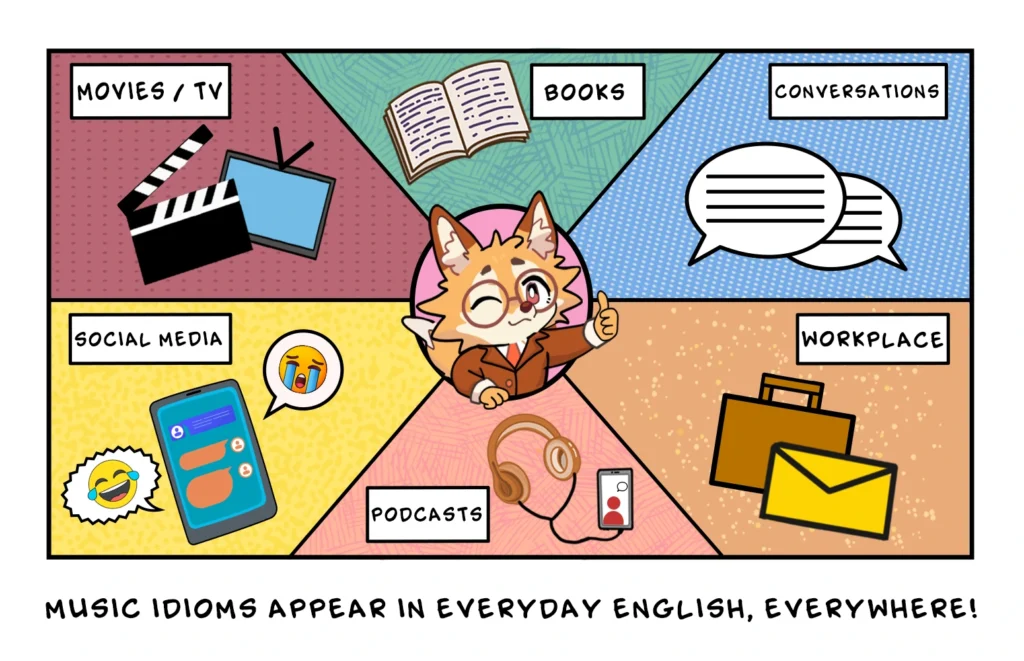
Music idioms are very common in spoken English. Native speakers use them in casual conversations, social media posts, books, podcasts, and workplaces.
Understanding these expressions can help you:
- Sound more fluent
- Understand native speakers better
- Improve your speaking confidence
- Make your writing more engaging
- Expand your vocabulary naturally
Many English learners focus only on grammar, but idioms are equally important for sounding natural in conversations.
Conclusion
Music idioms make English more expressive, creative, and enjoyable to learn. From “face the music” to “play it by ear,” these expressions appear in everyday English more often than many learners realise.
Start by learning a few idioms at a time and practise using them in conversations. Over time, they will become a natural part of your vocabulary.
Which music idiom is your favourite so far?
Quick Quiz: Test Your Music Idioms Knowledge
What does “play it by ear” mean?
- A) Listen to music carefully
- B) Decide something as you go
- C) Sing without practice
And what does “music to my ears” mean?
- A) A loud sound
- B) Something unpleasant
- C) Something pleasant to hear