30+ Health Idioms to Instantly Boost Your English Fluency
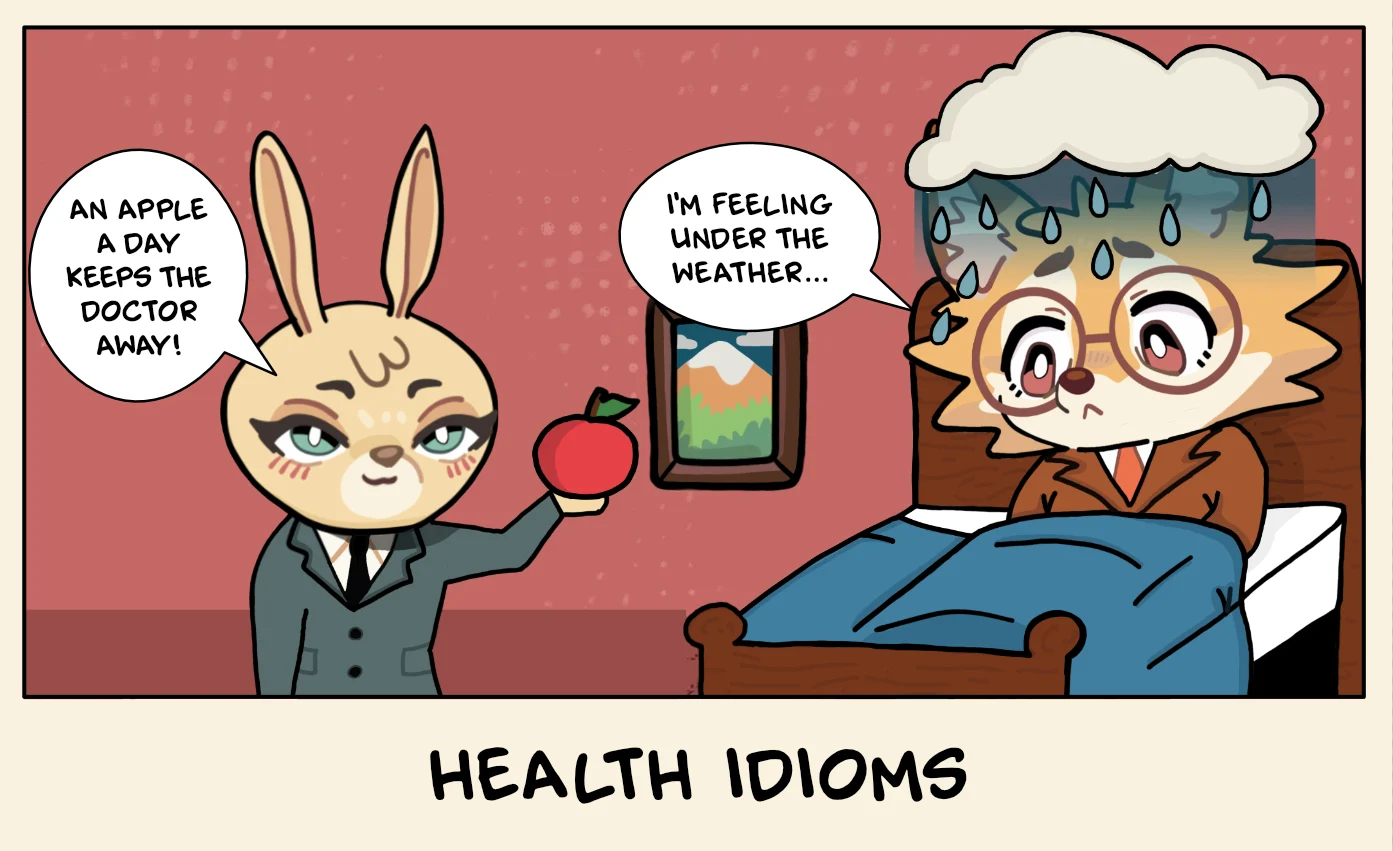
Have you ever heard someone say, “I’m feeling under the weather” or “She’s as fit as a fiddle”? These are health idioms, common English expressions connected to the body, fitness, illness, and wellbeing.
Native speakers use these idioms every day in conversations, movies, TV shows, workplaces, and social media. If you understand them, your English will sound much more natural and fluent.
The good news is that many health idioms are simple, fun, and easy to remember.
Table of Contents
What Are Health Idioms?
Health idioms are expressions related to the body, medicine, sickness, fitness, or general wellbeing. However, their meanings are usually figurative rather than literal.
For example:
- “Under the weather” does not mean standing below clouds. It means feeling slightly sick or unwell.
Idioms help make English more expressive and conversational. They are especially common in spoken English.
If you enjoy learning figurative expressions, you may also like this guide on figurative language examples:
https://englishlanguageandliterature.com/figurative-language-example/
30+ Health Idioms With Meanings and Examples
1. Under the weather
Meaning: Feeling sick or unwell.
Example: “I’m staying home today because I feel under the weather.”
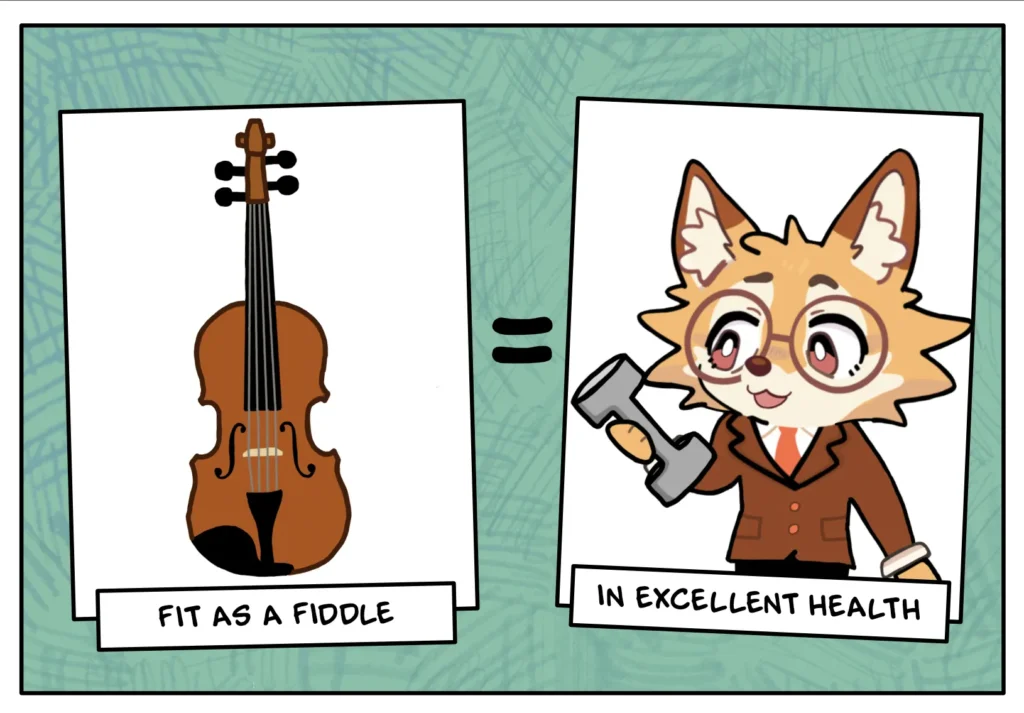
2. As fit as a fiddle
Meaning: Very healthy and strong.
Example: “Despite his age, my grandfather is as fit as a fiddle.”
3. Back on your feet
Meaning: Healthy again after illness or difficulty.
Example: “She was back on her feet after a few days of rest.”
4. In good shape
Meaning: Physically healthy.
Example: “Regular exercise keeps you in good shape.”
5. Alive and kicking
Meaning: Active and healthy.
Example: “The old traditions are still alive and kicking.”
6. Full of beans
Meaning: Energetic and lively.
Example: “The children were full of beans after lunch.”
7. Black and blue
Meaning: Covered in bruises.
Example: “He fell off his bike and was black and blue.”
8. A bitter pill to swallow
Meaning: A difficult fact to accept.
Example: “Losing the match was a bitter pill to swallow.”
9. Break out in a cold sweat
Meaning: Become very nervous or frightened.
Example: “I broke out in a cold sweat before the interview.”
10. Take a turn for the worse
Meaning: Become worse suddenly.
Example: “His condition took a turn for the worse overnight.”
11. On the mend
Meaning: Recovering from illness.
Example: “After surgery, she is finally on the mend.”
12. Clean bill of health
Meaning: A report showing good health.
Example: “The doctor gave him a clean bill of health.”
13. Sick as a dog
Meaning: Extremely ill.
Example: “I was sick as a dog after eating bad food.”
14. Feel run down
Meaning: Feel tired and weak.
Example: “I’ve been feeling run down lately.”
15. Apple of your eye
Meaning: Someone you love dearly.
Example: “Her youngest son is the apple of her eye.”
16. Pain in the neck
Meaning: An annoying person or problem.
Example: “This computer problem is a real pain in the neck.”
17. Cost an arm and a leg
Meaning: Be very expensive.
Example: “That new phone costs an arm and a leg.”
18. Give someone a hand
Meaning: Help someone.
Example: “Can you give me a hand with these boxes?”
19. Keep your chin up
Meaning: Stay positive during difficult times.
Example: “Keep your chin up — things will improve soon.”
20. Get cold feet
Meaning: Become nervous before doing something.
Example: “He got cold feet before the wedding.”
21. Foot the bill
Meaning: Pay the cost.
Example: “Her parents footed the bill for the trip.”
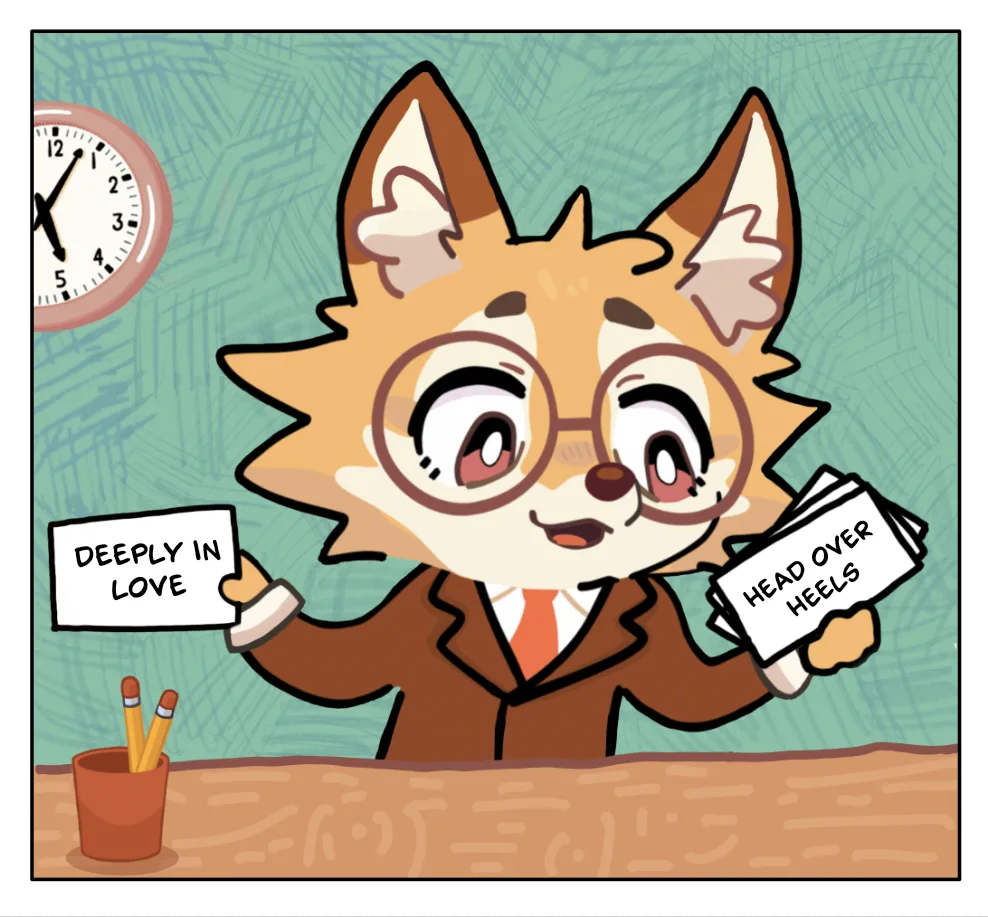
22. Head over heels
Meaning: Deeply in love.
Example: “They fell head over heels for each other.”
23. Lose your head
Meaning: Panic or become angry.
Example: “Try not to lose your head during emergencies.”
24. Pick someone’s brain
Meaning: Ask someone for advice or ideas.
Example: “I wanted to pick her brain about studying abroad.”
25. Blood is thicker than water
Meaning: Family relationships are strongest.
Example: “They always support each other because blood is thicker than water.”
26. By the skin of your teeth
Meaning: Barely succeed.
Example: “He passed the exam by the skin of his teeth.”
27. Heart skips a beat
Meaning: Feel sudden excitement or fear.
Example: “My heart skipped a beat when I heard the news.”
28. Gut feeling
Meaning: An instinctive feeling.
Example: “I had a gut feeling something was wrong.”
29. Pull yourself together
Meaning: Calm down emotionally.
Example: “She took a moment to pull herself together.”
30. A dose of your own medicine
Meaning: Experience the same bad treatment you gave others.
Example: “The bully finally got a dose of his own medicine.”
31. Breathe down someone’s neck
Meaning: Watch someone too closely.
Example: “I can’t work properly with my manager breathing down my neck.”
32. Burn yourself out
Meaning: Exhaust yourself from too much work.
Example: “You’ll burn yourself out if you never take breaks.”
How to Learn Health Idioms Faster
Memorising long lists rarely works well. Instead, try learning idioms naturally through context and repetition.
Here are a few simple tips:
- Use one new idiom in conversation every day.
- Watch English movies and listen for idioms.
- Create your own example sentences.
- Read English articles regularly.
- Review idioms weekly to remember them longer.
The more idioms you use, the more confident and fluent your English will become.
Why Health Idioms Are Important in English
Health idioms appear everywhere in English conversations. Native speakers use them without even thinking about it.
Learning these expressions can help you:
- Understand native speakers more easily
- Sound more fluent and natural
- Improve your vocabulary
- Speak with greater confidence
- Make your English more expressive
Idioms are one of the best ways to move from basic English to more advanced and natural communication.
Conclusion
Health idioms are fun, practical, and extremely common in everyday English. Whether someone feels “under the weather” or “as fit as a fiddle,” these expressions help conversations sound more natural and engaging.
Start by learning a few idioms at a time and practise using them in daily conversations. Over time, they will become a natural part of your English vocabulary.
Which health idiom do you think you will use first?
Quick Quiz: Test Your Health Idioms Knowledge
What does “under the weather” mean?
- A) Feeling sick
- B) Enjoying the sunshine
- C) Feeling energetic
What does “cost an arm and a leg” mean?
- A) Something dangerous
- B) Something very expensive
- C) Something unhealthy