30+ Color Idioms for Everyday English
Native English speakers always use color idioms. They’re not only a big part of everyday speech, but they also add a splash of color and fun to the language!
Table of Contents
What Exactly Are Color Idioms?
Color idioms are super common English expressions that use colors to describe feelings, situations, or ideas in a fun, non-literal way.
They are phrases that add special meaning simply by adding colors to sentences.
A classic example would be:
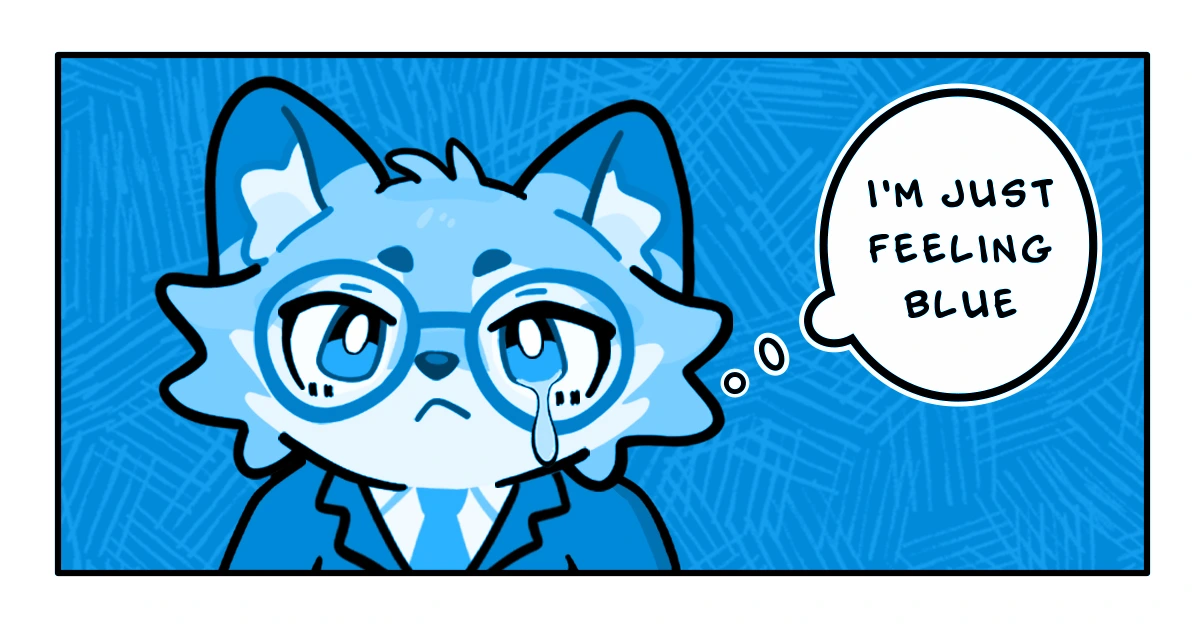
“I’m feeling blue”, which basically translates to “I’m feeling sad”.
Doesn’t that remind you of the Disney movie ‘Inside Out’? Well, that’s part of what color idioms can be: an association of colors to specific things.
For example, when we think of…
- Blue: sadness.
- Red: anger
- Green: jealousy.
- Yellow: happiness
- And so on!
It goes beyond emotions, but feelings are a good way to set things in motion because they’re quite instinctive.
Color idioms are very common and useful. If you’re looking to think more like a native speaker, knowing them is a must!
They can help you:
- Understand movies, TV shows, books, and plays in their emotional or symbolic contexts.
- Sound more fluent in conversations.
- Express emotions more clearly.
- And lastly… improve your English!
So, let’s get to it! Now that you know what color idioms are, it’s time to keep digging into more knowledge.
In this guide, you will:
- Learn what color idioms are.
- Be introduced to common color idioms
- Find out about more idioms focused on one specific color, like:
- White idioms
- Red idioms
- Blue idioms
- Green idioms
- Black idioms
- Yellow idioms
- You will also have a writing assignment to practice!
Let’s begin!
Popular and Common Color Idioms
As we just made clear, colors are intrinsically related to feelings and ideas.
Because of these associations, English speakers created some expressions that are used in everyday conversations, texts, songs, and much more!
Some examples can paint a better picture, don’t you think?
Below, you’ll find the most typical color idioms along with:
- Their common ways of expression.
- Their meaning.
- And a sentence example!
Common Color Idioms
| Color | Idiom | Meaning | Sentence Example |
| Gray | Gray area | Uncertain, unclear | The law has many gray areas. |
| Silver | Silver lining | The good in the bad | Getting fired had a silver lining; she could follow her dream of becoming an actress. |
| Brown | Brownie points | Approval, praise | Her husband earned some brownie points for mowing the lawn. |
| Silver | Silver spoonSilver platter | To be born into wealthTo be given something really easily | You were born with a silver spoon in your mouth, that’s why you don’t stress over rent.Thanks to networking, her new job was handed to her on a silver platter. |
These are very popular, so they’re a great mind-opener. Let’s proceed to explore even more!
White Idioms
| Idiom | Meaning | Sentence Example |
| White lie | A harmless, small lie | It was only a white lie, it’s not a big deal! |
| White elephant | Something expensive and useless | I wasted my Christmas bonus check on a white elephant the other day. |
| Whitewash | To cover up something unpleasant | The oil company got bad press for whitewashing their impact. |
| White-collar | Office or professional work | He’s going to business school to land a white-collar job. |
| Raise the white flag | Surrender | Eventually, the wrestler had no choice but to raise the white flag. |
Red Idioms
| Idiom | Meaning | Sentence Example |
| Red tape | Too much bureaucracy | Getting health insurance means sorting out a lot of red tape. |
| In the red | Someone in debt | When her store closed, she found herself in the red. |
| Caught red-handed | Being caught doing something wrong | The burglar was caught red-handed! |
| Seeing red | Extremely angry, practically fuming | When people insult his friend, he sees red |
| Paint the town red | To celebrate wildly | Before the wedding, his friends took him out to paint the town red. |
Blue Idioms
| Idiom | Meaning | Sentence Example |
| True blue | Loyal or genuine | They’ve been true blue friends for decades. |
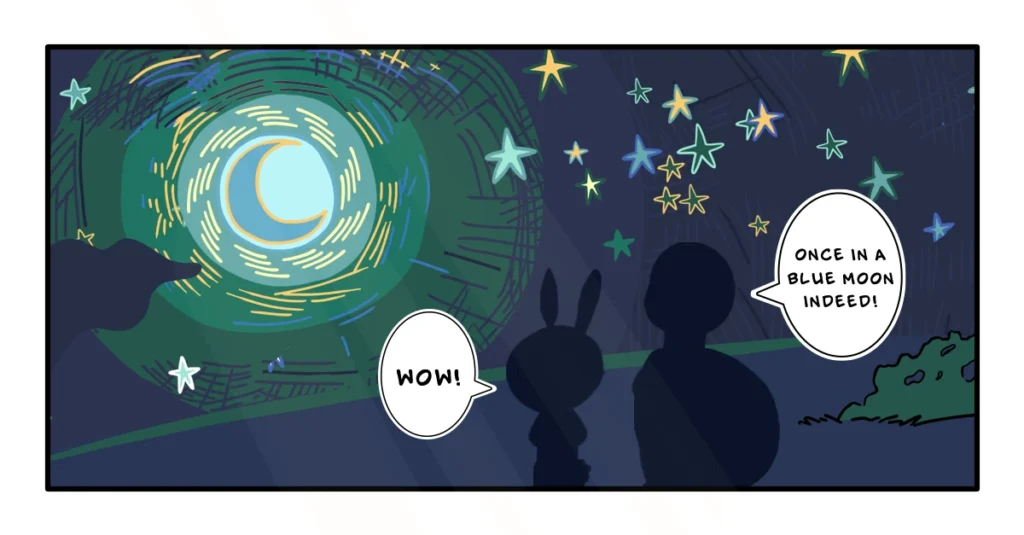
| Once in a blue moon | Very rarely, or unusual | The comet only comes around once in a blue moon. |
| Out of the blue | Something unexpected and unpredictable | Her decision to move countries came out of the blue. |
| Blue in the face | Exhausted from a long, fruitless effort | They argued until they were blue in the face. |
| Feeling blue | Sad | He was feeling blue at the funeral. |
Green Idioms
| Idiom | Meaning | Sentence Example |
| Green with envy | Incredibly jealous | The neighbor’s new car makes me green with envy. |
| Green thumb | A talent for gardening | After tasting his tomatoes, they all agreed he has a real green thumb. |
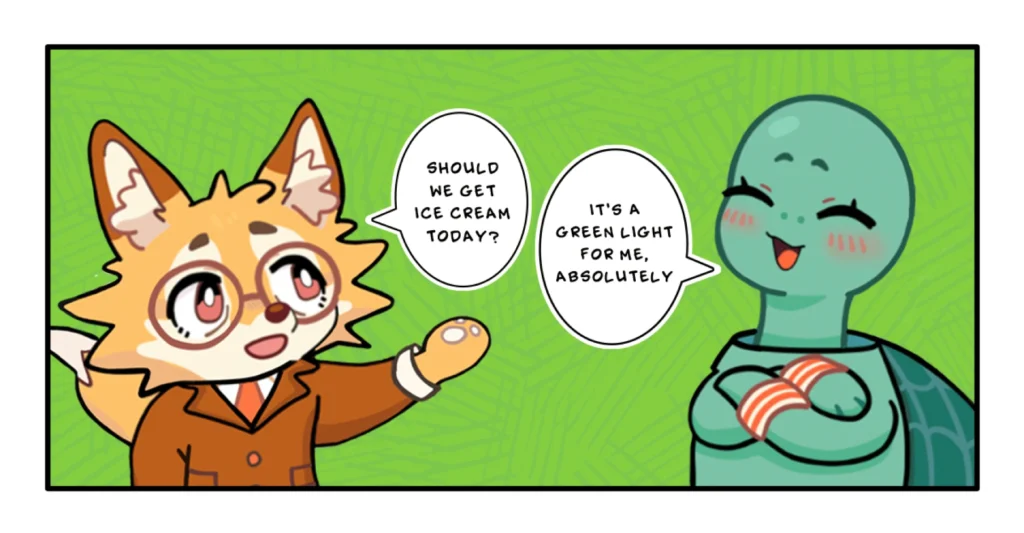
| Gave the green light | Approved something | The project went ahead after he gave the green light. |
| The grass is always greener on the other side | The alternative always seems better | John daydreams at work because the grass is always greener on the other side. |
| Green as grass | Inexperienced or naive | Our new team member is green as grass. |
Black Idioms
| Idiom | Meaning | Sentence Example |
| Black sheep | Someone considered radically different or shameful in a group | Choosing to become an artist made him the black sheep of his family. |
| Pot calling the kettle black | Someone is being hypocritical | Saying I don’t like to work is the pot calling the kettle black. |
| Black mark | A negative strike against someone | His arrest will be a black mark on his record for a while. |
| Black humor | Jokes about very serious or forbidden topics | Her black humor was poorly received by the hospital staff. |
| Black-hearted | Evil | As a fearsome pirate, he was famously black-hearted. |
Yellow Idioms
| Idiom | Meaning | Sentence Example |
| Yellow-bellied | Cowardly or easily frightened | Whenever he watches a horror movie, you can see how yellow-bellied he is. |
| Yellow journalism | Sensational or exaggerated news, usually false | The paper is being sued for its aggressive yellow journalism. |
| Mellow yellow | Calm and laid-back | We love hanging out with her because she’s always mellow yellow. |
| Yellow flag | A warning signal | The change in his contract was a yellow flag. |
| Yellow streak | A sign of cowardice | Instead of standing up for me, he showed his yellow streak. |
Conclusion
Color idioms make your English sound more natural, expressive, and fun!
Learning English is not only about the basics, but it’s also about submerging/immersing yourself into tips and tricks that will help you think and sound like a native in no time!
The more color idioms you learn, the easier it becomes to understand natural English and express yourself clearly.
So, how about a little assignment, huh? Are you up for the challenge?
WRITING EXERCISE
Use these three classic examples in a sentence:
- Feeling blue.
- Green light.
- Once in a blue moon.
Also, try catching those (and more) in movies, podcasts, and music. Think about their context and how characters or people use them.
Once you notice them easily, you’ll use them naturally and add some color to your learning journey.
Enjoy the rainbow!
P.S. Want to learn more about English idioms? Check out our other blogs!