50+ Hard English Words: Master Advanced Vocabulary Easily
English is a fascinating language, but it can also be one of the most challenging to master. From unpredictable pronunciation and silent letters to words with multiple meanings, many hard English words can confuse even advanced learners and native speakers alike.
However, learning difficult vocabulary is about much more than impressing others. A strong vocabulary helps you communicate with greater precision, understand complex texts, and express ideas more naturally in both spoken and written English. Sometimes, a single well-chosen word can replace an entire explanation.
If your goal is to improve your English fluency, expanding your vocabulary should go hand in hand with regular reading, speaking, and writing practice. Building a strong vocabulary will also improve your confidence in academic, professional, and everyday conversations.
In this guide, you’ll discover more than 50 hard English words grouped by pronunciation, spelling, and meaning. Each word includes a simple definition and an example sentence to help you remember it in context. By the end of this article, you’ll not only recognize these advanced English words—you’ll know when and how to use them confidently.
Table of Contents
Why Are Some English Words So Hard?
Before exploring the list, it helps to understand why some English words are so difficult to learn. English is often described as a “borrower” language because it has adopted vocabulary from Latin, Greek, French, German, and many other languages. As a result, its pronunciation and spelling rules are far less consistent than those of many other languages.
This rich linguistic history is one of the reasons English has such a large and diverse vocabulary. While that gives learners plenty of ways to express themselves, it also creates words that can be difficult to pronounce, spell, and understand correctly.
Here are some of the main reasons why English words can be so challenging:
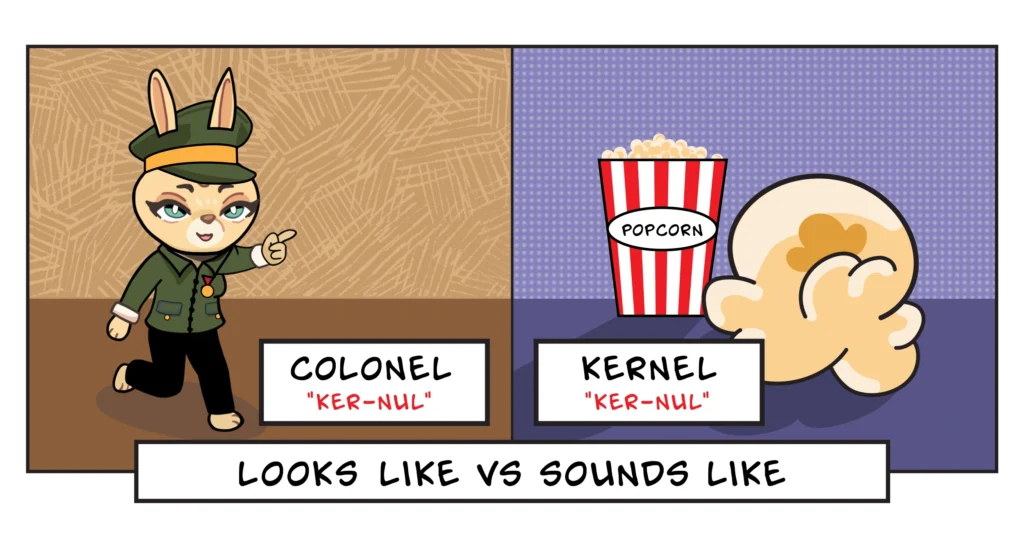
- Unpredictable pronunciation: Many words are not pronounced the way they are spelled. For example, “colonel” is pronounced “kernel,” while “Worcestershire” sounds very different from its written form.
- Silent letters: Words such as “knight”, “psychology”, and “debt” contain letters that are written but not spoken, making pronunciation confusing for learners.
- Complex meanings: Some advanced English words express subtle ideas, emotions, or concepts that are difficult to translate directly into other languages.
- Multiple meanings: Many English words have several definitions depending on the context, making it essential to understand how they are used in real-life situations.
Although these challenges can feel overwhelming at first, they become much easier with regular practice, exposure, and repetition. The list below will help you master some of the most difficult English words by learning both their meanings and how to use them correctly.
For accurate definitions, pronunciation, and usage examples, you can also refer to trusted English dictionaries while studying.
Hard English Words to Pronounce
Pronunciation is often the biggest challenge for English learners. You may recognize a word instantly when reading, yet hesitate to say it aloud because its pronunciation doesn’t match its spelling. This is one of the most common difficulties in English, as many words follow historical pronunciation patterns rather than modern spelling rules.
The hard English words below are well known for confusing both learners and native speakers. Some contain silent letters, while others are borrowed from different languages, making their pronunciation anything but intuitive. Learning how these words sound will help you speak more confidently and improve your overall English fluency.
Tip: Pay attention to the phonetic pronunciation in the middle column. Read each word aloud several times and use the example sentence to practice it in context. Listening to native pronunciation can also help reinforce the correct sounds.
| Word | Phonetic Pronunciation (IPA-inspired) | Meaning | Example Sentence |
| Colonel | Ker-nul | A high-ranking army officer. | The colonel ordered the troops to advance. |
| Worcestershire | Wuss-ter-sheer | A savory sauce used in cooking. | Put some Worcestershire sauce on the steak. |
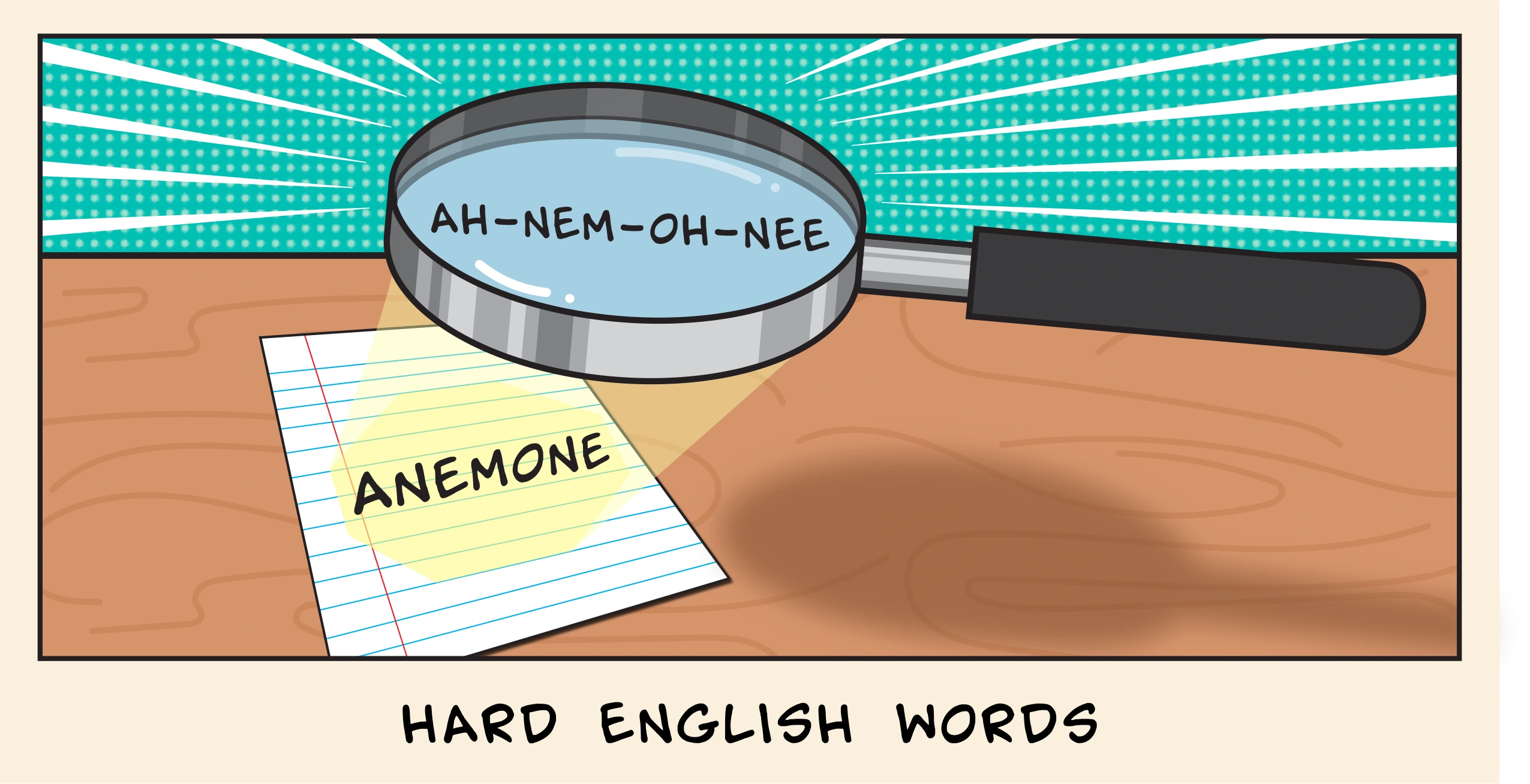
| Anemone | Ah-nem-oh-nee | A brightly colored sea creature or flower. | The clownfish lives inside the sea anemone. |
| Isthmus | Is-muss | A narrow strip of land connecting two larger areas. | The Panama Isthmus connects North and South America. |
| Squirrel | Sk-whirl | A small rodent with a bushy tail. | The squirrel hid nuts in the tree for winter. |
| Rural | Rur-ol | Relating to the countryside (not the city). | He moved to a rural area to enjoy the quiet. |
| Otorhinolaryngologist | Oto-rhino-laren-gologist | An ear, nose, and throat doctor (ENT). | If your throat hurts for weeks, see an otorhinolaryngologist. |
| Draught | Draft | A current of cool air in a room. | Please close the window; there is a cold draught. |
| Choir | Kwy-er | A group of singers. | She sings in the church choir every Sunday. |
| Queue | Kyoo | A line of people waiting for something. | We had to wait in a long queue for tickets. |
| Mischievous | Mis-chiv-us | Causing trouble in a playful way. | The mischievous puppy stole my shoe. |
| Defibrillator | De-fib-ri-lay-tor | A machine used to restart the heart. | The paramedics used a defibrillator to save his life. |
Hard English Words to Spell
Pronouncing a word correctly is one challenge, but spelling it accurately can be even more difficult. English spelling is filled with exceptions, silent letters, double consonants, and unusual vowel combinations that often confuse learners and native speakers alike.
The hard English words below are commonly misspelled because they don’t always follow predictable spelling patterns. While spellcheck can catch many mistakes, developing strong spelling skills is essential for academic writing, professional communication, and language proficiency.
Instead of simply memorizing each word, pay attention to recurring spelling patterns and common letter combinations. Understanding why a word is spelled a certain way will make it much easier to remember in the future.
| Word | Tricky Part | Meaning | Example Sentence |
| Accommodate | Double c, double m. | To provide space or fit in. | The hotel can accommodate 500 guests. |
| Embarrassment | Double r, double s. | A feeling of shame or awkwardness. | He turned red with embarrassment. |
| Rhythm | No vowels (uses y), silent h. | A strong, regular repeated pattern of sound. | The music has a fast rhythm. |
| Pharaoh | Silent a and o. | A ruler in ancient Egypt. | The pharaoh built a massive pyramid. |
| Nauseous | Lots of vowels (eau). | Feeling like you are going to vomit. | The boat ride made me feel nauseous. |
| Conscience | Sc combination. | An inner feeling of right and wrong. | His conscience told him to tell the truth. |
| Necessary | One c, double s. | Required or essential. | Water is necessary for survival. |
| Bureaucracy | Eau combination. | Overly complicated administrative procedure. | Getting a visa involves too much bureaucracy. |
| Indict | C is silent. | To formally accuse of a crime. | The grand jury voted to indict him. |
| Foreign | E before i. | From a country other than your own. | Learning a foreign language is rewarding. |
| Vacuum | Double u. | A space entirely void of matter (or the cleaner). | Please vacuum the carpet before the guests arrive. |
Hard English Words with Complex Meanings
Not all difficult English words are challenging because of their spelling or pronunciation. Some words are difficult because they express abstract ideas, subtle emotions, or concepts that have no simple equivalent. Learning these advanced vocabulary words will help you communicate with greater precision and add more depth to your speaking and writing.
These words are especially useful in academic essays, professional communication, creative writing, and advanced English conversations. Rather than relying on basic vocabulary, you can express yourself more accurately and naturally by choosing words that capture exactly what you mean.
Below, we’ve grouped these hard English words into two categories: abstract concepts and descriptive words. Learning them in context will make them easier to remember and use correctly.
Abstract Concepts
| Word | Meaning | Example Sentence |
| Ubiquitous | Present, appearing, or found everywhere. | Smartphones are now ubiquitous in society. |
| Ephemeral | Lasting for a very short time. | Fashion trends are often ephemeral. |
| Serendipity | Finding something good without looking for it. | Meeting my best friend at the airport was pure serendipity. |
| Obfuscate | To make something unclear or confusing on purpose. | Politicians often obfuscate the truth to avoid questions. |
| Esoteric | Intended for only a small number of people with special knowledge. | The professor wrote a book on esoteric philosophy. |
| Cacophony | A harsh, discordant mixture of sounds. | The construction site was a cacophony of drills and shouting. |
| Ennui | A feeling of listlessness and dissatisfaction arising from a lack of occupation or excitement. | The wealthy teenager suffered from ennui. |
| Paradigm | A typical example or pattern of something; a model. | The internet created a new paradigm for communication. |
| Sycophant | A person who acts obsequiously toward someone important in order to gain advantage. | The boss was surrounded by sycophants who agreed with everything he said. |
| Nefarious | Wicked, villainous, or criminal. | The villain had a nefarious plan to steal the diamond. |
Descriptive Words
| Word | Meaning | Example Sentence |
| Fastidious | Very attentive to and concerned about accuracy and detail. | He is fastidious about keeping his desk clean. |
| Gregarious | Fond of company; sociable. | She is a gregarious person who loves parties. |
| Luminous | Full of or shedding light; bright or shining. | The moon was luminous in the night sky. |
| Quixotic | Exceedingly idealistic; unrealistic and impractical. | His plan to save the world alone was noble but quixotic. |
| Mellifluous | (Of a voice or words) sweet or musical; pleasant to hear. | She had a rich, mellifluous voice. |
| Pernicious | Having a harmful effect, especially in a gradual or subtle way. | Smoking has a pernicious effect on your health. |
| Stoic | A person who can endure pain or hardship without showing their feelings or complaining. | He remained stoic throughout the funeral. |
| Vapid | Offering nothing that is stimulating or challenging. | The conversation was vapid and boring. |
Mastering words with complex meanings is one of the fastest ways to expand your English vocabulary. Even if you don’t use every word in everyday conversation, recognizing them while reading books, articles, or professional documents will improve both your comprehension and communication skills.
The “Show Off” Words: Long and Complicated
Some hard English words are memorable simply because of their extraordinary length. While you’re unlikely to use most of them in everyday conversation, they offer a fascinating glimpse into the history, creativity, and complexity of the English language.
Many of these words have become famous not because they’re commonly used, but because they regularly appear in quizzes, spelling competitions, and discussions about unusual English vocabulary. Learning them is a fun way to challenge yourself and expand your appreciation for the language.
Don’t worry about memorizing every one of these words. Instead, enjoy discovering what they mean and where they come from—you might even impress your friends the next time someone asks about the longest words in English!
| Word | Meaning | Example Sentence |
| Sesquipedalian | Characterized by long words; long-winded. | The professor’s lecture was overly sesquipedalian. |
| Antidisestablishmentarianism | Opposition to the withdrawal of state support from an established church. | It is famous for being one of the longest non-medical words: Antidisestablishmentarianism. |
| Floccinaucinihilipilification | The action or habit of estimating something as worthless. | His floccinaucinihilipilification of my art was hurtful. |
| Incomprehensibilities | Things that are impossible to understand. | The document was full of legal incomprehensibilities. |
| Honorificabilitudinitatibus | The state of being able to achieve honors (famously used by Shakespeare). | It is a rare word, but honorificabilitudinitatibus is fun to say. |
How to Learn Hard English Words Effectively
Memorizing a list of hard English words is a great first step, but true vocabulary growth comes from using those words regularly. The more often you see, hear, write, and say a new word, the more likely you are to remember it and use it naturally in conversation.
Instead of trying to learn dozens of words at once, focus on a few new words each day and practice them in different contexts. The strategies below will help you build long-term vocabulary retention and improve your overall English fluency.
1. Use the “Rule of Three”
When you learn a difficult word, try to use it at least three times within the next 24 hours. Repetition strengthens your memory and helps turn passive vocabulary into active vocabulary.
- Write it in a text message.
- Use it in a conversation (even if you are talking to yourself).
- Write a sentence with it in your journal.
2. Focus on Roots and Prefixes
Many advanced English words are built from smaller word parts. Learning common prefixes, suffixes, and roots will help you recognize unfamiliar words and make educated guesses about their meanings.
- Bene- means good (e.g., Benevolent, Beneficial).
- Mal- means bad (e.g., Malevolent, Malfunction).
- Chron- means time (e.g., Chronological, Anachronism).
Once you understand these building blocks, expanding your vocabulary becomes much easier.
3. Read Challenging Material
One of the fastest ways to learn difficult English words is to encounter them in context. Reading a variety of high-quality materials exposes you to advanced vocabulary naturally and reinforces correct usage.
Try reading:
- Classic literature: Charles Dickens, Jane Austen, or George Orwell.
- Quality journalism: The New York Times, The Economist, or The Guardian.
- Academic journals: Articles related to science, history, or philosophy.
4. Use Flashcards with Context
Flashcards are much more effective when they include context instead of just definitions. Rather than memorizing isolated words, create a complete sentence that demonstrates how the word is used in everyday English.
- Bad card: Obfuscate = Confuse.
- Good card: The politician tried to OBFUSCATE the truth by giving long, complicated answers.
Conclusion
Expanding your vocabulary is a journey that takes time, consistency, and regular practice. Don’t worry if you struggle to spell words like “bureaucracy” or pronounce words like “anemone” correctly at first—even native English speakers make mistakes with difficult vocabulary. The key is to keep learning, practicing, and using new words in context.
By mastering these hard English words, you’ll be able to communicate with greater confidence, write more clearly, and understand advanced English texts with ease. Every new word you learn brings you one step closer to speaking English more naturally and expressing yourself with precision.
Ready to keep improving your English? Explore our English vocabulary guides, English learning resources, and pronunciation tips to continue building your language skills. If you’d like daily practice, useful vocabulary, and support from fellow learners, join our English learning WhatsApp groups and make English a part of your everyday routine.
Writer: Maria Kaznesi
Designer: Samantha Kong