English Health Vocabulary: Essential Everyday Expressions
English health vocabulary is one of the most important parts of communication when you visit a hospital, talk to a doctor, or even explain how you feel to a friend.
If you can’t describe your symptoms or understand medical advice, it’s easy to feel lost or frustrated. That’s why learning the right health-related words and phrases will give you the confidence to speak clearly, stay safe, and handle real-life medical situations with ease.
Imagine waking up in a new country with a pounding headache, a sore throat, and no idea how to explain what’s wrong. You need to see a doctor, but all you can think to say is: “I’m sick.” Not very helpful, right?
That’s where mastering health and sickness vocabulary comes in. These words and expressions give you the power to explain how you feel, understand medical advice, and communicate confidently in everyday life.
Whether you’re a student preparing for exams, a traveler navigating airports and clinics, or a professional in global workplaces, this vocabulary is more than useful; it’s essential.
In this article, we’ll explore everything from basic sickness words to advanced medical terms. You’ll also learn idioms, sample dialogues, cultural tips, and practical learning strategies. By the end, you’ll not only understand the words, but you’ll also know how to use them naturally.
Table of Contents
What is English Health Vocabulary and Why Does It Matter?
Health and sickness vocabulary refers to all the words and phrases we use to describe health conditions, illnesses, symptoms, treatments, and recovery. See it like a toolbox that equips you to:
- Tell a doctor how you feel.
- Understand medical instructions.
- Talk with friends or colleagues about health.
- Read news articles or health guides confidently.
It’s not only about serious situations. Even everyday conversations often include health terms:
- “I’m feeling a little under the weather today.”
- “He caught a cold after playing in the rain.”
- “She’s on medication for high blood pressure.”
Consistently practicing English health vocabulary also helps language learners describe diet, exercise, and wellness routines more effectively in academic essays and speaking tests.
Basic English Health Vocabulary for Everyday Conversations
Let’s start with the building-block words you’ll hear frequently when people are unwell.
Headaches and fevers
- Headache – Pain in the head.
- Migraine – Severe, throbbing headache, often with nausea.
- Fever – Abnormally high body temperature.
- Dizzy – Feeling like you might fall.
- Nauseous – Feeling like vomiting.
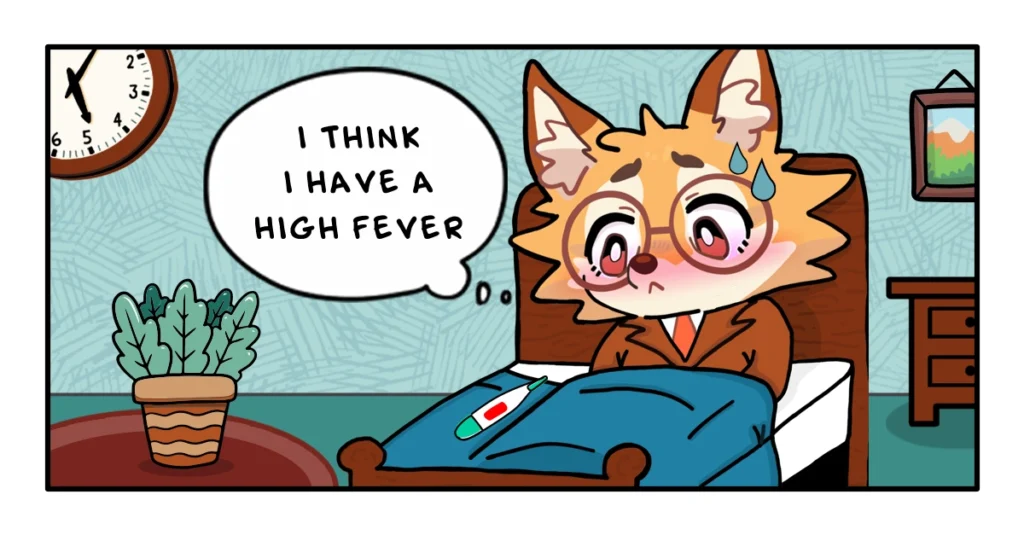
Example: “I’m feeling dizzy and have a high fever.”
Stomach-related sickness
- Stomachache – General stomach pain.
- Indigestion – Discomfort after eating.
- Vomiting – Expelling food from the stomach.
- Diarrhea – Frequent, watery bowel movements.
- Cramps – Sharp, muscle pains in the abdomen.
- Constipation – Difficulty passing stool.
Example: “He had indigestion after eating too much pizza.”
Cold and flu vocabulary
- Cough – Expelling air noisily and suddenly from the lungs.
- Sore throat – Pain or irritation in the throat.
- Runny nose – Liquid discharge from the nose.
- Blocked nose/stuffy nose – Congested nasal passages which make it hard to breathe.
- Chills – Feeling very cold, often with fever.
Example: “She has a blocked nose and keeps sneezing.”
Culture Note: In American English, people often say “I caught a cold”, while in British English, you might hear “I’ve got a cold.” Both mean the same thing.
Common Health Problems Vocabulary
Using precise English health vocabulary is essential for students preparing for vocabulary sections in school or international language exams. Let’s break these down by severity.
Minor health issues
- Allergy – when your body’s immune system overreacts to things like pollen, dust, or certain foods such as peanuts.
- Rash – Red, itchy skin.
- Toothache – Pain located in or around a tooth.
- Earache – Pain inside the ear.
- Backache – Pain in the lower or upper back.
Serious health problems
- Asthma – A condition causing breathing difficulties.
- Diabetes – A disease affecting blood sugar.
- High blood pressure – Condition with elevated blood pressure.
- Heart disease – Problems related to the heart.
- Cancer – a group of illnesses caused by abnormal cell growth that can spread to other parts of the body.
Injuries vocabulary
- Sprain – Twist or stretch of a joint.
- Fracture – A partial or complete break in a bone.
- Cut – Skin injury from something sharp.
- Bruise – Discolored skin from impact.
- Burn – Injury to the skin caused by heat or fire.
- Scar – Permanent mark left on skin after healing.
A table for you to see the word, the meaning, and the example at the same time.
| Word | Meaning | Example Sentence |
| Allergy | Reaction to certain substances | “He has an allergy to shellfish.” |
| Asthma | Breathing condition | “She carries an inhaler for asthma.” |
| Fracture | Broken bone | “He suffered a fracture in his leg.” |
| Rash | Skin irritation | “The new cream caused a rash.” |
| Toothache | Pain in a tooth | “I need a dentist for this toothache.” |
| High blood pressure | Condition of high blood pressure | “Exercise helps manage high blood pressure.” |
Pro Tip: Make a two-column flashcard set (Word ↔ Meaning) and test yourself daily.
Idioms and Expressions with Health and Sickness Vocabulary
Idioms make your English sound natural. Let’s look at common health idioms:
- Under the weather – Feeling unwell.
- As sick as a dog – Extremely ill.
- On the mend – Recovering from illness.
- At death’s door – Extremely sick.
- Back on your feet – Fully recovered and active again.
Examples in sentences:
- “He was as sick as a dog with food poisoning.”
- “She’s finally on the mend after surgery.”
More idioms worth knowing:
- Fit as a fiddle – Excellent physical health.
- A picture of health – Looking healthy.
- An apple a day keeps the doctor away – Healthy habits prevent illness, pointed with a proverb.
- Take your medicine – Accept consequences of actions.
Culture Note: In English-speaking countries, idioms are often used casually. A doctor won’t say “You’re under the weather” during an exam, but a friend definitely will!
Vocabulary About Sickness in Real-Life Conversations
Knowing the words is one thing. Using them in actual dialogues is where fluency happens.
At the doctor’s office
- “I’ve had a fever since yesterday.”
- “I feel dizzy when I stand up.”
- “I’ve been vomiting all morning.”
- “My chest feels tight, and I can’t breathe properly.”
At the pharmacy
- Prescription – Doctor’s written order for medicine.
- Over-the-counter (OTC) – Medicine you can buy without a prescription.
- Antibiotics – Medicine used to treat bacterial infections.
- Painkillers – Medicine for pain relief.
- Syrup – Liquid medicine.
Extended dialogue
Patient: “Doctor, I’ve had a sore throat and cough for three days.”
Doctor: “Do you feel feverish, or have you noticed any chills?
Patient: “Yes, my temperature was 39°C last night.”
Doctor: “It seems like the flu. I’ll give you a prescription for medicine. Make sure to rest and drink fluids.”
Patient: “Thank you. Where can I buy the cough syrup without a doctor’s prescription?”
Doctor: “Yes, the pharmacy has over-the-counter options.”
Practice by role-playing as both the patient and the doctor with a friend; it’s one of the fastest ways to master sickness-related vocabulary.
Advanced Health and Sickness Vocabulary for Learners
For learners aiming for exams (IELTS, TOEFL) or professional settings, here are advanced terms:
- Symptom – A sign of illness (e.g., headache, fever).
- Diagnosis – The doctor’s conclusion about the illness.
- Treatment – Medical care to cure or manage illness.
- Prescription medication – Medicine given with a doctor’s approval.
- Vaccination – Injection to prevent disease.
- Immunity – Ability to resist illness.
- Chronic illness – Long-term illness (e.g., diabetes).
- Acute illness – Short-term illness (e.g., flu).
- Preventive care – Actions taken to avoid illness (checkups, healthy diet).
- Nutrition – The science of food and health.
Example: “The doctor’s diagnosis was asthma, and the treatment involved inhalers.”
Trusted health organizations like the World Health Organization (WHO) often publish glossaries that double as excellent vocabulary practice.
Tips to Learn and Practice Health and Sickness Vocabulary
Learning vocabulary doesn’t have to be boring. Try these:
- Use flashcards – Write the word on one side, meaning + example on the other.
- Watch medical dramas – Shows like House or Grey’s Anatomy are packed with real phrases.
- Role-play – Act out doctor-patient conversations.
- Practice quizzes – Write short tests for yourself.
- Group study – Practice with classmates; one plays “doctor,” the other “patient.”
(You can combine this with our other guides, like practicing health idioms alongside the advanced English idioms list, and our synonyms for “I agree” article has more practical study tips you can also apply here.)
Conclusion
Health is one of the most universal topics you’ll ever discuss, so mastering health and sickness vocabulary is a must. From everyday colds to advanced medical terms, these words help you communicate with confidence whether you’re at the doctor, at school, or traveling abroad.
Start by mastering the basics, add idioms to sound natural, and practice daily with role-plays and TV shows. Over time, you’ll go from simply saying “I’m sick” to describing exactly what’s wrong and understanding others just as clearly.
FAQ Section
What are the most common sickness vocabulary words?
Words like fever, cough, headache, sore throat, stomachache, nausea, and dizzy are among the most common.
How do you use health problems vocabulary in sentences?
Example: “I have a toothache, so I need to see the dentist.”
What idioms are related to health and sickness?
Some of the most common health-related idioms you’ll hear include under the weather, on the mend, as sick as a dog, fit as a fiddle, and back on your feet.
What’s the difference between illness and disease in English?
Illness refers to the general state of feeling unwell. Disease is a specific medical condition (e.g., diabetes, cancer).
How can I improve my vocabulary about sickness quickly?
Practice daily with flashcards and role-play dialogues, and watch English-language shows with medical themes.
What’s the difference between acute and chronic illnesses?
Acute illnesses are short-term (flu, cold), while chronic illnesses last long-term (diabetes, asthma).
Are health idioms used in professional settings?
Not usually. Medical professionals use accurate terminology, but in everyday conversations, people often prefer simple idioms to describe how they feel.
What’s another way to say “I’m sick”?
You can say “I’m unwell,” “I’m not feeling well,” or “I’m feeling under the weather.”
What vocabulary should I know for the pharmacy?
Words like prescription, antibiotics, painkillers, over-the-counter, syrup, and dosage.
Can learning health vocabulary help with exams like IELTS or TOEFL?
Absolutely. Topics like health, wellness, and sickness often appear in speaking and writing tasks. Using precise vocabulary can boost your score.