From Italian to English: Why the Transition is Simple
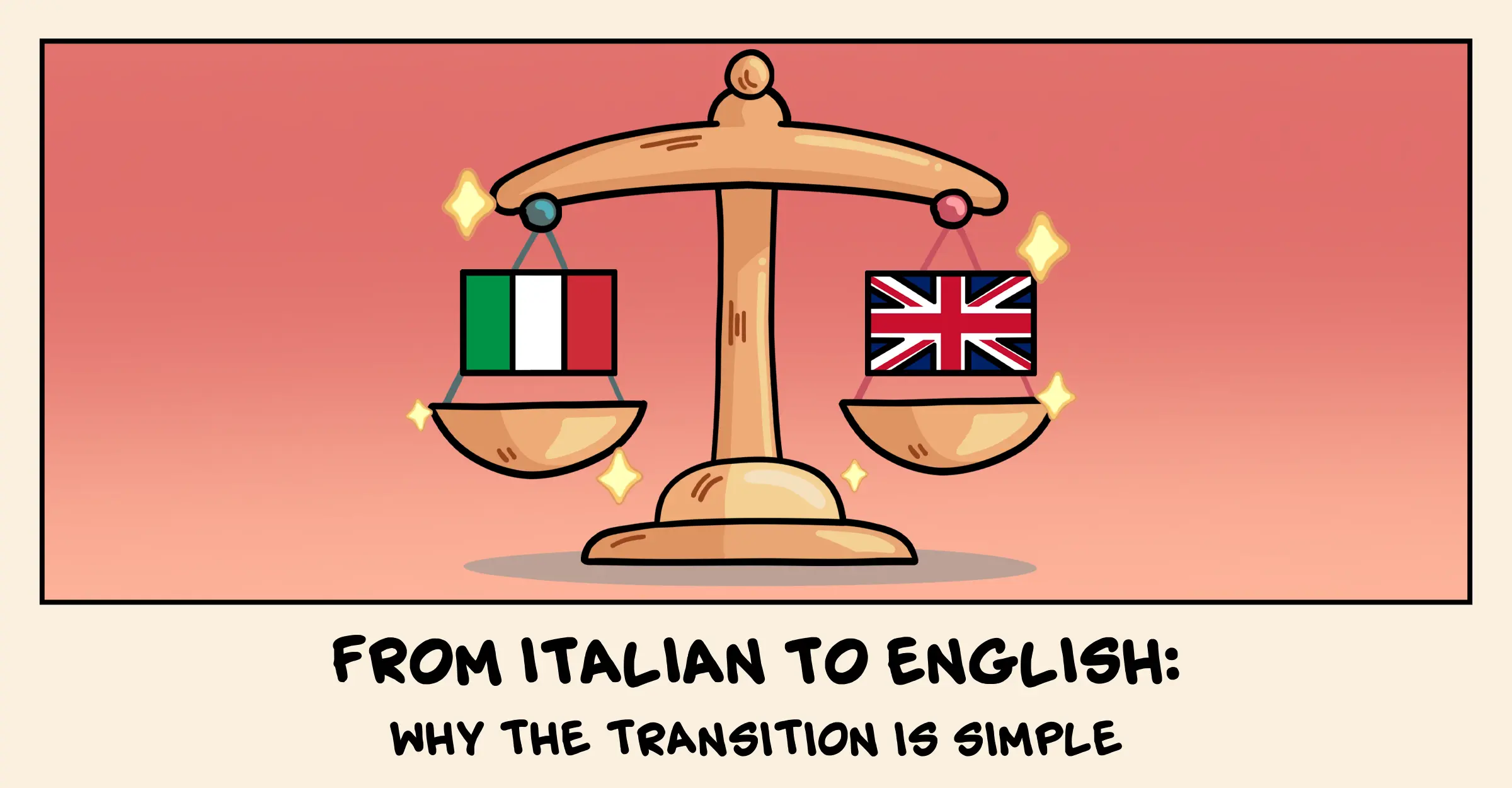
Mastering a global language like English is essential for success in today’s business world. For Italian speakers, the path to fluency is smoother than for many others.
Thanks to shared Latin roots and alphabet, overlapping grammar structures, and the increasing presence of English in modern Italian, the transition and learning process become more effortless.
This creates a strong foundation that accelerates language acquisition, enabling learners to communicate effectively in international markets.
This article highlights the key reasons why learning English is particularly accessible for those who are already familiar with Italian. If you’re just getting started, explore our online English courses for beginners and advanced learners alike.
In this guide, you’ll learn what anaphora is, explore anaphora examples, and discover how to use it effectively to elevate your writing.
Article Directory:
- Common Latin roots in Italian and English
- Evolution of the English Alphabet
- Similar Grammar Structures between English and Italian
- What Still Challenges Italian Speakers
- Final Thoughts: Influence of English on Modern Italian
Table of Contents
Common Latin roots in Italian and English
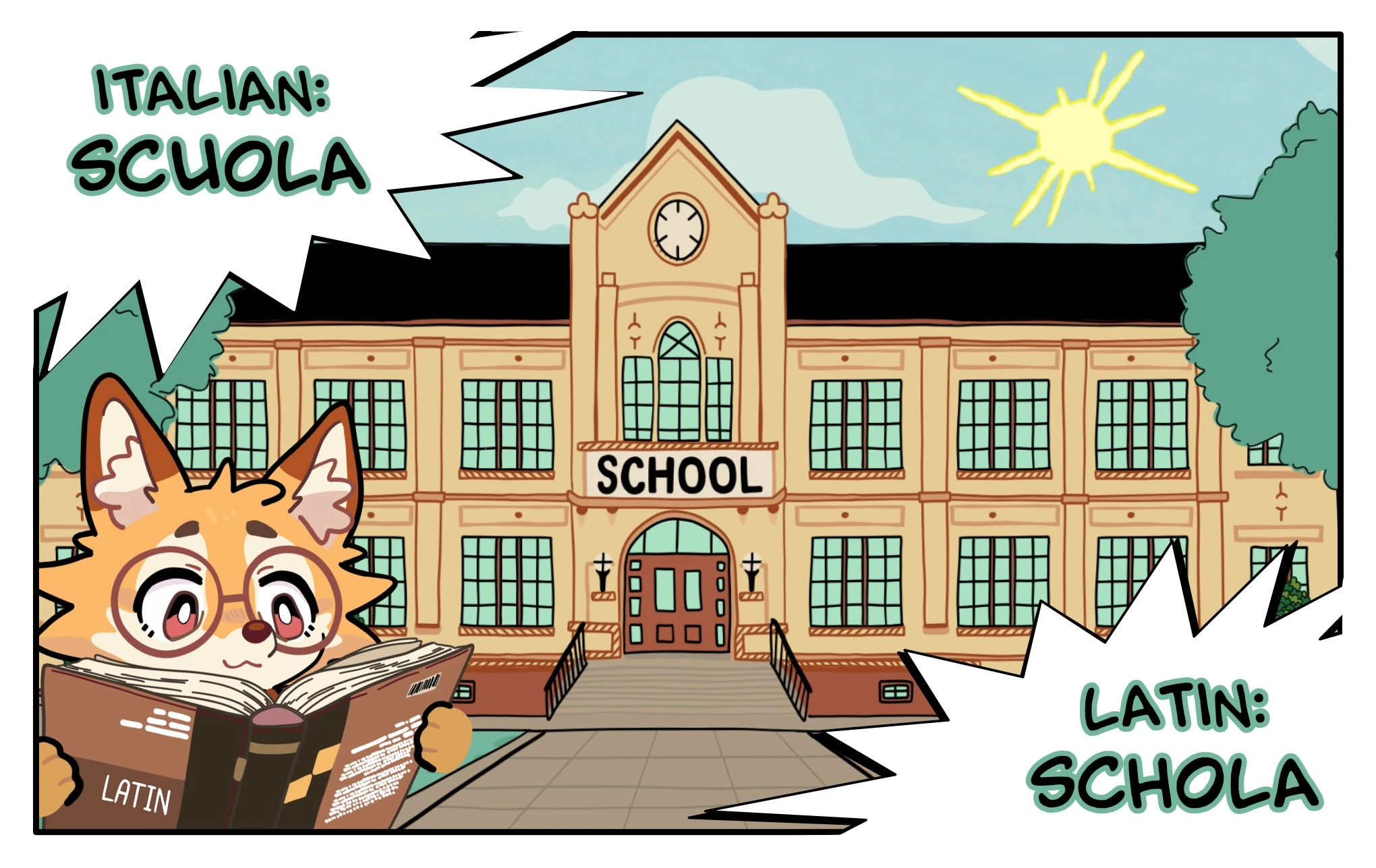
Both Italian and English have strong ties to Latin, though for different reasons. Italian, as a Romance language, evolved directly from Latin. English absorbed many Latin words through French, especially after the Norman Conquest of 1066 when Latin completely overruled the English vernacular.
This shared history means many English words have similar roots to Italian. For example, words like liberty (libertà) and constitution (costituzione) come from the same Latin origins, making them easy to recognize.
Moreover, music aficionados will have definitely observed Italian-derived musical terminology commonly used in English, including words, such as pianoforte, cello, and mezzo soprano as prominent examples.
Even abstract terms like patience (pazienza) and authority (autorità), or scientific words such as virus (virus) and operation (operazione), are familiar to Italian speakers. This connection helps Italian learners, especially in academic and professional fields, where Latin-based vocabulary is widely used.
Evolution of the English Alphabet
English as a spoken language was originally a form of Germanic dialects with a distinct written form comprised of runic characters, that were brought by Anglo-Saxon settlers in the 5th century. However, when Christian missionaries arrived on British shores, the Latin -or Roman- script began to gradually replace the runic one as the main form of written language.
Just two centuries after the first written texts of Old English were produced, the Latin alphabet began to take over. As a result, and after centuries of modifications, the English alphabet was established as a combination of the 23 Latin letters and several additional characters made to represent English sounds.
Similar Grammar Structures between English and Italian
Although English (a Germanic language) and Italian (a Romance language) come from different linguistic families, they share some notable grammatical structures that make English learning more intuitive for Italian speakers. These similarities primarily arise in sentence structure, word order, and some aspects of verb tenses, giving Italians a familiar foundation when constructing sentences in English.
1. Basic Sentence Structure in English vs Italian
Both Italian and English follow the same basic sentence structure: Subject-Verb-Object (SVO). This means that in both languages, sentences typically begin with the subject, followed by the verb, and then the object.
Example:
She reads a book – Lei legge un libro.
Both languages maintain the same logical order. It allows Italian speakers to construct simple English sentences without having to drastically alter the way they think. In contrast, speakers of many other languages are not always that lucky.
2. Use of Articles in Italian and English
Italian and English both use definite and indefinite articles. And while there are differences in usage, the concept of articles is familiar to Italian speakers. In both languages, articles precede the noun, which helps with comprehension.
Example:
The car (definite) and A car (indefinite) – La macchina (definite) and Una macchina (indefinite)
While the forms of the articles differ, the grammatical function of marking specificity (definite) or generality (indefinite) remains the same.
This contrasts with languages like Russian or Chinese, which do not use articles at all, making the concept of “a” and “the” more foreign to speakers of those languages.
3. Auxiliary verbs
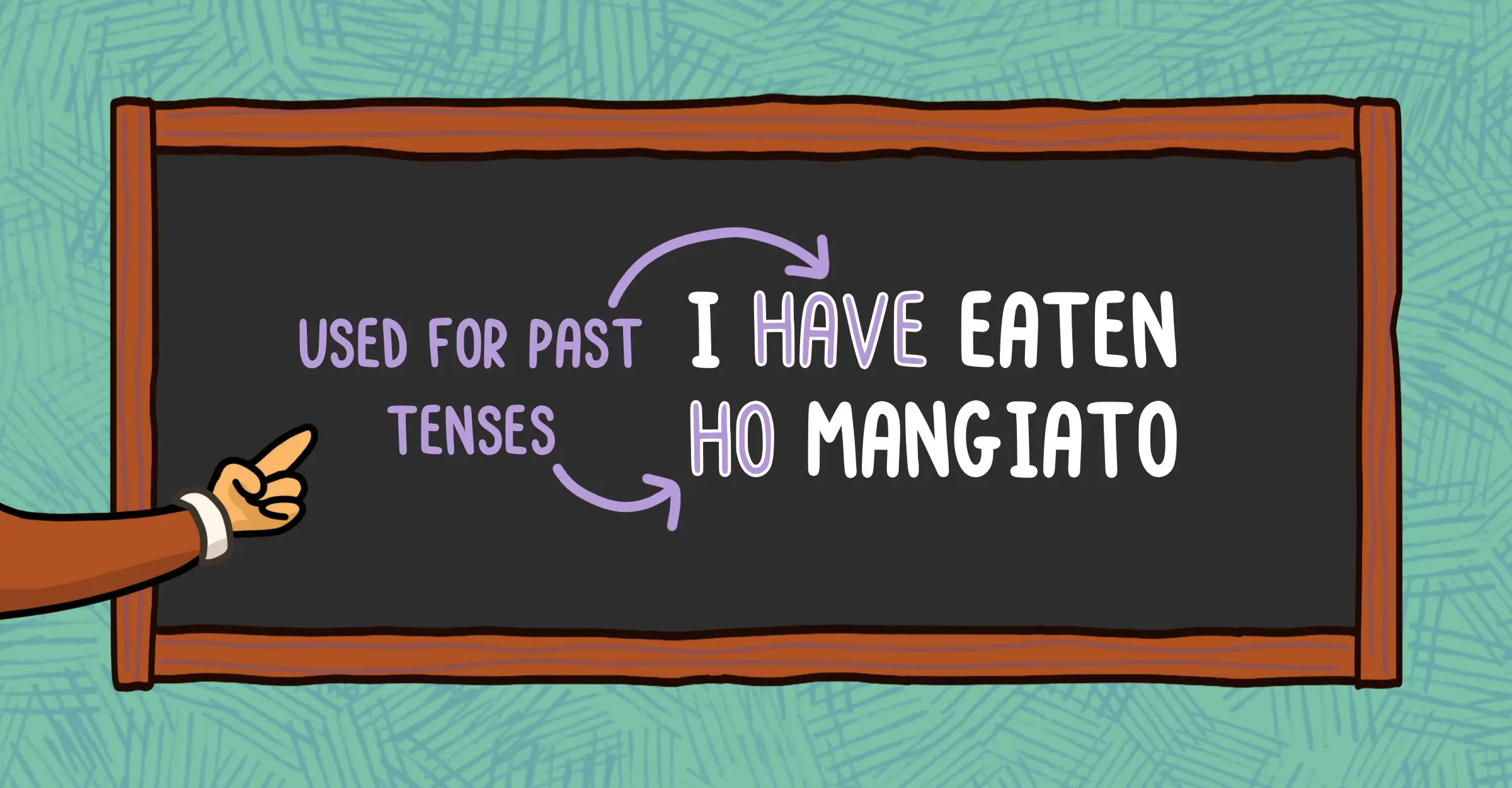
Both languages use auxiliary verbs to form compound tenses, particularly in the perfect tenses. In English, there is an auxiliary verb “have”, while in Italian, it’s either avere (to have) or essere (to be). Despite this difference, the idea of needing an auxiliary verb to form past tenses is evident.
I have eaten (Present Perfect) – Ho mangiato (Passato Prossimo).
In this example, both languages use auxiliary verbs (have/ho) to indicate that the action (eaten/mangiato) is complete.
What Still Challenges Italian Speakers
Having already talked about the similarities between Italian and English, it is only fitting that we also briefly mention some potential challenges for Italian EFL learners. While the common word roots and grammar functions benefit Italian speakers, there are other aspects like gendered language, pronunciation and vocabulary that pose setbacks to Italian speakers learning progress.
One grammatical challenge for Italian learners is adapting to the lack of grammatical gender in English nouns. In Italian, nouns are typically masculine or feminine, and articles and adjectives change accordingly. English, however, uses gender far less frequently in everyday grammar, which may initially confuse Italian speakers. Article usage can also differ between the two languages, occasionally leading learners to overuse or articles in English sentences.
Pronunciation is another area that may require extensive practice. Italian pronunciation follows consistent phonetic rules, whereas English contains many irregular spellings, silent letters, and different vowel sounds. Words such as though, through, and thought, that appear similar in writing, are pronounced differently, which can be challenging for learners.
Nevertheless, regular exposure to spoken English through films, podcasts or even conversations can significantly improve pronunciation and listening comprehension over time.
Final Thoughts: Influence of English on Modern Italian
English has significantly influenced modern Italian, especially in areas like technology, business, fashion, and popular culture. Many English words are now commonly used in Italian without translation.
For example: in technology and business, terms like computer, software, meeting, and startup are used daily. In fashion and popular culture, words like cool, weekend, and shopping are widely adopted.
Phrases like stress, okay, and manager have also become part of everyday Italian vocabulary. This exposure, particularly through media and social platforms, familiarizes Italians with English and turns the learning process into a very intuitive one.
Italian speakers have a few natural advantages when it comes to learning English through grammar and the Latin alphabet. By tapping into these connections, learners can boost their English skills and communicate more confidently on a global level.
If you’re looking for more tips and resources to improve your English and build a daily routine for learning English online, visit our website and take the first step on your linguistic journey today!
Pro Tip:
Watching renowned Italian movies and turning on the subtitles can give you top-notch insights for a comparative observation of linguistic patterns as well as the cultural landscape of the Italian language.
Movies like La Vita E Bella, Cinema Paradiso, and the cinematography of directors, such as Visconti, Fellini, and Pasolini could give you a great variety to choose from.
References