10 Mistakes German Speakers Make When Learning English
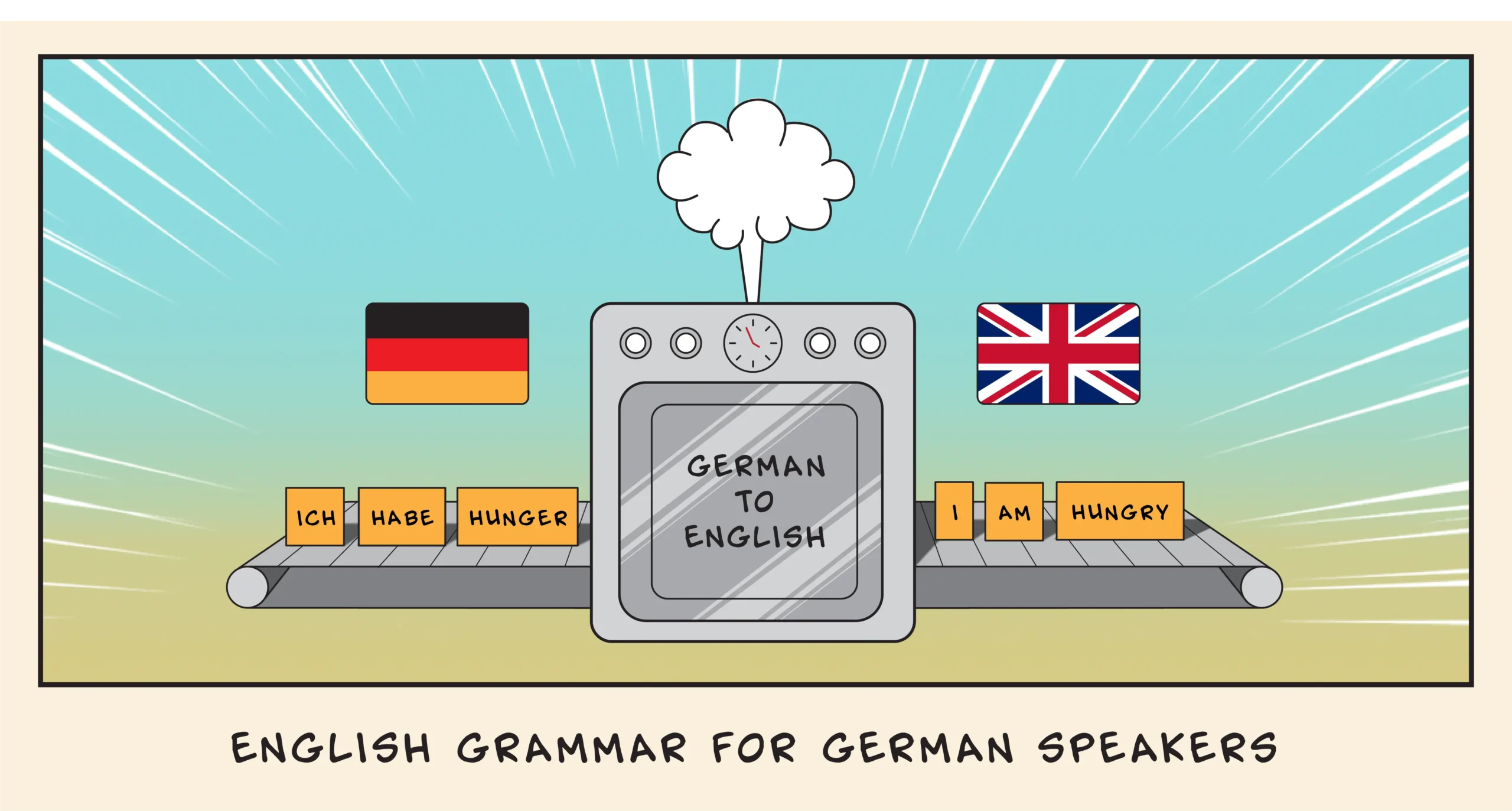
English mistakes German speakers make are often caused by differences between German and English grammar. Understanding these mistakes can help you speak and write English more confidently.
Do you ever pause before speaking English with a friend or a coworker because you are afraid of making a mistake?
If this sounds familiar, you’re not alone. The truth is that many non-native speakers feel the exact same way, because when you are learning a new language, everything can feel overwhelming and terrifying.
The good news? By focusing on a few key areas and making a few small changes you can improve your grammar and sound more natural.
In this article, you will learn:
Table of Contents
10 common mistakes German speakers make when learning English
- Casual phrases and expressions
- The order of sentences
- German and English Homophones
- Final tips and conclusion
- A short quizz
Let’s look at the most common English mistakes German speakers make and learn how to correct them.
1. Subjects in Sentences
English, every sentence needs a subject, that is why you must always include I, you, he, she, it, they.
This can be tricky because in German, subjects can be dropped in certain contexts, especially in informal speech.
Examples:
- ❌ Is very hot outside.
- ✅ It is very hot outside.
- ❌Am going to sleep.
- ✅ I am going to sleep.
2. Continuous Tense
German has no continuous tense and this can be problematic. We use the continuous tense for an action that is currently happening.
- ❌I drink coffee.
- ✅I am drinking coffee.
- ❌I am run.
- ✅I am running.
3. Past Simple
There is also a problem when speaking about the past. In German, often the present perfect tense is used when English would just use the past simple tense
- ❌ Then I have made dinner.
- ✅Then I made dinner.
- ❌I have driven to the store.
- ✅I drove to the store.
4. Homophones
There are words that sound similar in German and English, but they have entirely different meanings
- ❌aktuell=actually
- ✅aktuell=current
- ❌ der see+ the sea
- ✅der see= the lake
5. Uncountable Nouns
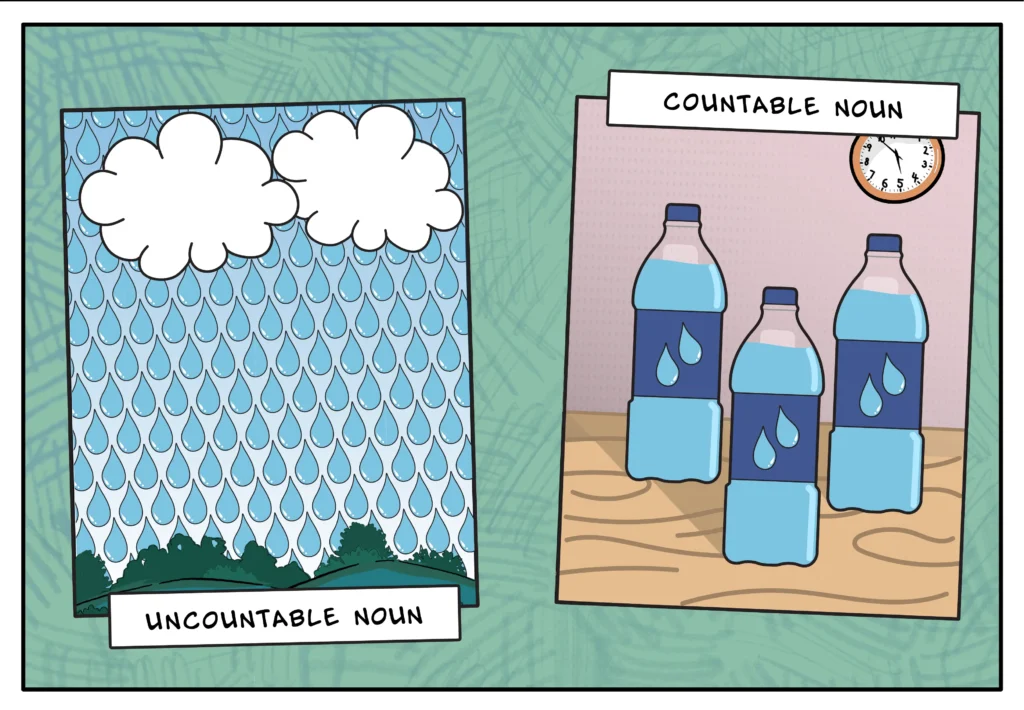
We call uncountable nouns words that we cannot count, like water, sugar, education or advice. When this happens, we don´t add “s” at the end of the word.
Examples:
- ❌ There are many furnitures in the room.
- ✅ There is a lot of furniture in the room.
- ❌ I drank two waters.
- ✅ I drank two bottles of water.
Tip: If you cannot count it like apples or potatoes, it is probably uncountable.
6. Modal Verbs
Words like, “can”, “should” and “want” can be confusing. This comes from not knowing the auxiliary form to use with them. Homophones can be a problem as “will” means “want” in German.
- ❌I don’t will not go to the store.
- ✅ I won’t go to the store.
- ❌ I want will go to the zoo.
- ✅I will want to go the zoo.
7. Punctuation
The German language is more strict with punctuation than English. There are sentences in German where commas are needed in certain places where they’re not needed in the English translation. In German, all clauses need to be broken up with commas while this is not the case in English.
- ❌ Do you still, have the book I gave you?
- ✅Do you still have the book I gave you?
- ❌Do you want, to go the beach later?
- ✅Do you want to go the beach later?
8.Conditionals
Again, since “will” means “want” in German, this can confuse people.
- ❌ If I want to the store later, I want buy some milk.
- ✅If I go to the store later, I will buy some milk
- ❌If it will be raining, then it will be muddy.
- ✅If it rains, it will be muddy.
9. Future Simple
Germans again sometimes forget to use “will” when using the simple future tense.
- ❌I call you tomorrow.
- ✅ I will call you tomorrow.
- ❌I go out to eat tonight.
- ✅I will go out to eat tonight.
10. Gendered Nouns
German nouns have one of three genders while English words only have one.
- ❌ She took the pillow and through it onto the floor.
- ✅She took the pillow and threw it onto the floor.
- ❌He dropped his key. He fell down an elevator shaft.
- ✅He dropped his key. It fell down an elevator shaft.
Casual Phrases and Expressions
Sometimes we translate expressions directly from German and it can sound confusing in English.
Tip: Keep in mind, when in doubt, use simple words.
The Order of Sentences
Here´s a secret: English sentences prefer to stay in one order.
The pattern is:
Subject + Verb + Object
(S+V+O)
Why? You might ask
In English, the verb usually comes right after the subject, and the object comes after the verb.
Example:
- ❌ Tomorrow go I to work.
- ✅ I go to work tomorrow.
List of German Homophones
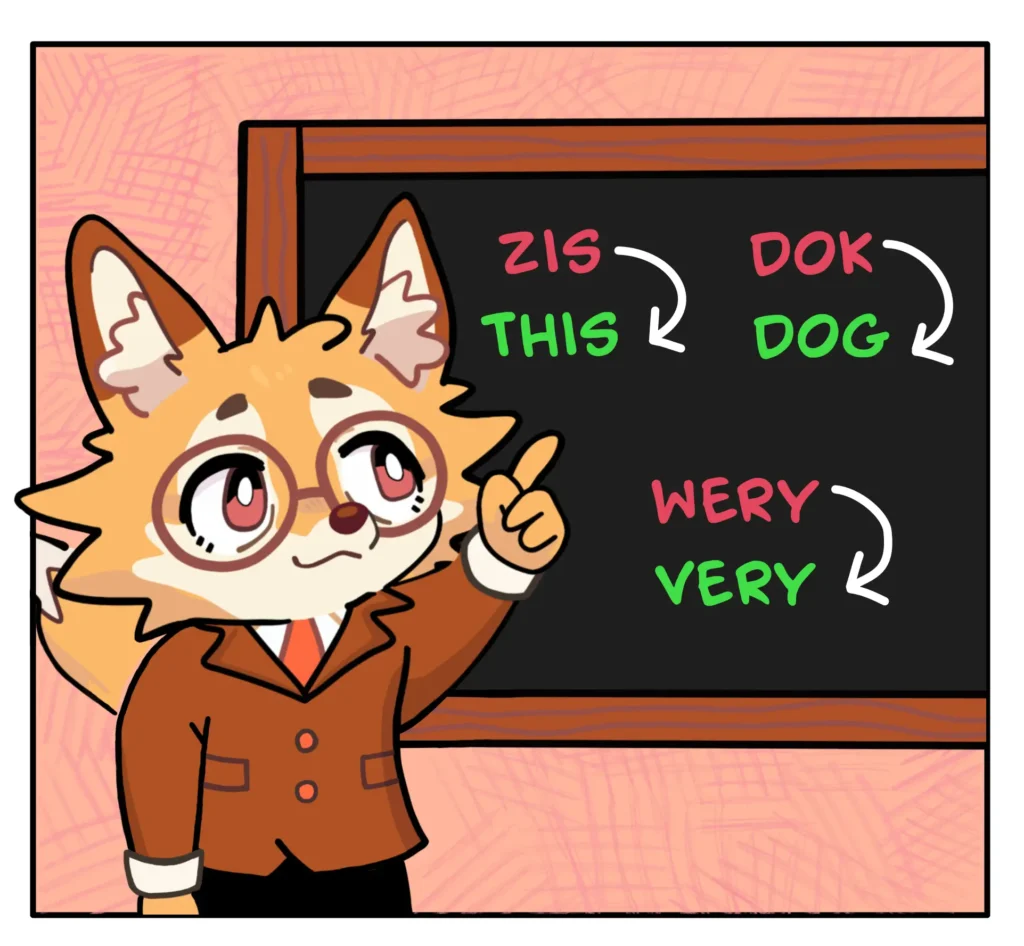
Here are more common German and English homophones that you don’t want to mix up
| German Word | English Translation |
| Also | So |
| Der chef | Boss |
| Gift | Poison |
| Kind | Child |
| Art | A species |
| Rock | Skirt |
| Boot | Boat |
| Gut | Good |
| Angel | A fishing rod |
| Tot | Dead |
| English Word | German Meaning |
| Also | Auch |
| Chef | Koch |
| Gift | Geschenk |
| Kind (type) | Art |
| Art | Kunst |
| Rock | Felsen |
| Boot | Stiefel |
| Gut | Der Darm |
| Angel | Engel |
| Tot | Knirps |
A Few Last Tips to Improve Your English
- Pretend you´re texting a friend and write at least two short sentences every day.
- Talk to yourself about your day and routine for about a minute, this will also improve your confidence when speaking English.
- Keep sticky notes about English grammar on your mirror or even your fridge. They will be little friendly reminders every time you see them.
- Join our WhatsApp group for English chatting and learning. You will have 24-hour access to teachers to practice anytime, every day.
Conclusion
If English feels difficult, it is not because you are bad at it. It´s just that German and English work a little differently.
Remember: it´s completely normal if you´re not perfect at first, because what matters is that you’ve already started your English learning journey.
You will get better faster than you think if you practice every day, step by step. And don’t forget to celebrate the small wins, every time you learn a new word or practice, it’s a victory.
By practicing regularly, you can avoid the English mistakes German speakers make and become a more confident English speaker.
Don´t forget to check our courses and start practicing today!
Quiz
What do you think these German words mean in English?
- Bad
- Evil, harmful
- Good, just
- Funny, ridiculous
- Hall
- The outside of a ship
- Two people embracing
- A large room.
- Lack
- To be deficient
- To have too much
- A lake
Answers: a, c, a