7 Insights About Biased Language for More Inclusive English
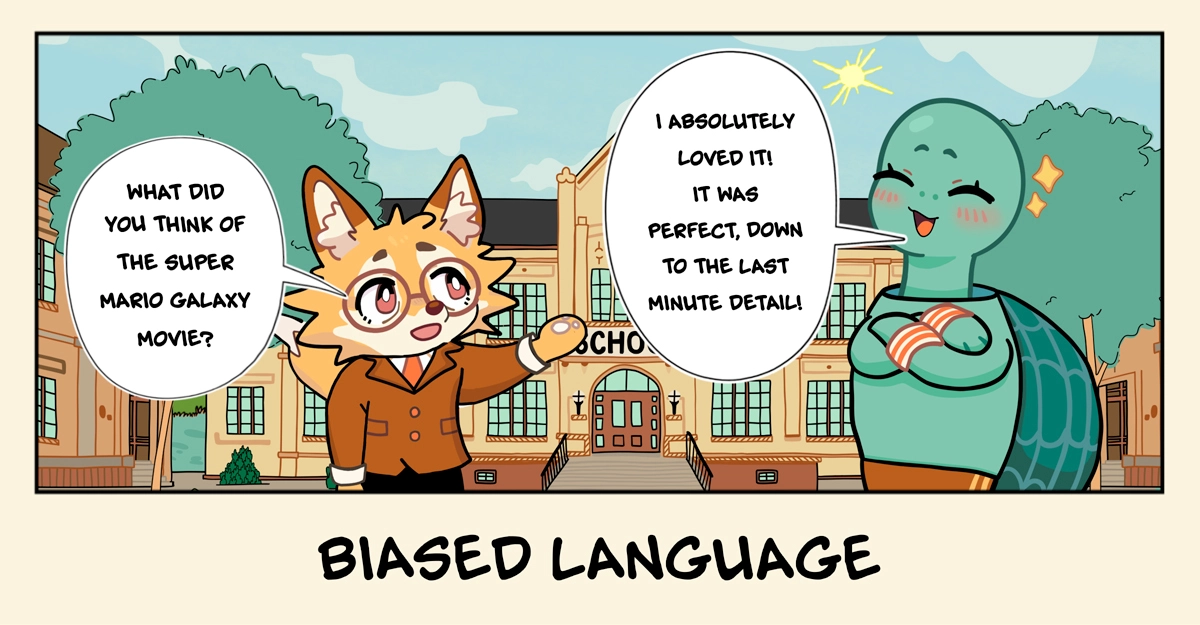
Everyone has their own perspectives. You might not like a movie that your friend loves, or they might hate a restaurant you thought would try out sometimes.
Our experiences dictate how we view the world and that reflects the way that we talk about different subjects. This is as true in English as it is with any other language. We call this type of speech or writing “biased language”.
Now here is an important question, how can you tell when someone is using biased language? This guide will go into where you might find instances of biased language, providing examples and defining characteristics that you might encounter.
In this post, we will guide you through the following:
Table of Contents
Where Is Biased Language Commonly Used?
Biased Language in Media
Some news stations are directly affiliated with political parties or have gathered an audience that leans towards a certain political direction. This gives them an incentive to satisfy their audience by catering to their opinions and employing rhetoric aligned with said political party.
This can involve making certain important figures look better or even making groups of people look worse if that aligns with the party’s interests. Biased headlines are also written to be as bombastic as possible to get attention.
Similarly, advertisements are made to convince you to buy something. They are generally only going to say good things about the product being promoted, or at least try to create several positive associations, like having a catchy interpretive tagline.
Biased Language in the Workplace
During the hiring process, businesses present themselves as attractively as possible to potential employees, usually in their recruitment letters. The latter and other written items geared towards potential employees will generally focus on the positives of working at the company in question.
Biased Language in Everyday Conversations
Biased language is frequently used during everyday conversations. When expressing an opinion, a person might often be biased. This sort of biased language is not necessarily harmful, and it comes up naturally in many conversations.
People have different points of view, which heavily influence how they talk or write; most of the time, even the person using biased language doesn’t notice.
However, biased language can be used judgmentally very easilyvery easily used judgementally and can be harmful to people.
For example, if a person has a distrust oftowards elderly people, they might talk about their experience with an elderly person with pronounced negativity. This type of biased language is called bigoted language, and it can be targeted towards any sort of person.
The Pros and Cons of Biases in Language
While biased language itself isn’t necessarily a bad thing, it’s always important to get a second opinion if you are getting information on something important, such as with a news piece. Moreover, there are multiple pros and cons tofor using it:
Pros
Biased language can help you become more persuasive, especially during speeches and debates. Often, it can seem very emotional, which can help persuade audiences of your argument.
Also, if you are sharing an opinion on something small, such as liking a movie, biased language can easily help you create connections and strengthen friend groups based on similar passions.
Cons
Intentionally using biased language is often seen as unprofessional and unreliable in most formal contexts. This means that if you are writing something formal, you need to avoid using it where you can.
Moreover, biased language can also cause divisions among sub-groups of people. This can be especially harmful if you are using bigoted language, and it is often best to completely avoid using it under any circumstances.
If you are using bigoted language, you risk perpetuating stereotypes about different people. A stereotype is an overgeneralization of a large group of people, often based on qualities that cannot be controlled, such as ethnicity or race.
Bias can take a lot of forms, and you can most likely detect bias from the context of the conversation. However, there are a few key signs to look for to identify biased language.
Examples of Biased Language and Their Meanings
Bias can take a lot of forms, and you can most likely detect bias from the context of the conversation. However, there are a few key signs to look for to identify biased language.
Gender-Based Biased Language
Gender- based bias (or simply gender bias) is when a person or group of people mistreat and often undermine a group of people because of their gender. It most commonly happens to women, but it can be targeted towards men as well.
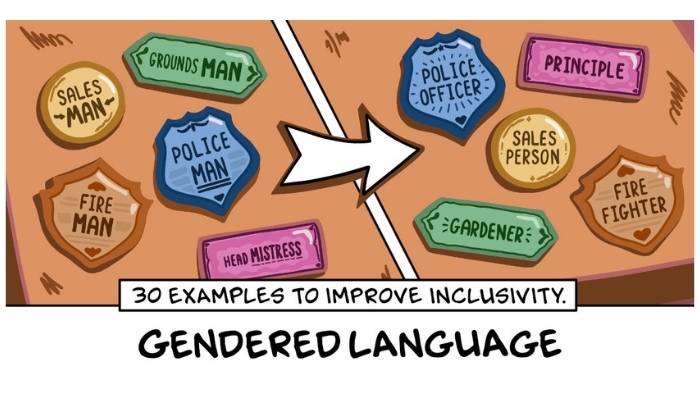
Gendered language often assumes a person in power or authority is male. Here are a few examples:
- “Chairman” vs. “Chairperson”
- “Fireman” vs. “Firefighter”
- “Policeman” vs. “Police officer”
Racial and Ethnic Biased Language
There are a lot of outdated terms and adjectives used to describe people of different races and ethnicities, many of which have turned into pejorative terms.
A pejorative term (sometimes called a slur) is a word that expresses hatred or disapproval, often used to insult a person, due to their race, ethnicity, or other characteristic.
There won’t be any racial slurs written down here, but here are a couple of examples of words you could use to describe different ethnic groups that won’t cause harm:
- BIPOC (short for Black, Indigenous, and People of Color)
- Minority (a person that is not as common in their society)
Age-Related Biased Language
Sometimes, biased language can relate to someone’s age. Here are a few examples of what you can say instead of elderly:
- Older person
- Senior citizen
- Elders
Ability-Related Biased Language
Some words or phrases can seem biased against people with disabilities, whether physical or mental. While you might not be trying to cause harm, these phrases might make it seem like you are looking down on the person or hurt their feelings in some way.
It is generally advised that you keep your language positive when referring to a disabled person and to put the person in the forefront instead of the disability. For example:
- “Cconfined to a wheelchair” vs. “wheelchair user.”
- “Handicapped” vs. “Person with a disability.”
- “Mmentally defective” vs. “with an intellectual disability.”
Biased language is often difficult to detect if you are the one using it, but there are a few ways you can monitor your use of said language.
It takes a lot of self-reflection and awareness, so really think about what you are saying is harmful to other people or if you have any sort of biases yourself, before you check what you have written or said.
Also, check whether you are not relying on stereotypes when talking about other people, and see how you can move away from relying on those assumptions.,
When Biased Language Is Appropriate vs. Inappropriate
Biased language is not always inappropriate, but you need to know when it is ok to use it and why you are using it.
Are you trying to create emotion in a speech or in your fictional story? If so, go ahead. Are you in a more formal setting, such as presenting a business report? Maybe don’t use it. Here are a few other examples for both.
Appropriate Uses
- Creative writing, satire, or character voice: These are all creative spaces where a lot of emotions are exaggerated, and biases can be present without being judgemental. You might have a character express themselves in a biased way, or you may use satire to make fun of systems of power by presenting them in an unfair light.
- Quoting historical texts or cultural references (with context): People in history had their biases in the past, and to preserve authenticity, you may need to reflect that when referencing a quote of theirs.
Inappropriate Uses
- Workplace communication: The workplace should be as civil and as organized as possible to avoid disrupting anyone’s duties.
- Academic and professional settings: These settings rely heavily on facts, meaning that it is inappropriate to use them here.
- Public-facing brand or media messaging: Having biased or bigoted language can cause a divide between the public and harm your community.
Signing up for a WhatsApp Englishenglish group can be a very beneficial way to practice navigating biased language and figure out when using it would be more appropriate.
Conclusion
The importance of identifying the characteristics of biased language lies not just in your enhanced understanding of English. It’s also important to develop more positive relationships with your friends, co-workers, and society in general.
It also forces you to test your awareness of what you are saying and your ability to use context to help you find out when something is appropriate to say or not.
Try to use more inclusive language in your day-to-day life, and notice how it improves the atmosphere around you.
Pro Tip for you!
Ever cared about exploring the relationship between humor and biased humor? Where should one draw the line? Short stand-up comedy videos on YouTube and other sources can help you explore this question and are a great exercise for the strengthening of your ability to identify linguistic nuance!
References:
https://www.thoughtco.com/objectivity-and-fairness-2073726
https://www.spice-social.co.uk/the-power-of-shared-interests
https://www.publicspeakinglab.com/blog/persuasion-how-emotions-elevate-public-speaking-e2-81-a3
https://www.un.org/en/hate-speech/understanding-hate-speech/what-is-hate-speech
https://www.englishclub.com/vocabulary/fl-giving-opinions.php
https://prosmarketplace.com/blog/how-to-write-a-recruitment-letter
https://formationmedia.co.uk/blog/language-in-advertising-understanding-its-use
https://guides.library.stonybrook.edu/news/bias
Further links and useful guides for you to consult:
OHR_ILG_RaceEthnicity_FINAL (1).pdf
Inclusive language: words to use and avoid when writing about disability – GOV.UK