20+ Clothing Idioms for More Expressive Writing
Have you ever heard someone say “keep your shirt on” or “put yourself in someone else’s shoes”?
These are called clothing idioms, and native English speakers use them all the time in conversations, movies, books, and even workplaces.
Learning clothing idioms can help you speak English more fluently and naturally. Instead of repeating simple phrases, idioms make conversations more expressive and easier to remember.
These expressions are especially common in spoken English and informal conversations.
You’ve probably heard some of these idioms in movies or TV shows without even noticing.
Many English learners understand these expressions when they hear them, but struggle to use them naturally in conversation.
Table of Contents
Why Are Idioms With Clothes So Common?
Idioms with clothes are very common, since clothing is universal to daily life. There are also many different articles of clothing, which means the range of idioms with clothes can cover tons of different concepts and sentiments.
Idioms with clothes can involve specific articles of clothing, or more general terms like “dress” and “style”. Clothing idioms are also a great illustration of the way that cultures share these concepts, even when the words change. Look at idioms like “DonClothing is something people use every day, so it naturally appears in many English expressions and idioms.
Some clothing idioms describe emotions, while others talk about confidence, money, pressure, work, or relationships.
For example:
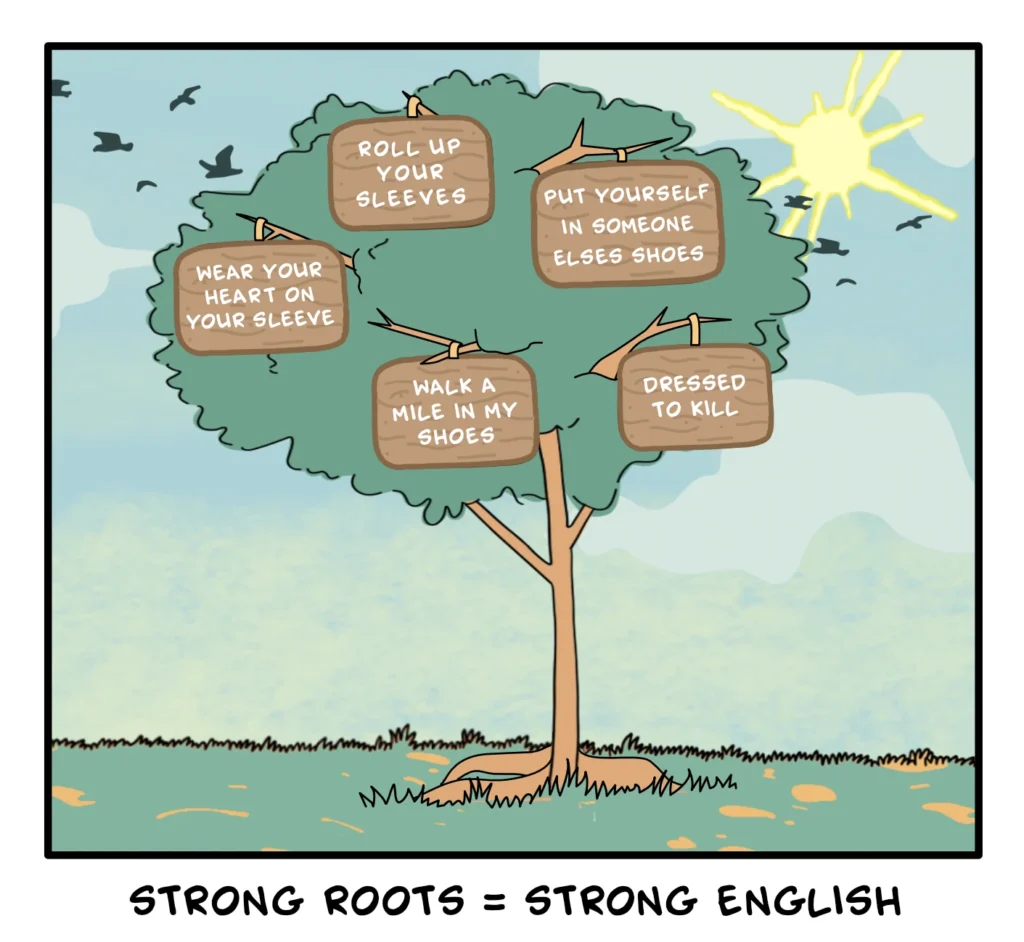
- “Wear your heart on your sleeve” talks about emotions.
- “Lose your shirt” refers to losing money.
- “Roll up your sleeves” means getting serious about work.
Because these phrases are connected to everyday life, they are easier to remember and commonly used in conversation.
Common Idioms With Clothes
Clothing idioms appear in many forms in English. Some are connected to emotions, while others describe work, personality, money, or everyday situations.
Below are some of the most common idioms with clothes and how they are used in real conversations.
Shirt and Jacket Idioms
Clothing idioms appear in many areas of everyday English, from casual conversations to workplace communication. Understanding their meanings can help you recognize common expressions and use them more naturally in your own speaking and writing. The examples below show how these idioms are used in real-life situations.
| Idiom | Meaning | Example |
| Keep your shirt on | Stay calm | Keep your shirt on. We still have time. |
| Wear your heart on your sleeve | Show emotions openly | She wears her heart on her sleeve. |
| Stuffed shirt | A formal or boring person | The stuffed shirts at the meeting barely spoke to anyone else. |
| Lose your shirt | Lose all your money | He lost his shirt investing in that business deal. |
| Roll up your sleeves | Prepare to work hard | We rolled up our sleeves and finished the project. |
| Have something up your sleeve | Have a secret idea or plan | I think she has something up her sleeve. |
Shoe Idioms
Shoes appear in many English idioms because they are connected to life experiences, choices, and personal situations.
| Idiom | Meaning | Example |
| Put yourself in someone else’s shoes | Understand another person’s feelings | Try putting yourself in her shoes. |
| Fill someone’s shoes | Successfully replace someone | It will be difficult to fill her shoes. |
| If the shoe fits, wear it | Accept criticism if it applies to you | She said my work was sloppy. Well, if the shoe fits, wear it |
| Shake in your boots | Be very nervous | He was shaking in his boots before the interview. |
Hat Idioms
Hat idioms are common in older English expressions and are still widely used today.
| Idiom | Meaning | Example |
| Wear many hats | Have many different roles | She wears many hats at work. |
| Pull something out of a hat | Produce something unexpectedly | He pulled a solution out of a hat. |
| Pass the hat around | Collect money from people | They passed the hat around to help the family. |
| Take your hat off to someone | Admire or respect someone | I take my hat off to her hard work. |
Pants and Pocket Idioms
Many clothing idioms are also connected to money, confidence, or personal behaviour.
| Idiom | Meaning | Example |
| Fly by the seat of your pants | Act without a plan | We had to fly by the seat of our pants during the event. |
| Empty your pockets | Spend all your money | The vacation nearly emptied my pockets. |
| In someone’s pocket | Under someone’s control | The manager seems to have everyone in his pocket. |
| Tighten your belt | Spend less money | We need to tighten our belts this month. |
| Below the belt | Unfair or cruel | That comment was completely below the belt. |
More Common Clothing Idioms
English contains many other clothing-related idioms that don’t fit neatly into a single category. These expressions are frequently used in everyday conversations, books, movies, and workplace discussions. Learning them can help expand your vocabulary and make your English sound more natural and expressive.
| Idiom | Meaning | Example |
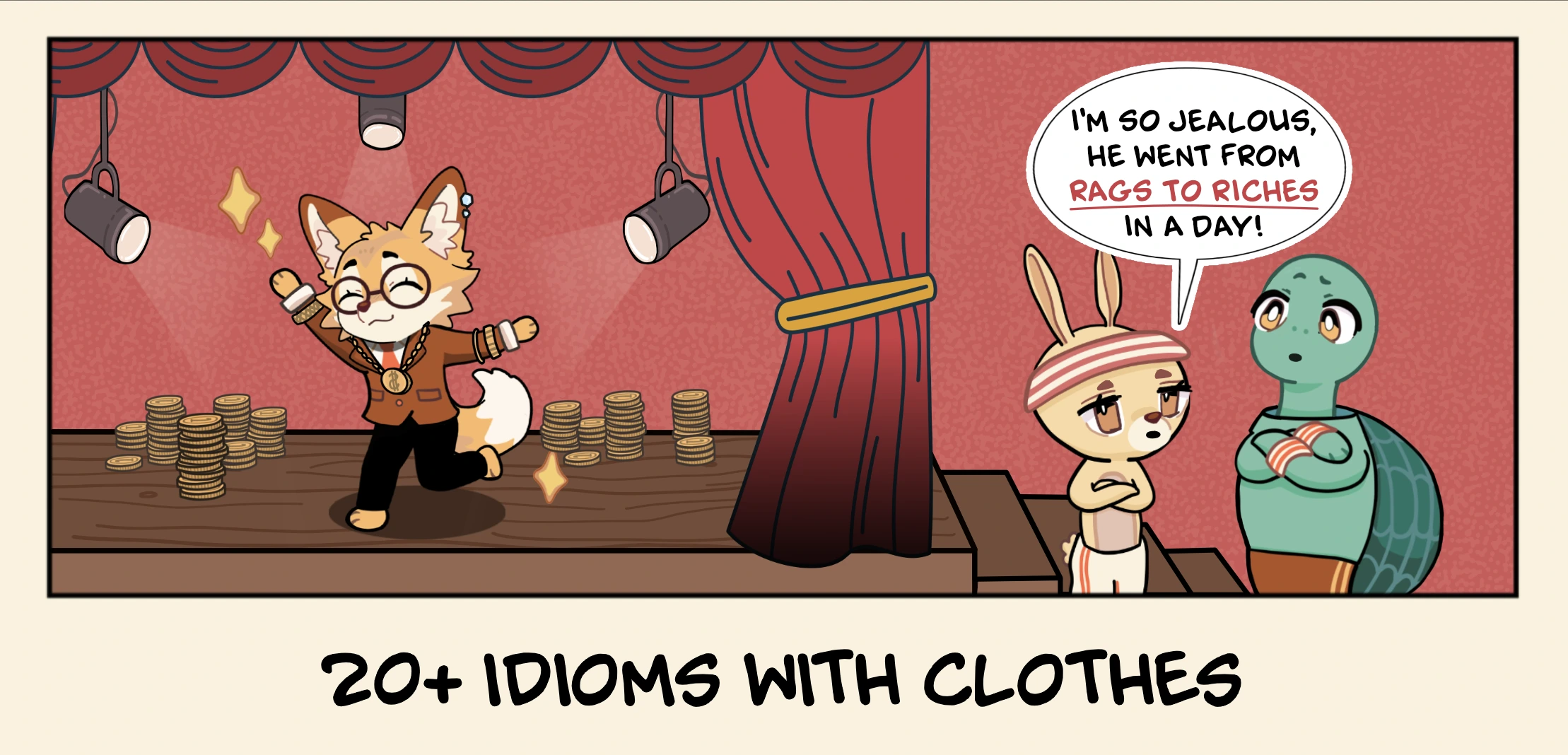
| Rags to riches | Going from poverty to wealth or success | She went from rags to riches after building her own company. |
| Dressed to kill | Dressed very attractively or impressively | He arrived at the party dressed to kill. |
| At the drop of a hat | Immediately, without hesitation | She would travel at the drop of a hat. |
| Hand-me-down | A piece of clothing or an item passed from one person to another | My younger brother wore hand-me-down clothes from me. |
Why Learn Idioms With Clothes?
Learning clothing idioms can make your English sound more natural and expressive. These expressions are among the most commonly used English idioms, making them valuable for both speaking and writing.
They also help you:
- understand native speakers more easily,
- improve conversational English,
- recognize expressions in movies and TV shows,
- and make your speech sound less repetitive.
Many clothing idioms are used casually in workplaces, classrooms, and social conversations, so understanding them can make communication easier in real-life situations.
Knowing these idioms can make everyday conversations easier to understand and more enjoyable to follow.
Where Are Clothing Idioms Commonly Used?
Idioms with clothes appear in many everyday situations, including:
- Casual conversations
- TV shows and movies
- Business communication
- Books and storytelling
- Social media and online content
For example, phrases like “roll up your sleeves” are common in workplaces, while expressions like “dressed to kill” are often used in entertainment and fashion discussions.
Understanding these idioms helps you follow conversations more naturally and communicate more confidently.
Quick Quiz
Test Your Clothing Idioms Knowledge
- What does “keep your shirt on” mean?
- Which idiom means understanding another person’s situation?
- What does “wear many hats” suggest about someone?
- Which idiom means preparing to work hard?
- What does “tighten your belt” mean?
FAQs About Idioms With Clothes
What are idioms with clothes?
Idioms with clothes are expressions related to clothing items like shirts, shoes, hats, or pants that have meanings beyond their literal words.
Why are clothing idioms important in English?
They help conversations sound more natural, expressive, and fluent.
What is the most common clothing idiom?
Some of the most common clothing idioms include:
Keep your shirt on
Roll up your sleeves
Put yourself in someone else’s shoes
Wear your heart on your sleeve
Can clothing idioms be used in formal writing?
Some can be used casually in professional communication, but many are better suited for conversation and informal writing.
Are clothing idioms common in everyday English?
Yes. Many clothing idioms are regularly used in conversations, movies, TV shows, workplaces, and on social media.
Final Thoughts
Idioms with clothes are everywhere in English, from conversations and movies to workplaces and books.
Learning these expressions can help you sound more fluent and better understand native speakers. The key is to learn them naturally and use them in the right situations.
Start by practicing a few common idioms like “roll up your sleeves” or “put yourself in someone else’s shoes,” then slowly add more to your vocabulary over time.
Which clothing idiom is your favourite? Try using one in a sentence of your own.