Personality Adjectives to Describe a Person
Introduction
How would you describe your best friend in just three words?
Would you say they’re kind, ambitious, funny, or reliable?
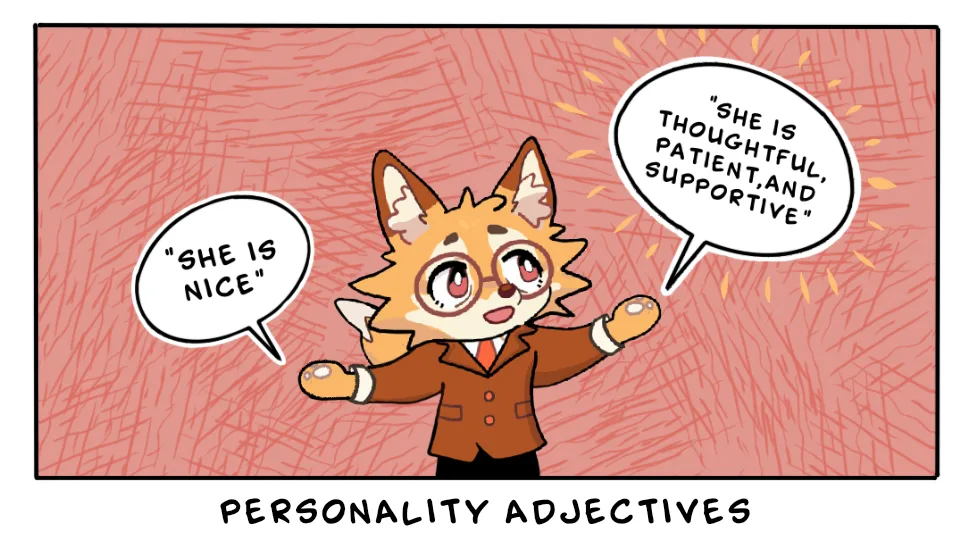
Personality adjectives are words we use to describe a person’s character, behavior, and attitude. They help us paint a clearer picture of who someone is beyond their appearance. Instead of saying, “She is nice,” you could say, “She is thoughtful, patient, and supportive.”
Learning personality adjectives and personality traits is one of the easiest ways to improve your English vocabulary and become a more confident speaker and writer. These words help you describe people more naturally in English and are commonly used in conversations, interviews, essays, emails, and storytelling.
By the end of this guide, you’ll have a much larger vocabulary for describing people naturally and accurately.
Table of Contents
What Are Personality Adjectives?
Personality adjectives are words used to describe a person’s character, behavior, attitudes, and emotional qualities. Examples include kind, confident, reliable, ambitious, and empathetic. These adjectives help us explain what people are like in everyday conversations, professional settings, and written communication. They answer questions like:
- What is she like?
- What kind of person is he?
- How would you describe your manager?
- What are you like under pressure?
For example:
| Sentence | Personality Adjective |
| Sarah always helps others. | Helpful |
| John never gives up. | Determined |
| Emma enjoys meeting new people. | Sociable |
| David gets angry easily. | Short-tempered |
Think of personality adjectives as the colors of language. They help make descriptions more detailed, interesting, and memorable.
Why Are Personality Adjectives Important?
Personality adjectives appear everywhere in English.
You’ll hear them in:
- Everyday conversations
- Movies and TV shows
- Books and stories
- Job interviews
- Workplace communication
- Social media posts
- Recommendation letters
Using personality adjectives helps you:
- Speak more naturally.
- Expand your vocabulary.
- Describe people accurately.
- Improve your writing.
- Sound more fluent in English.
For example:
❌ My manager is nice.
✅ My manager is organized, supportive, and dependable.
The second sentence gives a much clearer picture.
How to Ask About Someone’s Personality
Before learning personality adjectives, it’s helpful to know how native speakers ask about personality.
Some common questions include:
| Question | Example |
| What is she like? | What is your new teacher like? |
| What kind of person is he? | What kind of person is your boss? |
| Could you describe her personality? | Could you describe your roommate’s personality? |
| What are you like? | What are you like when you’re stressed? |
| How would you describe him? | How would you describe your best friend? |
These questions are common in both casual and professional situations.
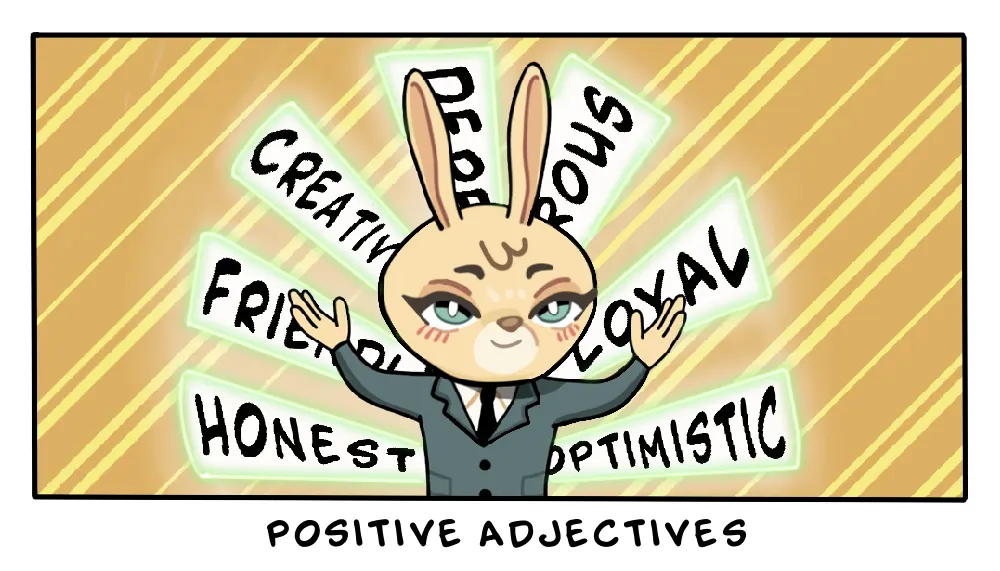
Positive Personality Adjectives
Positive personality adjectives describe qualities that people generally admire. These words are especially useful in interviews, recommendation letters, and introductions.
| Adjective | Meaning | Example |
| Ambitious | Wants to succeed | She is ambitious and works hard. |
| Adaptable | Adjusts easily | He is adaptable in new environments. |
| Brave | Shows courage | She was brave during the emergency. |
| Calm | Stays relaxed | He remained calm under pressure. |
| Compassionate | Cares about others | She is compassionate toward everyone. |
| Confident | Believes in themselves | He is confident during presentations. |
| Creative | Has original ideas | She’s a creative problem solver. |
| Dependable | Reliable | My colleague is dependable. |
| Determined | Doesn’t give up | He is determined to achieve his goals. |
| Empathetic | Understands others’ feelings | She is empathetic and supportive. |
| Energetic | Full of energy | He’s energetic and enthusiastic. |
| Friendly | Easy to talk to | Everyone finds her friendly. |
| Generous | Shares willingly | He is generous with his time. |
| Honest | Tells the truth | She has always been honest. |
| Humble | Not arrogant | Despite his success, he remains humble. |
| Loyal | Faithful and supportive | She is loyal to her friends. |
| Optimistic | Thinks positively | He stays optimistic during challenges. |
| Patient | Doesn’t get frustrated easily | Teachers need to be patient. |
| Reliable | Can be trusted | She is reliable and hardworking. |
| Supportive | Encourages others | My family has always been supportive. |
Negative Personality Adjectives
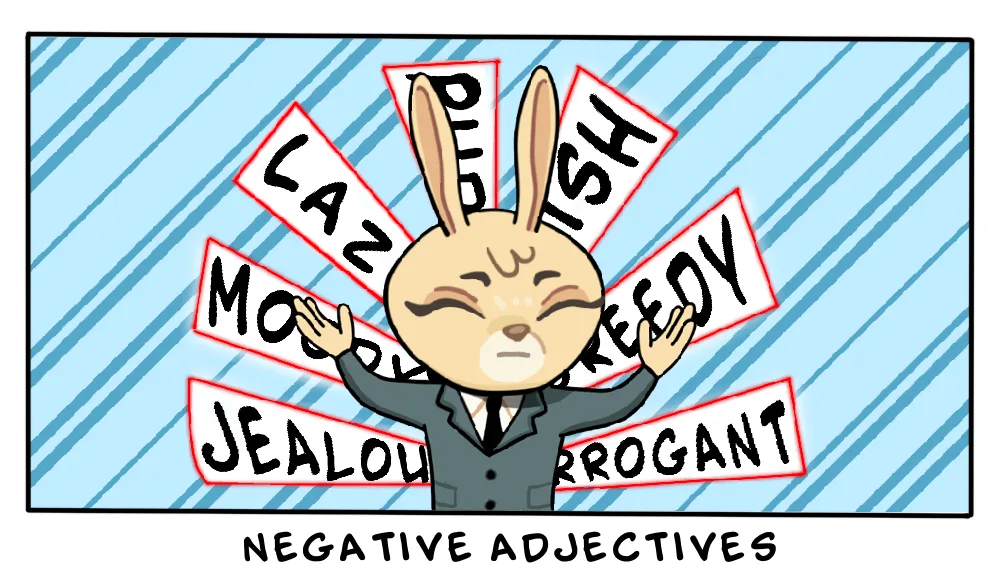
Negative personality adjectives describe traits that are generally considered undesirable.
| Adjective | Meaning | Example |
| Arrogant | Thinks too highly of themselves | He can be arrogant sometimes. |
| Bossy | Likes controlling others | She is very bossy at work. |
| Dishonest | Doesn’t tell the truth | He was dishonest about the situation. |
| Greedy | Wants more than needed | The character was greedy. |
| Impatient | Gets frustrated easily | She is impatient in long lines. |
| Jealous | Envious of others | He felt jealous of his friend’s success. |
| Lazy | Doesn’t like working | He was too lazy to finish the project. |
| Moody | Changes emotions frequently | She’s moody in the mornings. |
| Pessimistic | Expects bad outcomes | He is pessimistic about the future. |
| Rude | Lacks manners | The customer was rude to staff. |
| Selfish | Thinks only about themselves | She can be selfish sometimes. |
| Stubborn | Refuses to change opinions | He is stubborn and rarely compromises. |
| Unreliable | Cannot be trusted | He is unreliable when deadlines are involved. |
| Impulsive | Acts without thinking | She made an impulsive decision. |
| Cynical | Distrustful of people | He has become cynical over time. |
Neutral Personality Adjectives
Some personality adjectives are neither positive nor negative. Their meaning depends on the situation and context.
| Adjective | Example |
| Quiet | She prefers listening to speaking. |
| Serious | He takes his work seriously. |
| Curious | Children are naturally curious. |
| Reserved | She is reserved around strangers. |
| Practical | He always thinks logically. |
| Competitive | She enjoys winning. |
| Independent | He likes doing things himself. |
| Cautious | She avoids unnecessary risks. |
| Observant | He notices small details. |
| Perfectionist | She likes everything done perfectly. |
Context often determines whether these traits are seen positively or negatively.
Personality Adjectives for Job Interviews
Many personality adjectives are commonly used during interviews.
If you’re preparing for an interview, consider using words like:
- Reliable
- Adaptable
- Organized
- Collaborative
- Proactive
- Motivated
- Resourceful
- Detail-oriented
- Professional
- Resilient
Example:
“I would describe myself as dependable, adaptable, and highly motivated. I enjoy learning new skills and working collaboratively with others.”
These adjectives help employers understand how you work and interact with others.
Personality Adjectives for Resumes and LinkedIn
Choosing the right personality adjectives can make your resume, LinkedIn profile, and professional introduction more impactful. Recruiters often look for words that describe how candidates work with others and solve problems.
Common professional personality adjectives include:
– Adaptable
– Collaborative
– Detail-oriented
– Dependable
– Organized
– Proactive
– Resourceful
– Resilient
– Results-driven
– Professional
Example:
“I am a results-driven and adaptable professional who enjoys collaborating with cross-functional teams and continuously learning new skills.”
Use these adjectives honestly and support them with examples whenever possible.
Common Mistakes When Using Personality Adjectives
1. Using Appearance Adjectives Instead
❌ She is tall.
✅ She is confident.
Remember, personality adjectives describe character, not physical appearance.
2. Using Very Generic Words
❌ He is good.
✅ He is thoughtful and dependable.
3. Using Negative Words in Professional Settings
Avoid describing yourself as:
- Lazy
- Stubborn
- Moody
- Bossy
Instead, use positive alternatives.
4. Using Too Many Adjectives Together
❌ She is kind, nice, friendly, amazing, wonderful, incredible, and perfect.
✅ She is kind, dependable, and supportive.
Less is often more.
Tips for Learning Personality Adjectives
One of the easiest ways to remember personality adjectives is to connect them to people you already know. Think about a friend who is dependable, a teacher who is patient, or a colleague who is organized. Making personal connections helps new vocabulary stay with you longer.
Try these strategies:
- Learn five new adjectives every week.
- Use them in conversations.
- Create flashcards.
- Watch English movies and identify personality traits.
- Describe friends and family members.
- Keep a vocabulary journal.
- Practice writing short character descriptions.
The more you use personality adjectives, the more naturally they’ll come to you.
Continue Improving Your English
If you’re building your English vocabulary and grammar skills, these guides can help:
- 50+ Adjectives to Describe Someone
https://englishlanguageandliterature.com/adjectives-to-describe-someone/ - Another Phrase for “Not Only”
https://englishlanguageandliterature.com/another-phrase-for-not-only/ - Idioms With Clothes
https://englishlanguageandliterature.com/idioms-with-clothes/ - Types of Verbs in English
- Reported Speech Examples
- Intonation in English: Types, Rules, and Examples
https://englishlanguageandliterature.com/intonation-in-english/
These articles will help improve your vocabulary, grammar, and spoken English naturally.
Frequently Asked Questions
What are personality adjectives?
Personality adjectives are words that describe a person’s character, behavior, or attitude.
Why are personality adjectives important?
They help us describe people more clearly and communicate more effectively.
What are some positive personality adjectives?
Examples include:
Honest
Loyal
Friendly
Reliable
Creative
What are some negative personality adjectives?
Examples include:
Arrogant
Selfish
Moody
Lazy
Stubborn
Can personality adjectives be used in interviews?
Yes. Personality adjectives are frequently used to describe strengths, work style, and communication skills during interviews.
What is the difference between personality and appearance adjectives?
Personality adjectives describe character, while appearance adjectives describe physical features
What are the best personality adjectives for a resume?
Some of the best personality adjectives for resumes include:
Adaptable
Dependable
Collaborative
Organized
Motivated
Professional
Detail-oriented
Resourceful
Resilient
Proactive
These adjectives work particularly well when supported by examples from your work or academic experience.
Final Thoughts
From introducing yourself in a job interview to describing your favorite movie character, personality adjectives appear in almost every aspect of communication. Building this vocabulary will help you express yourself more clearly, understand others more effectively, and communicate with greater confidence in English.
References
- https://englishlanguageandliterature.com/adjectives-to-describe-someone/
- https://www.englishclub.com/vocabulary/adjectives-personality.php
- https://7esl.com/adjectives-that-describe-personality/
- https://www.scribbr.com/parts-of-speech/adjectives/
Writer: Poonam singh
Designer: Isha Barua