Another Word for But: Enhancing Your Writing with Smarter Alternatives
Another Word for But: Smarter Alternatives that Sharpen Your Writing
“But” is a tiny word commonly used in conversations and writing. It connects two ideas that contrast, show a difference, or introduce an exception. “I loved the film, but it was too long.” It is constantly used; however, that is the problem.
When every other sentence uses the same connector, your writing starts to feel flat. No need to worry, English is full of fresh alternatives. Picking another word for “but” can make your sentences sound smoother and more confident.
In this guide, you’ll learn:
- Why relying heavily on “but” weakens your writing
- How “but” can sound negative and when “and” works better
- Natural synonyms for “but”
- Best options for starting a sentence
- Best choices for academic essays
- Common mistakes to avoid
Table of Contents
Why Use Words other than “But”?
“But” is clear and useful, so why change it? Here are a few reasons:
- Variety: Readers stay more engaged when your sentences don’t all sound the same.
- Tone: Some alternatives feel more formal, others more gentle.
- Precision: The right word shows exactly how two ideas connect.
Swapping in a synonym now and then keeps your writing fresh without changing your writing’s meaning.
When “But” Sounds Negative and Why “And” Can Work Better
“But” is not only a grammar tool to link ideas, but it can sometimes negate the first idea.
Read this: “You did a good job, but the structure needs to be better.” Some listeners mostly hear this and take it as an attack rather than constructive criticism. That’s because “but” can put a spotlight on the negative.
Now try it with “and”: “You did a good job, and the structure needs to be better.” This gives both halves equal emphasis. Praise and feedback are now communicated equally to the listener.
This small swap matters, especially with motivational speaking and feedback, when you want people to listen.
It won’t fit every sentence, as sometimes, you truly need contrast. Still, next time you’re about to type “but” in a message, pause and ask: am I connecting these two ideas, or accidentally erasing one of them?
If you write a lot of emails, reports, or client messages, this one habit can change how people respond to you. Our Business English course goes deeper into writing clearly, calmly, and persuasively at work.
Common Synonyms for “But”
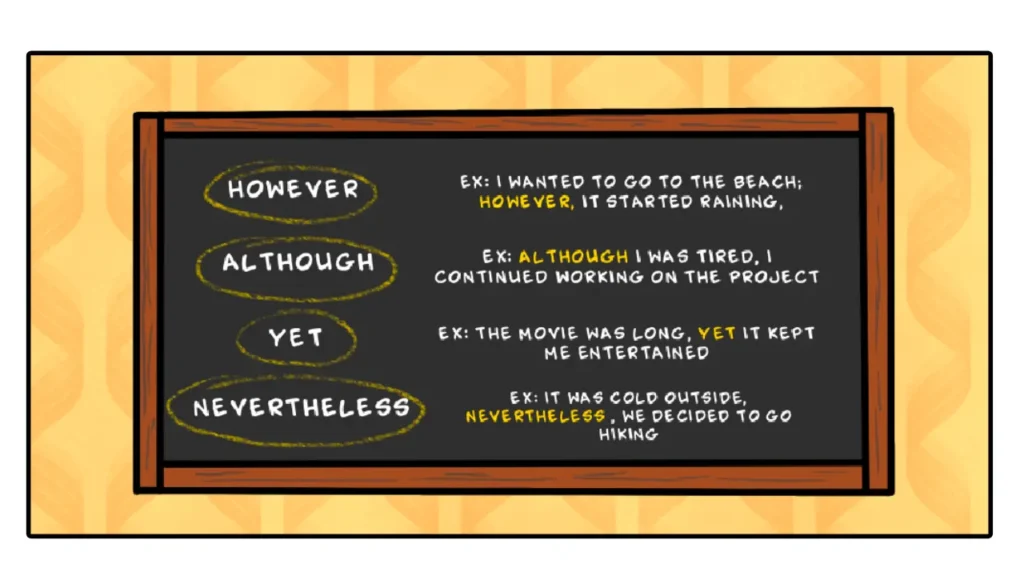
When you need contrast, here are dependable choices:
- However: I wanted to walk to work; however, it started to rain.
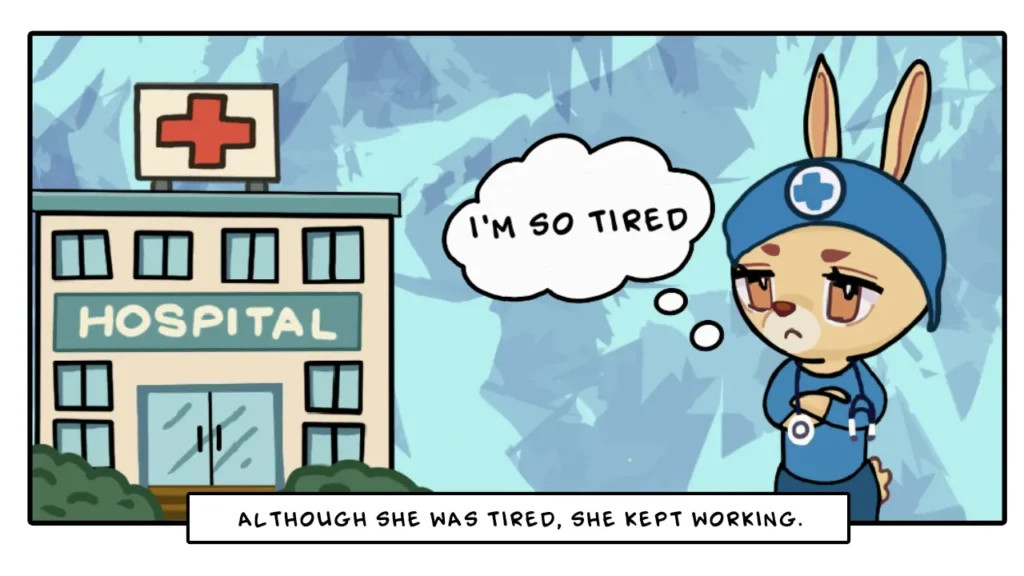
- Although: Although I was tired, I finished the report.
- Yet: The test was hard, yet everyone passed.
- Though: I like tea, though I try to drink less of it.
- Nevertheless: It was freezing; nevertheless, we went hiking.
- On the other hand: Traveling is fun. On the other hand, it can be tiring.
Each signals contrast in different contexts. “However” can be formal; “yet” feels quick and natural; “on the other hand” sets up a clear comparison.
Another Word for “But” to Start a Sentence
Starting a sentence with “but” is grammatically fine, but is sometimes discouraged. A synonym can feel more polished, especially in formal writing:
- However, no reaction occurred between the solutions.
- Still, we decided to move ahead.
- Nevertheless, he continued the project.
These sentence starters signal a turn in your argument while keeping a smooth tone.
Best Choices for Essays
In academic and formal writing, precise connectors are a necessary part of your grammar and tone. When you’re writing an essay, use these:
- However: keeps a professional tone
- Nevertheless: shows contrast while sounding formal
- Although: blends neatly into longer sentences
Compare these two:
- The data looked promising, but more research is needed.
- The data looked promising; however, more research is needed.
If you want to sharpen this skill, our academic writing guides help you learn more about the specifics.
“But Also” and “Similar but Different”
Sometimes you’re not replacing “but” on its own. For “but also,” try as well, in addition to, or along with:
- She is not only a singer but also a dancer. → She is a singer as well as a dancer.
For “similar but different,” try comparable yet distinct or related yet unique:
- The two books are similar but different. → The two books are comparable yet distinct.
Common Mistakes to Avoid
A few slip-ups to watch out for:
- Comma errors: When connecting two sentences into one, connectors like “however” need a semicolon before it and a comma after. Public archival records suggested widespread support for the tax reform; however, newly found statistics showed the opposite.
- Double contrast: Don’t stack them. “Although it was late, but we stayed” has one “but” too many.
- Overcorrecting: You don’t need a fancy synonym every time. A plain “but” can sometimes be the clearer choice.
Quick Reference
- Contrast: however, although, though, yet, nevertheless, nonetheless, even so, on the other hand
- Exception: except, excluding, aside from, apart from, other than
- Limitation: only, merely, simply
For more word swaps, browse our guides on synonyms for other words and situations. Our English for Life course can also help you build on your English to sound more native-like.
Conclusion
“But” will always be a necessary word. Our goal is not to ban it, but to use a variety of synonyms that will make your speech and writing much smoother and better fit the context. Other times, switching it to a gentle “and” can help you be heard more clearly with your feedback.
Fun Fact
The word “but” has an evolving historical use. According to Merriam-Webster, the word originates from the Old English word, būtan. This is a blend of “by” and “out,” which literally meant “outside” or “except.” Its earliest use was intended to denote a physical or conceptual exclusion of things from the outside. However, from the 13th Century onward, this evolved toward the modern definition, including contrasts and objections.
References
Writer: Randy Toku
Designer: Isha Barua