30+ Allegory Examples to Help Sharpen Your English
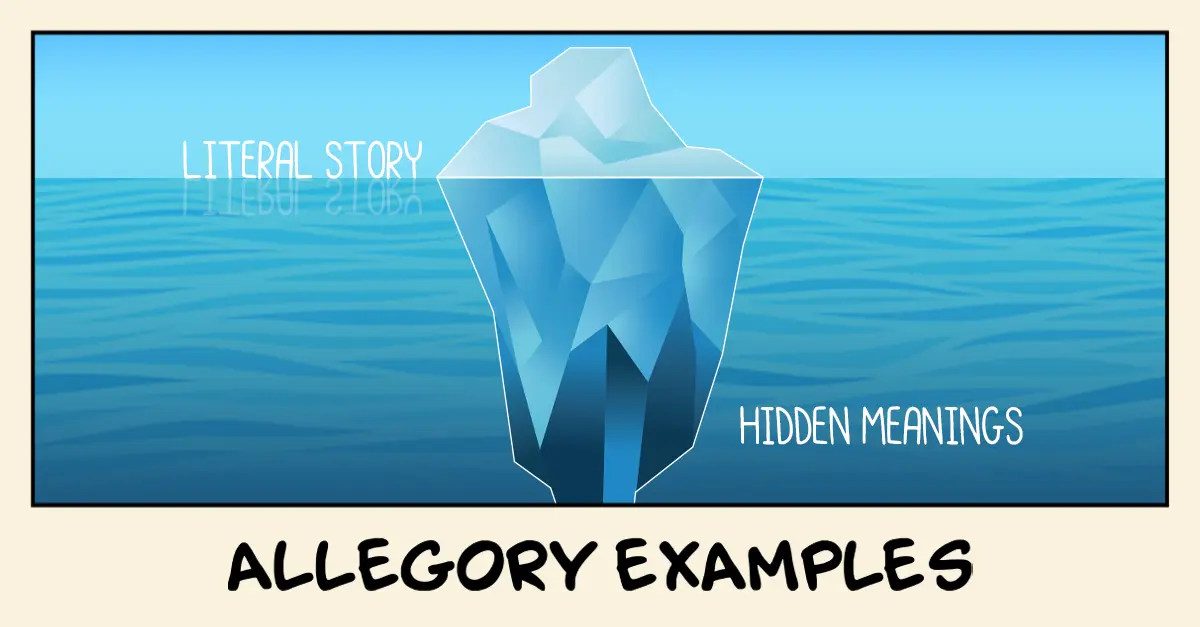
Table of Contents
30+ Allegory Examples to Help Sharpen Your English
Have you noticed that many stories, if not all of them, have a hidden message or lesson?
Let’s have a look at a classic story structure, say, a battle between good and evil. Its baseline might be about good people fighting an evil power, but beyond that context, the story is truly teaching us about friendship, justice, ethics, unity, and more! When a story is used to deliver hidden messages like these, it is called an allegory.
Think of an allegory as an iceberg. What you see above the water is the story on the surface: the characters, events, the action, and plot.
But most of the iceberg is underwater, hidden.
An allegory is a story that holds a deeper meaning. Instead of being only about the events on the surface, everything in the story stands for something else that lies underwater, usually a bigger idea that critiques society, talks about humanity, power, and morality.
You’re not just reading what happens on top, you’re also meant to understand what is underneath!
You might think, how is this different from metaphors or symbols?
Easy peasy! Symbols and metaphors cover only a small part and detail of any story, whilst an allegory’s hidden meaning is in the entire story.
If you approach it with a comparative mindset, like an iceberg, it’ll be easier.
Remember:
- Above the surface.
- Underwater.
Now, let’s learn even more!
In this guide, you will know how allegories work in:
- Literature
- Film and Media
- Art and Music
- Religion and Philosophy
And also:
- You will be given 30+ allegory examples to put this knowledge into practice.
- And learn where it’s appropriate to use them (or not) in what you do.
On your mark, set, go!
Allegory Examples in Literature
If you’ve heard of or experienced the effect of an allegory, it was probably through literature. Classic stories and modern fiction use allegories frequently to enhance their storytelling and support their narratives.
Think of a good ol’ classic: Little Red Riding Hood.
Let’s compare and contrast what this childhood story’s “above the surface” and “underwater” would be.
| Above the surface | Underwater / Hidden allegory |
| A little girl walks through the forest to visit her sick grandmother. She meets a wolf. | Be cautious of strangers and people you don’t know, because they could have bad intentions. |
Allegories in Film and Media
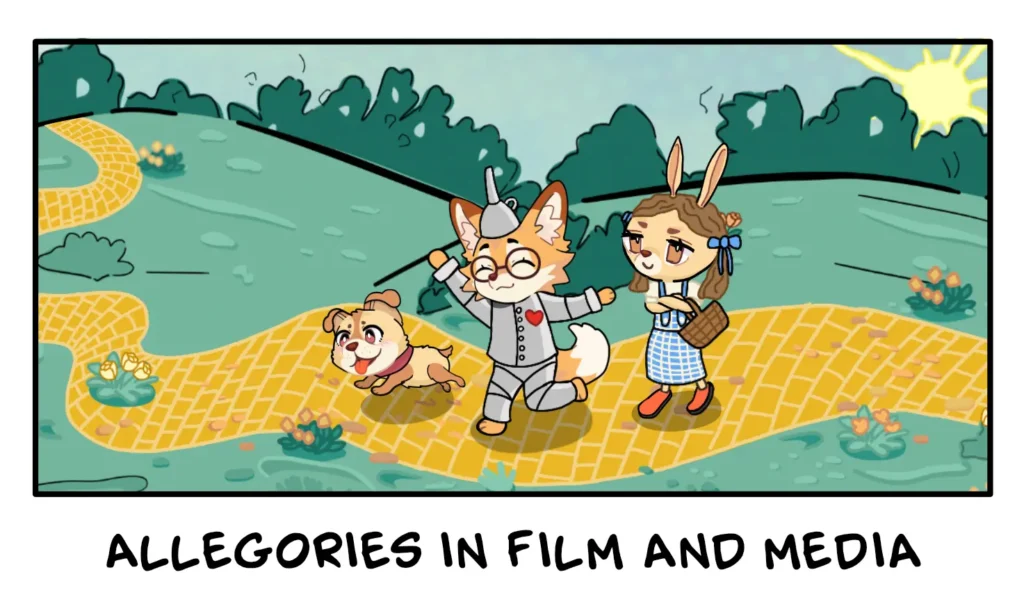
Every movie, short film, reel, and video has an allegory!
Let’s explore how to find them.
| Film | Media |
| Look for repeated images, color, frames, and symbols in any scene. | Notice repeated ideas, texts, or patterns in shows, games, or any online content. |
| Pay attention to how the main characters, the secondary characters, and the villains are presented. | Consider the creator’s interests and overall background when watching their work. |
| Think about what the film makes you feel, or which emotions you think it wants you to feel. | Notice the way those ideas are represented, perhaps in their pace and tone. |
| Learn about the historical period, social, or genre that is connected to it. | Pay mind to which current events could’ve inspired that content. |
Allegories in Art and Music
The art and music you would see in museums and hear on platforms like Spotify often contain allegories.
But how can you identify them?
| Art | Music |
| Repeated symbols | Repeated words |
| Different lighting intensity | Specific melodies |
| Animals and specific colors. | Check if the song compares two things. |
| Learn about the historical context behind the piece and the artist. | Pay attention to the emotions you feel when hearing the song. |
| Notice emotions in facial expressions. | It helps to know the artist’s story and/or background. |
| How characters and objects are shown. | Notice emotional themes like love, friendship, grief, and so on. |
| Pay mind to how you feel when looking at the piece. | The rhythm can reveal the song’s intention. |
Allegories in Religion and Philosophy
Religion and Philosophy are often used to set people’s moral compass, which is why they hold intentional allegories in their stories and teachings.
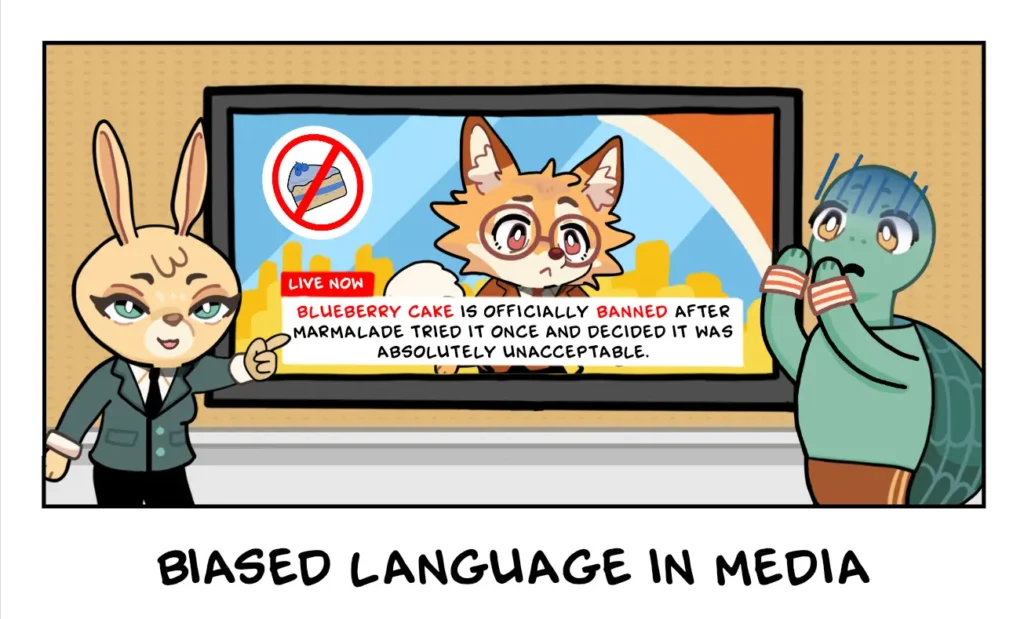
Every movie, short film, reel, and video has an allegory!
Let’s explore how to find them.
| Film | Media |
| Look for repeated images, color, frames, and symbols in any scene. | Notice repeated ideas, texts, or patterns in shows, games, or any online content. |
| Pay attention to how the main characters, the secondary characters, and the villains are presented. | Consider the creator’s interests and overall background when watching their work. |
| Think about what the film makes you feel, or which emotions you think it wants you to feel. | Notice the way those ideas are represented, perhaps in their pace and tone. |
| Learn about the historical period, social, or genre that is connected to it. | Pay mind to which current events could’ve inspired that content. |
Allegories in Art and Music
The art and music you would see in museums and hear on platforms like Spotify often contain allegories.
But how can you identify them?
| Art | Music |
| Repeated symbols | Repeated words |
| Different lighting intensity | Specific melodies |
| Animals and specific colors. | Check if the song compares two things. |
| Learn about the historical context behind the piece and the artist. | Pay attention to the emotions you feel when hearing the song. |
| Notice emotions in facial expressions. | It helps to know the artist’s story and/or background. |
| How characters and objects are shown. | Notice emotional themes like love, friendship, grief, and so on. |
| Pay mind to how you feel when looking at the piece. | The rhythm can reveal the song’s intention. |
Allegories in Religion and Philosophy
Religion and Philosophy are often used to set people’s moral compass, which is why they hold intentional allegories in their stories and teachings.
Here are ways to spot them!
| Religion | Philosophy |
| After you’ve interacted with a religious text or media, which moral lessons can you find? | Do those stories or teachings make you reflect on them? |
| Notice any symbols such as light, heaven, hell, darkness, light, among many others. | Symbols are also useful. They represent either knowledge, truth, freedom, or anything related to society. |
| How are the characters described? Which ideal could they defend or warn you about? | Do you relate to any of the thoughts? How do you feel? |
| Learn about the religion you’re interacting with to understand the core intention better. | Read about the philosopher and their background to better understand the allegory in their ideas. |
Since there are so many ways and places to find allegories, let’s walk through them as simply as we can.
30+ Allegory Examples
Here are some examples of allegories to help you understand them better!
You will see:
- The content,
- Its category (political, religious, moral, literary, it depends!),
- And an allegory it represents.
Note: These examples will have only one allegory. Any written, illustrated, or audiovisual work can represent many more!
| Content | Category | Allegory |
| Animal Farm by George Orwell | Political / Literary | Commentary on how Soviet communism led to oppression. |
| Little Red Riding Hood | Literary / Moral | The danger of trusting strangers. |
| Hansel and Gretel | Literature / Moral | Obeying your parents will keep you safe. |
| Cinderella | Literature / Moral | Kindness and hope will pay out in the end. |
| Lord of the Flies | Literature / Moral | The struggle between behaving properly and acting savagely. |
| The Chronicles of Narnia | Literature / Moral | Religious allegory about the story |
| The Matrix | Political | Questioning control, freedom, and truth. |
| 100 Years of Solitude | Political | The effects of colonialism and how it impacts personal relationships. |
| American Idiot | Music / Political | Criticism of war and media influence. |
| Guernica | Art | The horrors of war and violence. |
| The Hunger Games | Political | The rich exploit the poor. |
| Allegory of the Cave | Philosophical | Knowledge and truth are important |
| David and Goliath | Religious | Strength and faith can make you overcome anything. |
| Noah’s Ark | Religious | Obeying and trusting God is necessary to survive. |
| The Odyssey | Mythical | The journey home can be difficult, but it’s worth it. |
| Adam and Eve | Religious | Falling into temptation has its consequences. |
| Frankenstein | Literary | Science should be exercised responsibly. |
| Saturn Devouring His Son | Art | Fear and power. |
| Zombie | Political / Music | War causes conflict and violence. |
| The Lord of the Rings | Literary | With friendship, mercy, and strength, evil cannot survive. |
| The Raft of the Medusa | Art | Human suffering and survival after disaster. |
| The Myth of Arachne | Moral / Mythological | Excessive pride leads to one’s downfall. |
| Oedipus Rex | Moral / Theatrical | Ignoring and avoiding the truth will lead to tragedy. |
| The Exorcist | Film / Religious | Struggle between good and evil, faith and doubt. |
| No Country for Old Men | Film / Moral | Fate doesn’t wait for anyone. |
| Squid Game | Moral / Media | The upper class uses the poor and unprivileged for entertainment. |
| Spider-Man | Moral / Film | With great power comes great responsibility. |
| Journey to the West | Religious / Moral | Enlightenment can be possible if you’re willing to open your heart. |
| Pinocchio | Literature / Film | One must not tell lies. |
| Encanto | Film | Comparing yourself to others will prevent you from accepting yourself. |
| Inside Out | Film | Mental health awareness is important as you grow up. |
| The Little Prince | Philosophical / Literature | Staying connected to your child-like sense of wonder and imagination is important. |
When to use an Allegory
You might have noticed that most examples of allegory come from creative works rather than everyday conversations.
It’s because allegories are deliberately hidden, and spoken conversations are clearer and more direct.
So here’s a simple breakdown:
Appropriate Uses of an Allegory
- Literary analysis
- Essays
- Creative writing
- Speeches
- Political commentary
- Social critique
- Abstract and morally conceived stories.
Inappropriate Uses of an Allegory
- Technical or scientific writing
- Legal, medical, or professional documents.
- Day-to-day conversation, either spoken or through chat and emails.
Conclusion
As you can see, we can find allegories nearly everywhere. Even in ourselves!
In your case, above the surface, you’re someone trying to learn a new language. But underwater, building confidence, expanding your mind, and creating opportunities that will change your life in ways that aren’t yet visible.
As a way to challenge yourself, how about a little assignment?
- Read any short story and try to think about its allegory.
- Watch any movie and identify the core allegory.
If you’d like to improve your English even more, don’t hesitate to reach out and ask about our courses!